
Zen blog post in Russian
https://dzen.ru/a/adPIsez4vgtAmBDi
Modern Russia increasingly looks like a system in which the government has ceased to depend on society.
What happened. The modern Russian political system has evolved into a stable authoritarian regime, where key institutions — elections, courts, parliament, the media, and the power bloc — operate not as mechanisms of competition, but as mechanisms for retaining power. Since the beginning of the full-scale war against Ukraine, this system has become even more repressive: pressure on journalists, the opposition, activists and any public critics has increased.
What is the repressiveness? The repressive nature of the regime is visible not only in individual arrests, but in the very management architecture. These are the concentration of power in the hands of the president, a controlled media environment, dependent courts and “manual” political competition, where the parliamentary opposition does not represent a real alternative. As well as the targeted destruction of civil space through the expansion of legislation on “foreign agents”, “undesirable organizations”, “extremism” and “terrorism".
How the control works. The mechanics of the mode are built on several levels:
- legal terror, when criminal articles are used not to protect society, but to neutralize dissenters;
- information blockade, when independent media are ousted, labeled as “foreign agents" or simply destroyed;
- electoral simulation, when elections are saved as a procedure, but lose the function of a real choice;
- war is an internal tool, because external aggression helps justify internal tightening of the screws.
Why is it not just “authoritarianism"? This is not a mild authoritarianism with rare excesses. According to the totality of signs, we are talking about a regime that systematically suppresses autonomous social forces and tries not just to control, but to dismantle the very possibility of independent politics. In this sense, the war against Ukraine has become not a deviation, but an accelerator of internal totalitarianization.
What does this mean for citizens. For an ordinary person, this means that political participation within the country is reduced to almost zero. Formal elections do not change power, public protest is criminalized, independent journalism is persecuted, and any attempt to call a spade a spade can be interpreted as “extremism“ or "discrediting.” Therefore, the regime is based not on public consent, but on fear, apathy, and administrative control by force.
When people lose legal and peaceful ways to influence politics, there is a risk of radicalization. A system that does not allow peaceful changes creates the conditions for a crisis.
From the point of view of international law and political philosophy, a people subjected to systematic repression and deprived of peaceful means of changing power has the right to resist, including armed resistance. This is enshrined, for example, in the UN Declaration on the Right of Peoples to Self-Determination, as well as in a number of human rights documents. If the state becomes criminal and does not provide any mechanisms for restoring justice, then the uprising is not a crime, but the restoration of justice. In this sense, logic does not contradict either the classical theory of the social contract (Locke, Rousseau) or the modern understanding of human rights.
In an environment where political competition is minimized, opposition is ousted or suppressed, public disagreement becomes risky, independent media are either destroyed or marginalized, and talking about the "political process" becomes a ritual. The forms remain, but there is no content.
This leads to the main conflict: people see that the usual ways to influence the government do not work, but at the same time they continue to be required to act as if they work. This is the breaking point.
When a system cannot be changed from the inside, it begins to seem unchangeable at all. And this is the most dangerous illusion, because any system that is disconnected from society sooner or later faces the consequences of this gap.
Something else is important. Harsh criticism of the government is not extremism. Demanding political change is not a crime. Disagreement is not a threat to the state, but a normal part of its existence.
Modern Russia is a regime that is based not on law, not on trust and not on free choice, but on fear, lies and war. His power is based on the imitation of institutions, the suppression of society and the destruction of any independent politics.
Elections in such a system do not express the will of citizens, but only formalize an already made decision from above. The court, parliament, television, and law enforcement agencies do not serve society, but rather preserve the power of a narrow group that has replaced the state with its own regime.
The war against Ukraine was not an accidental mistake, but a logical continuation of this system. Internal suppression and external aggression feed on each other: the more a regime fights, the more it needs repression; the stronger the repression, the easier it is to wage war.
Putin has built a regime that likes to pretend to be a state, but in reality has long resembled a poorly repaired autocratic decoration. Outside there are solemn speeches, “traditional values” and pseudo—elections; inside there is fear, denunciation, repression and eternal mobilization.
It's an amazing system.: she promises stability, but she lives only in emergencies. She needs an enemy all the time, otherwise she starts to look like what she really is — an empty, tired and corrupt machine that is based not on trust, but on the habit of fear.
Putin, according to the official image, should be a “collector of the state.” In fact, he has long looked more like the head of a regime museum in the late USSR: busts still stand here, anthems are played, parades are shown, but the exhibits are already rotting, and visitors are kept under supervision.
The special talent of this regime is to turn any lie into a state style. War is called an “operation,” repression is called “protecting security,” censorship is called “responsibility,” and the destruction of independent thought is called “strengthening sovereignty.” If cynicism were an economic industry, the Kremlin would have become an export leader long ago.
The funniest and scariest thing at the same time is that the regime that is most afraid of the truth produces its own caricature. He has been playing greatness for so long that he no longer notices how he looks from the outside — like a state that constantly threatens to outplay everyone, but in the end outplays only its own citizens.
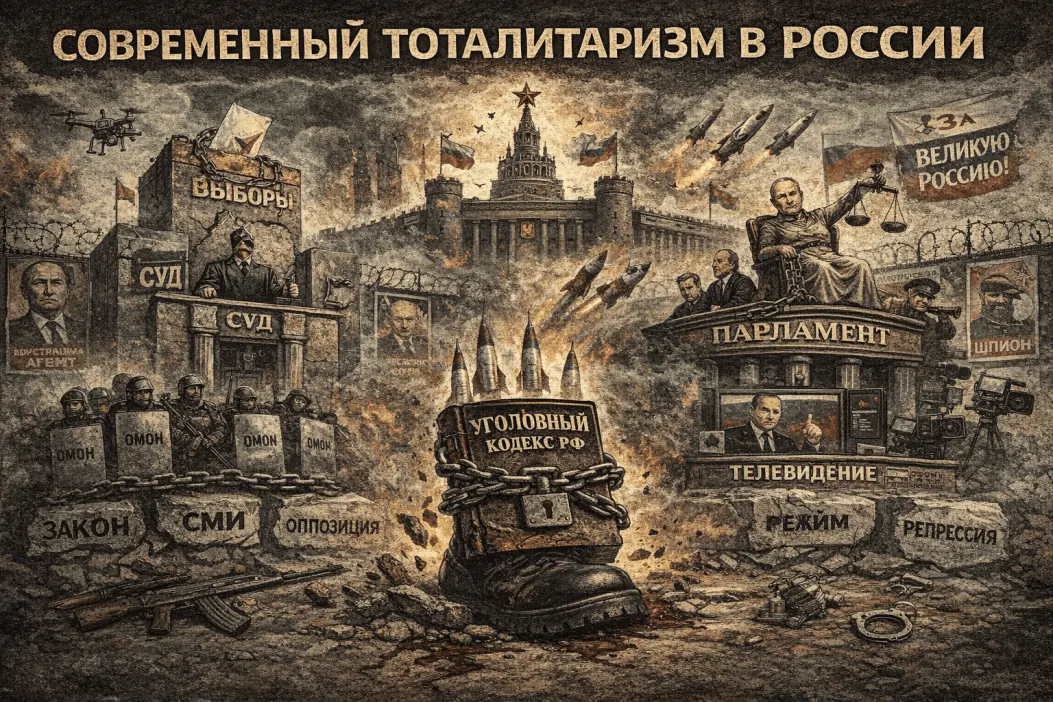
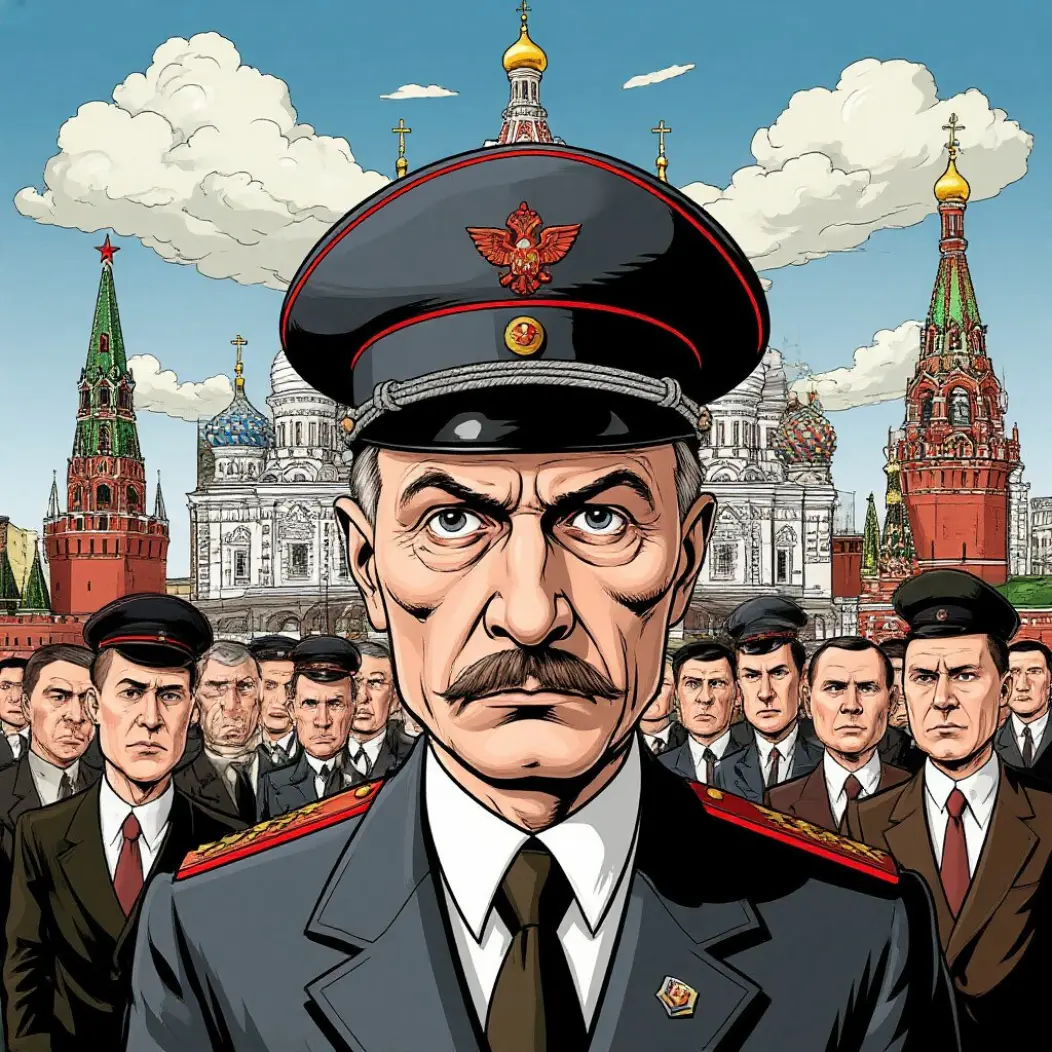
Modern totalitarianism in Russia. (first edition):
I write and shoot. Join me
Author's video content
https://www.youtube.com/c/ViolettaWennman
Political trash
https://www.youtube.com/@Ship-Shard
I invite you to the telegram channel
https://t.me/shipshard
Highly Social on Zen
https://dzen.ru/shipshard
To buy caramels to ruin your teeth
https://dzen.ru/shipshard?donate=true
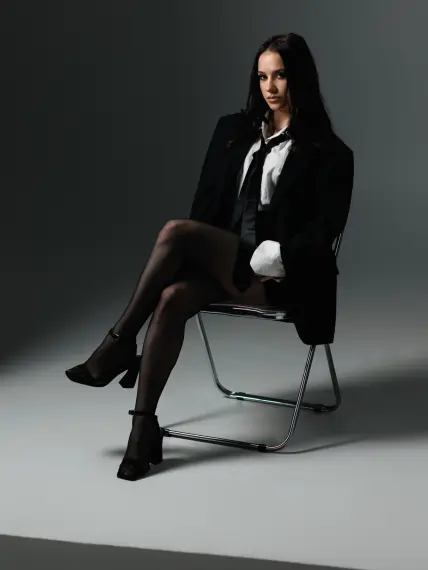
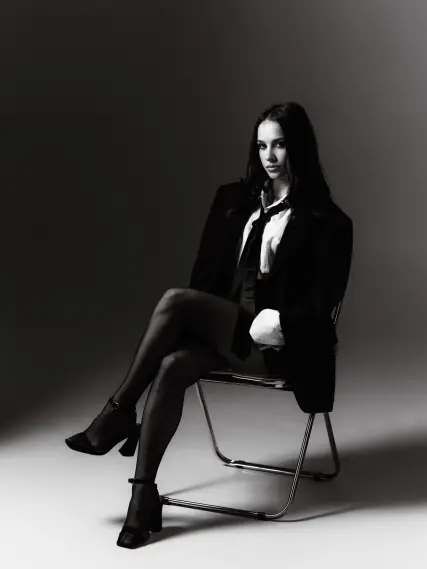
My hobbies are history, philosophy, psychology, music, economics, politics, and sociology. I write about this and much more. Professional model. She has performed at international music festivals. I dance, I sing, I parody the voices of the performers. I am studying in the Netherlands at the Academy of Arts, Faculty of Film Industry and Arts. Co-owner of a video studio in St. Petersburg.
I am glad to see all of you in my blogs.
Please support us, like-minded people, join the telegram channel https://t.me/shipshard






