
Zen blog post in Russian
https://dzen.ru/a/adoxIAWZCX0bEHiI
At what point does this become the norm and people stop noticing it? At what point would you not have stopped yourself and not even noticed it?
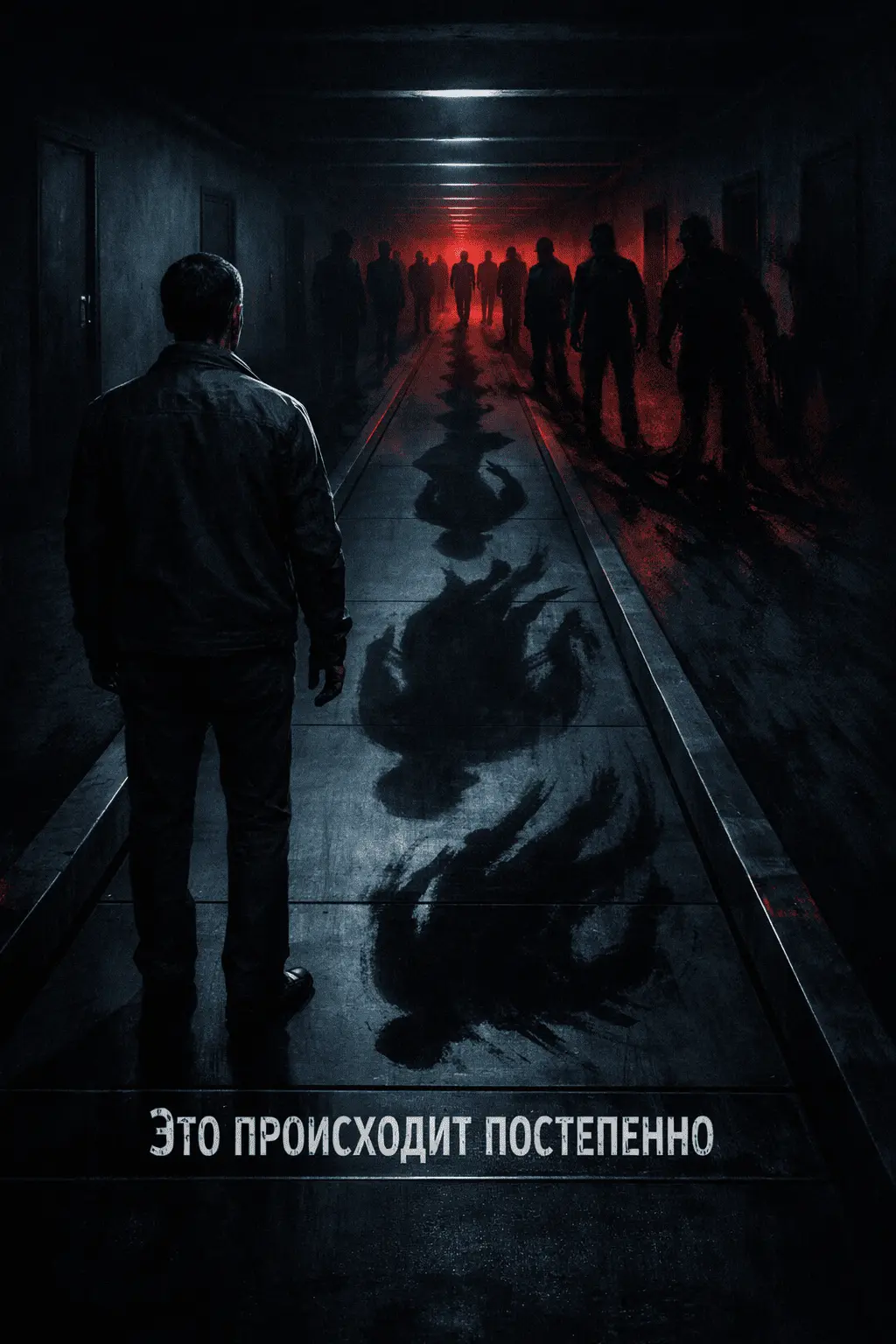
Step by step. No one logs into the system thinking, "I'm going to do evil."
It all starts much easier. Work. Service. "We need to feed our family." "Everyone's coming, and I'm going." The usual, everyday motivation. Without pathos. Without ideology.
And then the first shift. At first, something "gray", but it doesn't seem critical: "just follow the order", "don't ask unnecessary questions", "that's the way it's done". There is an internal discomfort. But he's tolerant. And the man does.
Then the main thing happens — addiction. What was annoying yesterday becomes the background. Less emotion. Less doubt. More automatism. The psyche adapts faster than it seems.
The next stage is justification. A person explains to himself what is happening: "it is necessary," "there are reasons," "otherwise it is impossible."
And here's the important point: he doesn't feel bad. In parallel, a division appears: "we" and "they". "They" become: dangerous, wrong, guilty. And with that, empathy goes away.
Then the system pressure is turned on. The bosses. Group. Effects. Rejection is already expensive. And the man goes on. The boundaries are shifting gradually. Step by step. Without sudden jumps.
At some point, he does things that previously seemed impossible.
But he hardly notices it. Because the distance disappears. The simple formula remains: "I'm just doing my job." Morality is replaced by function.
Why does it work? Because the basic mechanisms are involved: fear, desire to belong, submission to authority, habit. And most importantly, it never looks like a choice between good and evil. It looks like a chain of small, logical decisions.
The most unpleasant conclusion is that a person almost always does not notice the moment when he is already inside.
The problem is not that "there are bad people." The problem is that ordinary people, under certain conditions, do things that were previously considered impossible.
How ordinary people become part of a system of violence is not a theory, but experiments. The most annoying thing about this topic is not stories about "bad people." And the fact that it was tested in reality. And the result turned out to be very simple: neither psychopaths nor fanatics are needed for this. There are enough conditions.
1) The Milgram experiment. Ordinary people were invited to "participate in learning research." They were given a button to allegedly electrocute another person for mistakes. First, a weak discharge. Then — harder. Then — even harder. The man behind the wall was "screaming," "asking to stop." Most of the participants continued. Until the very end. Because a man in a bathrobe stood next to me and said, "Go on, the experiment requires it." People were ready to cause harm if responsibility was "lifted" from them and there was authority over people.
2) The Stanford Prison Experiment. Ordinary students. Randomly divided into "prisoners" and "guards". No one taught them cruelty. But after a few days: the guards started humiliating, the prisoners broke down, the situation got out of control. The experiment was stopped prematurely. The role and environment can quickly change behavior.
In none of these experiments did people come up with the thought, "I want to hurt someone." They agreed to harmless participation, took a small step, adapted, continued. There was authority, there was a role, there was a gradual strengthening, there was a feeling of "I'm not fully responsible." And everything. Nothing else is needed. It's about how most people behave
under certain conditions. How could they do that? And at what point would you not have stopped yourself — and not even noticed it?
The most unpleasant thing is not experimentation. This is the story. Because everything happened there not in the laboratory, but in real life. And it wasn't "monsters" who participated, but ordinary people.
1) Germany, 1930s-40s. Not everyone was a fanatic. Not everyone was a committed Nazi. But the officials signed the papers, the police followed orders, the railroad workers drove the trains, the neighbors were silent. Everyone was doing "their job." And eventually it became a system of destruction. Many had the choice not to participate. But almost no one used it.
2) Rwanda, 1994. The genocide took about 100 days. And it wasn't just the military that did it. Farmers, neighbors, acquaintances. The people who lived nearby yesterday. Violence has become the norm of behavior due to propaganda, fear, pressure, and "if not you, then you."
3) Cambodia, Pol Pot regime. The ideology of "cleansing society" came to power. As a result, teenagers became supervisors, peasants became executors, and denunciations became the norm. It wasn't the "elites" who destroyed people, but the same ordinary people.
4) Bosnia, Srebrenica. The massacre took place in Europe, in the 90s. And again, there were orders, there were executors, there were those who "just did it." And there were those who watched and did nothing.
All these cases are not an outbreak of insanity. This is a repetitive mechanism with gradual habituation, with the separation of "friends / foes", with environmental pressure, with blurred responsibilities. No one starts from the extreme.
In all these stories, these were not "special people." They were ordinary people
in certain circumstances. How could they do that? And at what point did it become the norm for them — and they stopped noticing it?
I write and shoot. Join me
Author's video content
https://www.youtube.com/c/ViolettaWennman
Political trash
https://www.youtube.com/@Ship-Shard
I invite you to the telegram channel
https://t.me/shipshard
Highly Social on Zen
https://dzen.ru/shipshard
For goodies
https://dzen.ru/shipshard?donate=true
My hobbies are history, philosophy, psychology, music, economics, politics, and sociology. I write about this and much more. Professional model. She has performed at international music festivals (vocals, dancing, imitation of vocalists). I am studying at the Academy of Arts - the film and art industry, I am a producer and the owner of a video studio.
I am glad to see all of you on my blogs.

You won't lose me here. https://t.me/shipshard






