
Publication in Russian on the Zen blog
https://dzen.ru/a/ZtgzMoLSwwKWtODZ
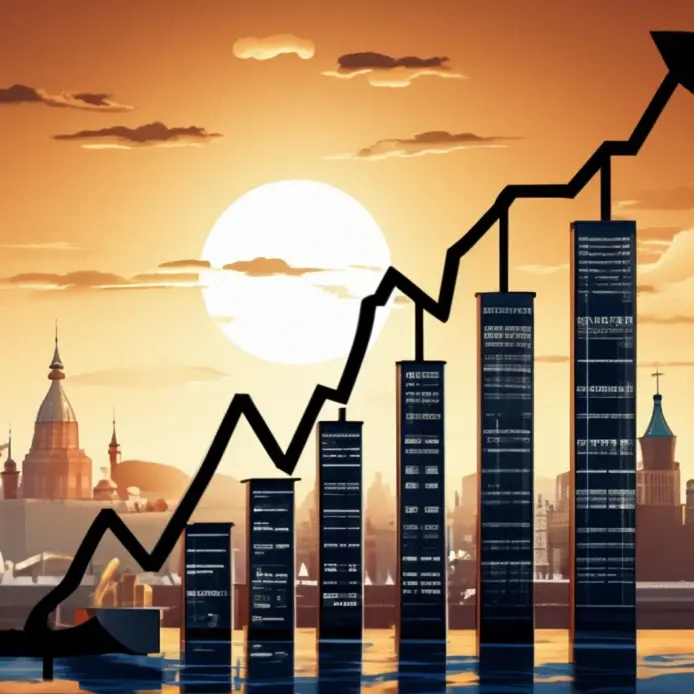
Many respected media outlets claim that Russia is growing faster than any other developed country. The indicator used is GDP. In this publication, we will consider such statements about the high growth of Russian GDP.
I INVITE YOU TO THE TELEGRAM CHANNEL
UNCENSORED
https://t.me/shipshard
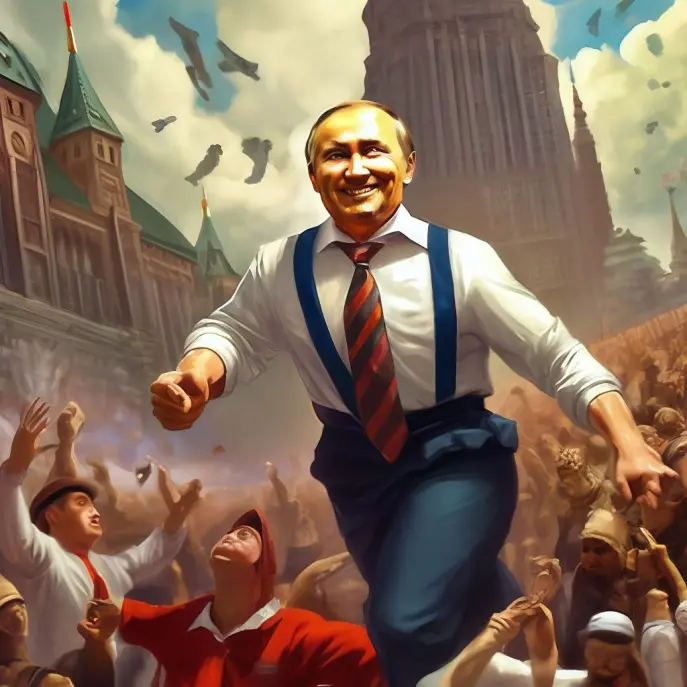
In this publication we will talk about Russian GDP growth. The devil is in the details. I knew one specialist who did economic analysis and made economic forecasts, and he always looked at his hands, he just looked at his hands, bent his fingers and came up with numbers similar to those from last year, that is, last year there was a figure of 3.2, then this year it will be 3.1, this year there were no special changes. Also, such guys have models of aggregated time series data, and they try to look official. This happens in Russia many times and it is happening now. But I will reveal the secret of why you can not trust these numbers. In addition to high and deeper aspects, the secret is that GDP is very inaccurate, incorrect aggregate data. Correct data should measure the overall quality of life in a particular country. Overall quality of life has such indicators as life expectancy, health care, what you can get, buy in the country. And GDP is really just a Keynesian formula, simplified Y = C + I + G, when all these indicators are added up in Russia, everything goes up, it turns into unproductive decorations, just flamethrowers and so on. If another country produced educational games and something like 3D printers, then Russia, according to the GDP formula, by increasing the production of flamethrowers, would grow faster. But these are unproductive assets that are simply disposed of, making everyone in the country poor and unhappy. Another country that produces games and printers participates in real economic growth by investing in capital goods and consumer goods. Let me put it another way. You live in a luxurious coastal city. In this city there are rich, poor, middle class representatives, everyone crowds together on the coast, everyone likes to go to the beach. You surf four days out of five, and your friend lives in a decrepit, falling apart mobile home, which in turn is divided into two families. And this friend spends a lot of money on tonic, which he loves very much. And next year he plans to spend 50% more on it, and this is a large part of his budget. This is GDP, as a set of expenses on the purchase of final goods. That is, we can say that his economy is growing at a powerful pace and better than the economy in the millionaire's house on the beach, only thanks to the percentage growth of his addiction to tonic. A millionaire usually does not classify all his assets into one financial category. In Russia, the same thing is happening in spending on ridiculous things for the front in the geopolitical struggle. And this is lulling, it gives a feeling that everything is fine, everything is great with us. When the financial crisis comes and hits Russia, it will hit so hard that everyone will not even understand what hit them, and everyone will say: "Oops, we did not see the crisis coming." This is exactly what happens with every crisis. Because what is spread by journalists and bloggers of Generation Z is an interpretation from people who are not economists. And the economists you know deal with aggregate data, they don't look at the microeconomic aspects of everyday life, investments in capital goods, capital goods like 3D printers, or all the money invested in a flamethrower. Here's the simple answer, and this is what you need to know when you analyze the nightmare that is happening in Russia. To summarize in a few words: the rapid growth of the Russian military-industrial complex exceeds the sharp decline of the civilian economy. No matter how impressive a tank is, it does not educate children or provide anything else that people want and need. Thank you all very much for your attention to the publication.
The publication on Zen (https://dzen.ru/a/ZrYJtmmjKiQh1lhT) "Kursk's Black Mark" blocked by Roskomnadzor:
https://telegra.ph/Rossijskij-Kursk-i-zashchita-Ukrainy-08-09
Адам Смит - шотландский экономист и философ-этик, один из основоположников экономической теории как науки. Считается основателем классической политэкономии.
Does a paper ruble under the mattress make a country rich? You have to understand that the magic of economics is free trade.
Micro is very important because the macro headlines give you insight into asset bubbles and capital misallocation, and micro (details) will show you the actual movements beneath the surface.
Since February 22, the IMF has shown itself to be excellent at swallowing Russian economic data and spitting it back out as news. In essence, it starts to feel like a washing machine.
Putting the economy on war footing gives a short-term economic boost, but causes long-term damage. If you build a tank, its cost contributes to the country's GDP, and the workers who built it will get paid for their labor, but if that tank is destroyed in two weeks, you haven't actually produced anything of value that would make the situation better. Currently, Russia officially spends about 40% of its budget on defense (compared to about 12% for the US), which gives a big boost to GDP growth, but it also means that many other things in the country are underfunded as money is diverted to the military.
What's the point of a higher GDP if those products are essentially burned up? A car, a phone, services, food, a house, etc. do provide benefits to people in both the short and long term. No one really benefits from producing a tank (unless it leads to a favorable geopolitical outcome).
Let's think for a moment about the "value" of that burned tank. Putin can set the price of a tank completely arbitrarily, there is no real market. Suppose you raise the price by 20%. That immediately increases your GDP! So you can inflate your GDP as much as you like, the problem is financing the whole lot. Burning reserves or debt.
Russia's industrial base is in a state of wartime. Disposable goods are produced here, not goods for resale. Historically, Russia has been an oil state. Even using the information published by the Russian Ministry of Finance, it is clear that their sales of oil fuel are falling, but "other" income is growing. This directly reflects the orientation of their means of production primarily on the conflict in Ukraine. The Russian government is replenishing its production base. This is simply not sustainable in the long term.
Author's video content.
In collaboration with CMCproduction & SmartREC video studios
https://www.youtube.com/c/ViolettaWennman
https://ok.ru/shipshard1
https://vk.com/shipshardvk
https://www.pinterest.ca/omegagirs/
https://dzen.ru/shipshard
https://t.me/shipshard
Publication in Russian on the Zen blog
https://dzen.ru/a/ZtgzMoLSwwKWtODZ






