
Publication in Russian on the Zen blog
https://dzen.ru/a/Zrehuj1uBwvrgs3R
Let's look at 10 advantages of free trade.
This post does not cover the disadvantages, which are another topic. However, let's look at the advantages of free trade to understand where the world economy is heading. Why some countries are developing, while others are experiencing economic stagnation.
I INVITE YOU TO THE TELEGRAM CHANNEL
UNCENSORED
https://t.me/shipshard
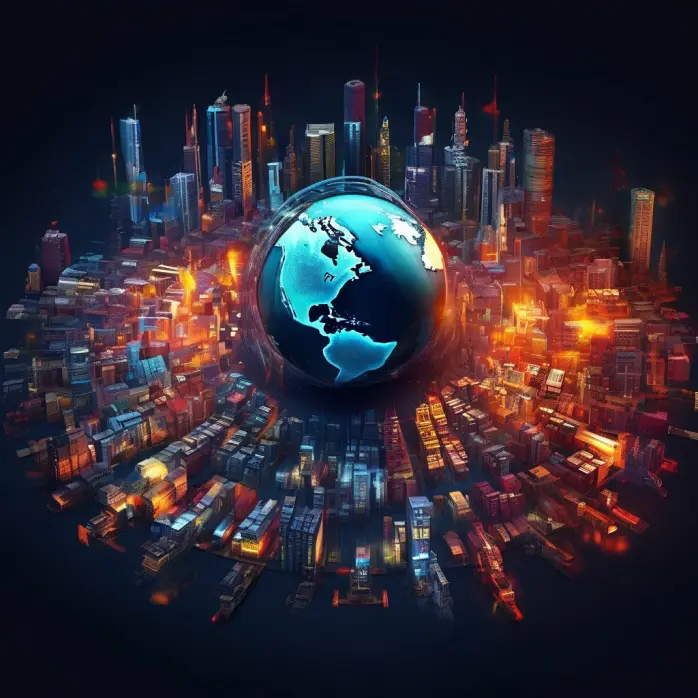
In this post I will talk about the benefits of free trade. I will give 10 reasons why free trade is good for countries around the world. So the reasons are: specialization, efficiency, price, consumption, trade promotes peace between nations, levels the playing field, innovative ideas and technologies, economies of scale, entrepreneurship and economic growth - we will look at all of these slowly. There are exceptions, so when we talk about free trade there are many different opinions, but let's step back from that for a moment, let's look at the rich regions. A few cities come to mind: Singapore, London, New York, Boston, Miami, Amsterdam, Hong Kong. And some poor regions that are cut off from the world by isolation: Congo, North Korea. The countries in the first list are famous for trading and having free trade policies, just look at the comparison of Hong Kong with mainland China before it became a quasi-capitalist country, compare North Korea with South Korea. The point is that if you trade, you will get rich, if you don't trade, you will be poor. I am not going to convince you of one or the other, I want to give, formulate and explain 10 advantages of free trade.
Specialization(1) in trade is lower opportunity costs and higher comparative advantage. What that means in plain English is that in Yalta we grow oranges and in Magadan we grow cold hard crisp apples. Of course Magadan could grow oranges if they wanted, they could build greenhouses and Yalta could build a special Arctic biodome to grow cold apples, but neither wants to do that because it's easier if everyone acts according to their comparative advantage. Notice I mentioned cities in a state and not countries, it makes little difference really, as long as cities trade with each other, and there is freedom of trade between countries. All these political boundaries are very fluid, they change. Countries wouldn't be as rich if they built walls around themselves and said they weren't going to trade with anyone. So specialization is reason number one. And the efficiency(2) of specialization, the efficiency of competition, competitive markets, that's reason number two. Competitiveness creates efficiency to reduce costs and use scarce resources efficiently. So efficiency is very important because it has implications not only for the efficient allocation and use of scarce resources, but also for the third reason, which is price gouging(3). Price gouging, competition drives prices down. That's something you can really get your teeth into. Efficiency may be an abstraction, but price gouging is something you can get used to, especially online. Who hasn't shopped online or browsed through services on the internet to find the lowest price on something? You're making a cost-benefit decision, whether to go to a particular store or just order online and have it delivered, and that's consumption(4), which is interesting because efficiency follows right after price, because they go hand in hand, and the fourth factor is consumption, and it follows naturally from specialization, efficiency, price. And consumption is what you and I are all about because we are consumers and through consumption each country gets access to goods that they wouldn't normally have based on the production possibilities frontier, countries get more variety and quality of goods. And variety is the spice of life. In a free market you can get anything you want, it's consistent with the level of consumption and the price that we expect to find. Lower prices and variety of goods, and the efficiency of production can create lower prices, which means that consumption becomes much greater and we as consumers enjoy all that variety of goods, and especially the inexpensive, high-quality, modern things that we can afford to buy. The point is that trade promotes peace among nations.(5) When you trade with someone you are less likely to dislike them if they put money in your pocket and bread on your table, if you have goods to sell you are likely to be more sympathetic to the person you are trading with. You see that they have a family, they have the same needs and desires, so better than armed defense of the country is free trade, because with free trade the barriers and the tensions are lowered, you start shaking hands with your neighbors, and then you realize that the tension and the fear go away. You can turn an enemy into a friend through trade, through the exchange of ideas, through cross-cultural educational enrichment. That's what free trade promotes: peace between nations. As soon as people start trading, one person sells something to another, a kind of friendly relationship develops. There may be hostility on some abstract political level, but there is no hostility between people, trade breaks down walls. Leveling the playing field(6) is factor number six. When you have monopolies setting and controlling prices, but when you have open markets and free trade, the power of monopolies is reduced or destroyed, and that is the great benefit of free trade, when single monolithic companies no longer control the market. Innovative ideas and technology(7) - number seven, and maybe this is the most important one, when ideas are exchanged and the world changes. Just use your imagination, what was impossible before is now possible, simply because you exchange ideas. When you have a problem that you can’t solve in your personal life or in the financial sphere, then you go and talk to a friend and he says, “Oh, yes, I had that problem before. And there is a solution to that problem.” In the same way, on a macro level, when countries change, ideas are exchanged, technologies are exchanged or traded, and as a result we all get richer, we get the eighth advantage, which is economies of scale(8). Economies of scale is the concept that companies take advantage of economies of scale on an international level, when people think about efficiency and lower prices, about infrastructure, the ninth factor of the free market kicks in, which is entrepreneurship(9). With entrepreneurship, you don’t necessarily have to go to work in a local factory or produce local goods for a local economy. You can do anything. You can import things from Germany and sell them in the Russian market. You can connect with people in Italy and do import-export. You can be an entrepreneur. You can sit at home. You can work in your garden. You can have your own business and do what you really love. The whole world will become richer, think about it, because there are companies, for example in the US, that are among the top ten, and the leaders of these companies, the founders of these companies, they are from other countries, and they are entrepreneurs. So entrepreneurship breaks down walls and creates ideas. And who knows where the world will go from here, maybe we will have a colony on Mars just by exchanging ideas, because no man is an island. Economic growth (10) is really a summation of the other points I have already made. You achieve long-term economic growth, not a temporary business cycle. It's not about pumping up the market, it's not about high stock market numbers, it's not about high real estate prices, it's about long-term economic growth that comes from hard work, efficiency, and the exchange of ideas. Isn't that the real purpose of economics? So I'll just list the top 10 benefits of free trade - specialization, efficiency, consumption, trade promotes peace between countries and levels the playing field between people, innovative ideas and technology, economies of scale, entrepreneurship, and economic growth - these are the top 10 benefits of free trade. Thanks for reading this post.
The wisdom of the crowd drives the economy. People don't usually eat concrete or try to flap their arms to fly; people are generally rational. Irrational people are not generally rewarded by society for their consistent irrational behavior in the marketplace. People are both emotional and rational, not perfectly, but collectively people act rationally. Otherwise, for example, they wouldn't hold a job for very long. Think about your job and your boss: you have to behave according to certain standards.
Free trade means that you grow apples and I grow oranges, and no one can stop us from trading.
Trade imbalances began with the collapse of Bretton Woods, the last semblance of anything close to a gold standard. The problem is monetary, not free trade. Free trade doesn't hurt a country, but discretionary monetary policy, where two countries use money as a tool to manage the economy, does.
The cause of economic imbalances is mostly monetary, not trade. Free trade simply gives us more choice.
Free trade causes change, and it is not always for the better for individuals. However, overall, the world is generally better off.
At least if free trade promoted world peace, it would be worth it, even if it came at a cost. Compare that to the cost of maintaining an army that consumes a country's resources. That's the benefit of free trade in the world.
Buy the author some crackers, let him get used to it!
Лучшие книги в жанре Экономика
Учебники по экономике - книги и аудиокниги
Author's video content.
In collaboration with CMCproduction & SmartREC video studios
https://www.youtube.com/c/ViolettaWennman
https://ok.ru/shipshard1
https://vk.com/shipshardvk
https://www.pinterest.ca/omegagirs/
https://dzen.ru/shipshard
https://t.me/shipshard
Publication in Russian on the Zen blog
https://dzen.ru/a/Zrehuj1uBwvrgs3R






