Publication in Russian on the Zen blog
https://dzen.ru/a/ZhadYrLEd3Gb4myL
The story of Aristotle and Phyllis is rarely told today, but it was extremely popular in the Middle Ages.
Phyllis rode Aristotle here, there and everywhere, from the backs of church pews to the bedrooms of private homes, from sacred places to secular ones. The saddled Aristotle was carved into column capitals, carved into fine ivory caskets, cast in bronze jugs, carved into blocks for woodcuts, and etched onto copper plates for engravings.
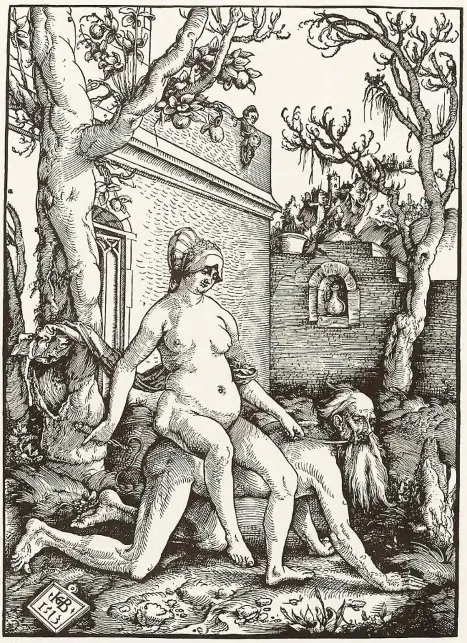

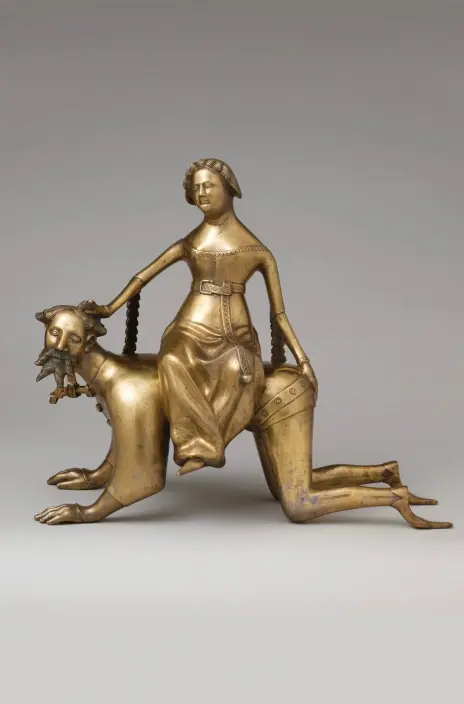
According to legend, Alexander the Great, a student of Aristotle, fell in love with a girl named Phyllis. Aristotle, concerned that Phyllis was distracting Alexander from his royal duties, advised him to spend less time with his love.
Offended, Phyllis decided to take revenge. The next morning she told Alexander to look out for her from the roof of the palace.
The philosopher looked up from his books to see a vision of beauty. Enchanted, he called her to him and begged her to be his.
Perhaps the story was so popular because its meaning was so variable.
It was susceptible to any number of contexts and interpretations.
For example, one of the first interpretations of the tale was a solemn religious tale that emphasized the dangers of pursuing philosophy without Christian faith, and another early version was the French fabliau, a genre of bawdy, silly stories that includes such brilliant masterpieces as "Berangier with a Long Ass" and " Turd.” This motif also served as a reference to chivalric romances and the ideals of courtly love.
Small ivory boxes exchanged between nobles as tokens of affection often featured carvings from sweet, tragic love stories (Pyramus and Thisbe or Tristan and Isolde) next to Phyllis riding Aristotle, as scenery and climax.
But it became widespread and is still known today, becoming a popular subject in Western European fine art.
On the other hand, the tale is often considered an example of a then popular genre called "Women's Power", which depicted wise or powerful men being defeated by women:
Judith beheads Holofernes; Delilah cuts Samson's hair; Eve tempts Adam.
In the Women's Power genre, the story of Aristotle and Phyllis has a close cousin in the story of Virgil in the Basket.
According to this legend, the great poet is crazy about the princess. He wanted to meet her for a private date and so he asked her to take him up to her room in the tower in a basket. The lady left him hanging halfway up the tower so that the whole town would laugh at him.
In medieval art, the Roman poet and the Greek philosopher often appear side by side, each trapped in his own stupidity.
The “Woman Power” trope was a reflection of the fears and anxieties of a controversial time. This was an era when the belief that women were inherently inferior collided with the reality of female rulers such as Queen Elizabeth, Mary Tudor, Mary Queen of Scots, Queen Catherine of Portugal and the Archduchesses of the Netherlands who dominated Europe.
To many, the idea of a woman in power seemed unnatural, a reflection of an upside-down universe. And Aristotle's own writings on the topic were often cited to support arguments for female inferiority.
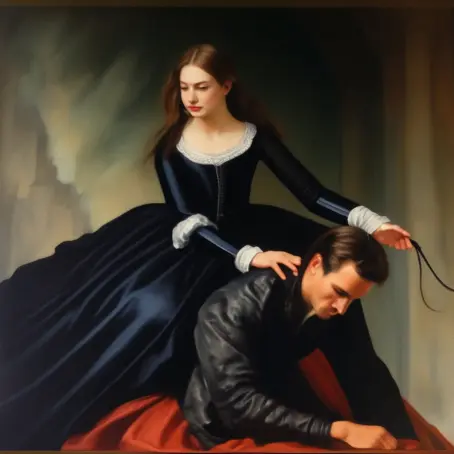
In 1882, Friedrich Nietzsche decided to stage his own version of Aristotle and Phillis. In the photograph, the philosopher and his friend Paul Rie stand like a plow in front of the cart, while Lou Salome swings a whip behind them. This is a retelling of medieval history, but rethought, transferred to a new era and carrying with it a load of new meanings.
Nietzsche, Paul Rie, Lou Salome (Version of "Aristotle and Phillis" from Nietzsche)
Author Ekaterina Sveshnikova
https://vk.com/english.rose








Author's video content.
In collaboration with CMCproduction & SmartREC video studios
https://www.youtube.com/c/ViolettaWennman
https://ok.ru/shipshard1
https://vk.com/shipshardvk
https://www.pinterest.ca/omegagirs/
https://dzen.ru/shipshard
Publication in Russian on the Zen blog
https://dzen.ru/a/ZhadYrLEd3Gb4myL