
We ended the last section in Europe where Napoleon was exiled to the isolated island of Saint Helena where he would eventually die. In addition, France would reintroduce the Monarchy following Napoleon’s exile, delivering a huge hindrance to the progress of the revolutionaries who sought economic justice and freedom in France and throughout Europe. However, we need to look back a few years to understand what was happening inside the newly formed republic of the United States.
When Thomas Jefferson entered his presidency in 1800, he walked into over $83,000,000 in national debt and knew the country’s economic system and the confidence of the American citizens could not handle much more. In order to avoid going into additional debt and garner extra revenue, Jefferson maintained neutrality in Europe and allowed trade with Britain and France throughout their armed conflicts. The only time Thomas Jefferson and the Americans interacted with Europe during the French revolution was in 1803 when Jefferson helped organize the largest land acquisition deal in world history for 15 million dollars, the Louisiana Purchase. With the new land, Jefferson persuaded Congress to fund large expeditions, including the Lewis and Clark expedition that led to many vital scientific and geographical discoveries for the United States. Another interesting side note is that in 1803 when James Madison was serving as Secretary of State, he was involved in a court case, Marbury V. Madison, that made its way to the Supreme Court and established the precedent of judicial review that is often the first American court case diagnosed in introductory law classes today.
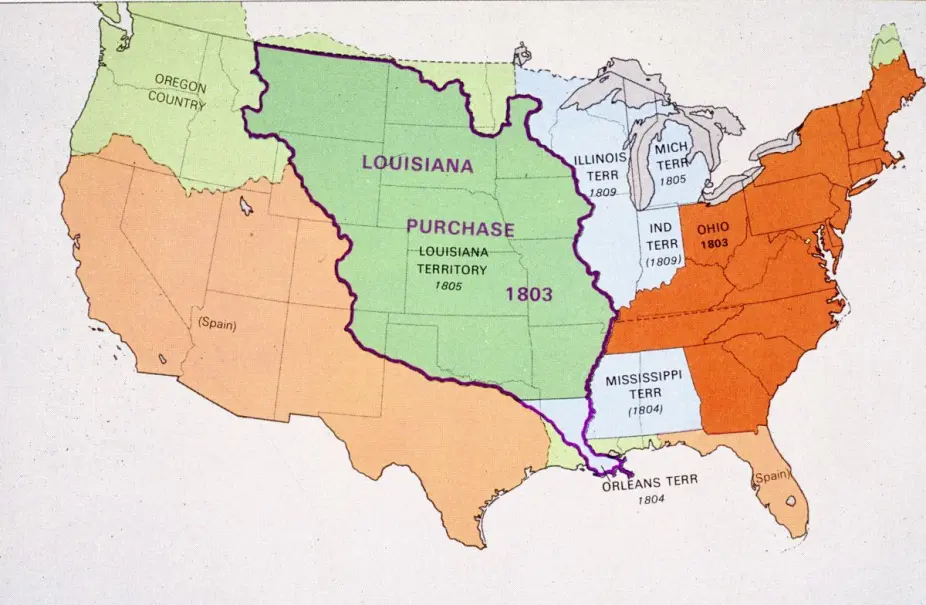
(https://www.history.com/topics/westward-expansion/louisiana-purchase)
With all of that in mind, when Jefferson stepped into office, he immediately began pushing for the replacement of Alexander Hamilton’s federalist stance on finance and government. To do this, he worked closely with a new Secretary of Treasury and Secretary of State, a Frenchman named Albert Gallatin and James Madison respectively, to remove unnecessary taxes, decrease spending on the military, remove policies that were obstructing the American economy, and even tried to start the process of removing guidelines that gave the First Central Bank immense power. Most of these policies were effective however during Jefferson's presidency the First Central Bank continued to print money because of special recommendations from Gallatin.
During the end of Jefferson's first term as President, his vice president Aaron Burr was becoming increasingly unpopular and at the start of Jefferson's second term was replaced with Democratic-Republican George Clinton (no relation to modern-day president George Clinton). Aaron Burr would eventually have an armed duel with Alexander Hamilton over their personal and political rivalry, where Alexander Hamilton would be shot and eventually die and Burr would go on a nation-wide chase until the prosecution was dropped.
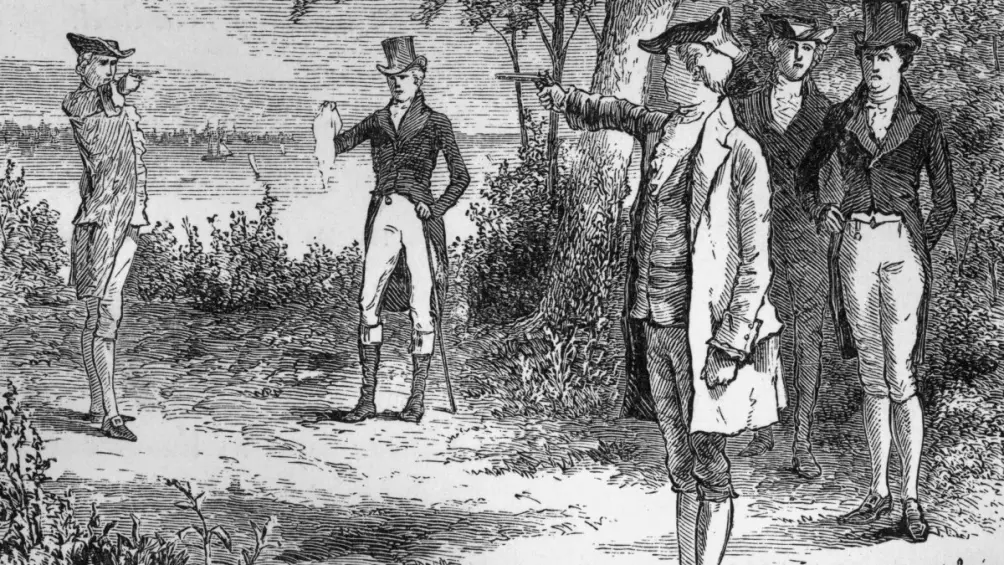
(https://www.history.com/news/burr-hamilton-duel-political-legacy-died)
With the tensions in Europe rising year over year, Jefferson was becoming increasingly scrutinized by European powers and domestic colleagues for his inaction. In an attempt to reconcile his popularity with the citizens of the US, he pushed Congress to vote on the Embargo Act of 1807, where trade would be halted with all foreign nations. This not only upset Great Britain and France, but many of the United States citizens, politicians, and Money Changers were fervently in disapproval of the decision, and Thomas Jefferson's popularity feel even more. The Embargo was so ineffective that only a year later, in 1808, the Act had to be lifted.
One of Jefferson’s policies ahead of its time was putting a ban on the international slave trade. In a public message to the citizens of the nation, he condemned the human rights violations that were occurring in the Triangle Trade and called on the criminalization of those who partook in the international slave trade. In 1807, Congress responded by passing the Act Prohibiting Importation of Slaves, which levied harsh penalties on violators.
Both of these policies led to Great Britain becoming increasingly dissatisfied with the United States Foreign trade policies. The British relied on the Americans in the International Slave Trade to continue the supply chain. Furthermore, the United States embargo severely hurt the British economy, because of the many resources and goods the British received from the growing republic. Britain was becoming more hostile to the United States, but they were busy fighting a war in Europe against France and had to ensure their domestic freedom wasn’t at stake. As a result, the Americans were able to avoid the military strength of the vast empire for the time being.
In 1809 Jefferson, keeping the tradition of Washington and perhaps sensing his health and popularity deteriorating, did not run for his third presidency. However, he did help move the nation forward in many ways. Jefferson helped sponsor the open-minded treatment of people with his views toward the international slave trade and Native Americans. Furthermore, he made strong efforts at reducing the national debt and when he left office the mark was just over $50,000,000. Nonetheless, the country had to move forward and the United States would have another chance to vote in two new candidates that would lead them forward through the unknown and serve the people as the President and Vice President of the United States
The choices were between James Madison who was Jefferson’s Secretary of State, George Clinton who was the vice-president and James Monroe who was the former ambassador to the United Kingdom. After the polls were taking and political rivals were at each other throats, James Madison would win the election and become the 4th president of the United States, with George Clinton being the runner up and serving again as Vice-President. During Madison’s first term as president, something very important was occurring, the charter of the First Bank of the United States was scheduled to run out in 1811 and the Money Changers were starting to devise plans to keep the privately owned, government-sanctioned central bank operating, as it was in their best interest to continue the printing of money.
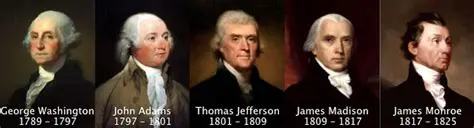
The Central Banking system of the United States was amassing to become a large topic of debate in political forums and throughout the country. Democratic-Republicans like Jefferson and James Madison were strongly against the idea and would do everything in their power to ensure the power of issuing money was not controlled by wealthy foreign and domestic powers.
As a result, the charter of the First Bank of the United States ran out in 1811 and the bank was sold to a Money Changer named Stephen Girard.
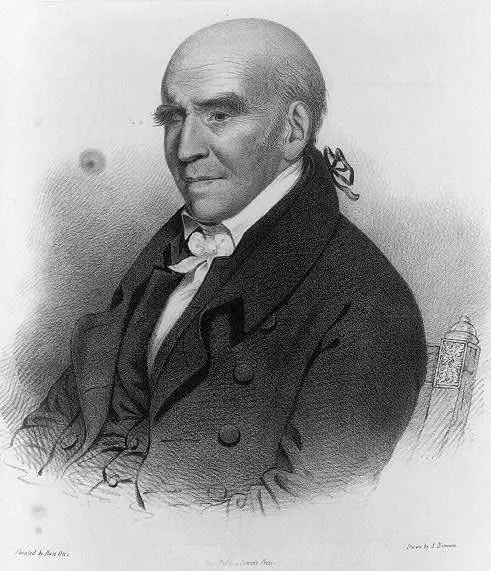
(Newsam, Albert, 1809-1864, lithographer)
Stephen Girard was born in France as the oldest of 14 children and in 1760 immigrated to New York in the United States as an adolescent where he would begin working as a trader on ports that would sell goods around the world. Girard slowly worked up the system and eventually became a Captain of a shipping vessel. Moreover, Girard would go on to buy up large collections of cargo ships during the following years and his business would benefit from the many wars that would occur over the next 40 years including the American and French Revolutions. One of his most successful endeavors was taking economic control over the production of the Caribbean, during the Haitian and Saint-Dominque revolutions against France. Girard was known to build his wealth from the slave labor of those nations and the wealth he amassed from his international trading and shipping businesses was so great, he was able to single-handedly purchase the First Bank of the United States when its charter ended in 1811. a year later in 1812, Girard officially reorganized the bank under his private and direct control naming it the Girard Bank.
Shortly after the dissolution of the First Bank of the United States, Great Britain began to ramp up their pressures on the United States' international trade. Now that the conflict in Europe against Napoleon had died down, it gave the British Empire an opportunity to focus more of its resources on the United States. British ships began to seize American vessels that were delivering cargo to Europe and forcing the sailors onboard into servitude for British nobles. Furthermore, the British were forcing the Americans to dock at United Kingdom ports to pay an extra tax before delivering their goods to the rest of Europe and being taxed again when they entered the destination country.
Many Americans begin to look at these actions by the British as a threat to their freedom and a downplay to the recognition of their new nation, so Money Changers and citizens began openly advocating for war. After the tensions reached a tipping point, the United States Congress officially declared war on Britain in the War of 1812. The leading causes seemed to be the American's decision to not renew the charter, the economic embargo, and the prohibition of the Triangle trade from the Americans, which were stifling the British economy and resulted in Great Britain escalating their hostilities toward the US.
Once the media channels got a hold of the British response, they began continuously printing newspapers and spreading them across the new nation in hopes of attaining support from the citizens. Once the government and Money Changers garnered enough support from the people, Congress officially declared war.
James Madison oversaw this war that lasted from 1812 to 1814 between Great Britain and the United States and saw the burning down of the newly relocated White House in Washington D.C. To this day historians debate the different possible origins and causes of the war, but overall agreement revolves around a combination of economic and territorial factors we discussed leading to the United States and Britain engaging in armed conflict.
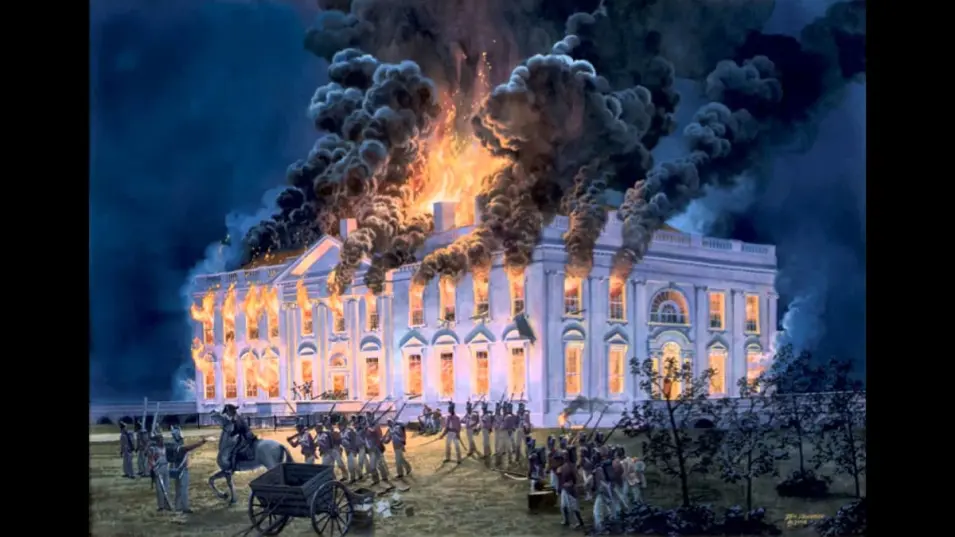
(https://www.history.com/news/the-british-burn-washington-d-c-200-years-ago)
An additional cause that’s often cited is the United States' desire to liberate and conquer Canada. Many of the land battles occurred near the Canadian border but overall, there was no change in territory. That pretty much summed up the entire war, there were no specular battles, no changes in the territory, and very little changes to policy and relationships. The only thing that did change was the debt for Great Britain and the United States greatly increased, the Native Americans who lived in the battle zones were decimated and the Money Changers were able to increase their profits risk-free.
The Girard Bank in the United States and the Barings in England were the two of the many funders of the US in the war. On Girard’s behalf over $1,000,000 in loans were made to the US government that was to be paid back on top of interest. The Barings bank, who had a branch in the United States, but we're headquartered in London, were also major funders in the American war effort which helped the Barings become “the sixth great European power” behind the prevailing nations of England, France, Prussia, Austria, and Russia by 1818 (Aguilera, Kristin, 22 January 2013).
So why would the countries face off in war if the only change would be the Money Changers increasing their profits and revenue? Well, imagine your emotions and the way you would be feeling during this time period if you woke up in your town in the United States and were reading the propaganda being portrayed in the newspaper, which was the only real form of widespread information sharing at this point. After a brief search for newspaper articles around the War of 1812 on Google, I quickly found an overwhelming number of newspaper headlines relating to the event. Therefore, it’s fair to assume one of the main causes of wars, in general, are the citizens of the nation falling into the trap of media propaganda that is being depicted by the government, without having any integrity to find the truth.
In general, people don’t want to go to war, they have a biological, social, and economic incentive to be at peace domestically and with people in foreign countries. Unless their living conditions or safety are being severely harmed, populations do not choose violence. Julian Assange, the founder of Wikileaks, puts it this way,
“One of the hopeful things that I have discovered is that nearly every war started in the past 50 years has been a result of media lies. The media could have stopped it if they searched deep enough if they hadn’t reprinted the government propaganda, but what does that mean? Well, that means basically populations don’t like wars and populations have to be fooled. Populations don’t willingly and with open eyes go into war, so if we have a good media environment then we also have a peaceful environment.”
What Assange is saying is very important and relevant to the War of 1812. The results of the military conflicts led to no change in territory, foreign policy, or any major changes between any of the nations involved. The people within each country felt virtually no change.
By 1814, the Treaty of Ghent was signed, which put an end to the War of 1812 and the citizens in the respective countries continued on with their lives, except for the deaths of their family members and their assets decreasing. The United States had conducted an entire war without the use of a central bank, but their debts were steadily increasing and inflation was beginning to catch up with its economy. The Money Changers had to orchestrate another plan to take back control over the economy and instill confidence in the worldwide economies that the United States was a power that would be here to stay.
It’s as clear looking at events in retrospect as it is analyzing them today; Money Changers use manipulation and fear tactics to trick the populations into believing war is necessary, so they can fund and profit from the military production and loan out money to the most risk-free source of income in the world, a government, the establishment that creates the laws of the nation that the citizens are bound to abide by, or else they will be forced to imprisonment or death. Furthermore, these catastrophic events, allow the Money Changers to take advantage of volatile conditions in society and the markets. While everyone is panicking and selling their assets at a markdown just to make it by, Money Changers stand at the ready to use their reserves to buy up all the land, commodities, and stocks at a huge discount.
The story of the Money Changers continues, next time we will go into more detail about the banking families responsible for creating the Second Central Bank of the United States, which was created only two years after the War of 1812 had ended, and others to discuss more important concepts that are still relevant today.
To read more go to TheMoneyChangers.Org
Or join the Discord and help grow a community of financial thinkers.






