
The official story of the Monero's privacy architecture rests on four main layers. Each of these targets a different place of information that a public blockchain would otherwise expose. These mechanism are not redundant, each one closes a privacy gap that others leave open.
1. Ring signatures
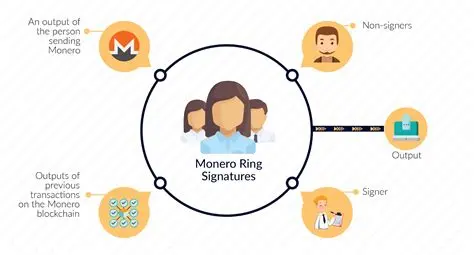
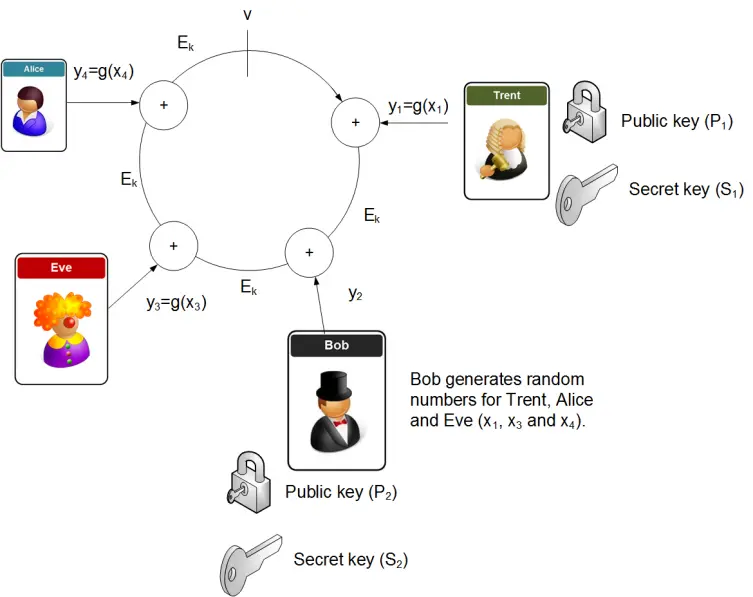
The first one is the ring signatures layer. When you send XMR, the transaction is grouped with 15 decoys from the blockchain into a ring of 16. An observer sees 16 possible senders but cannot determine which one is real. In fact, the observer cannot tell which of the possible signers in a signature group belongs to your account. A very important mention - ring signatures alone don't hide the amount or the receiver.
2. Stealth addresses
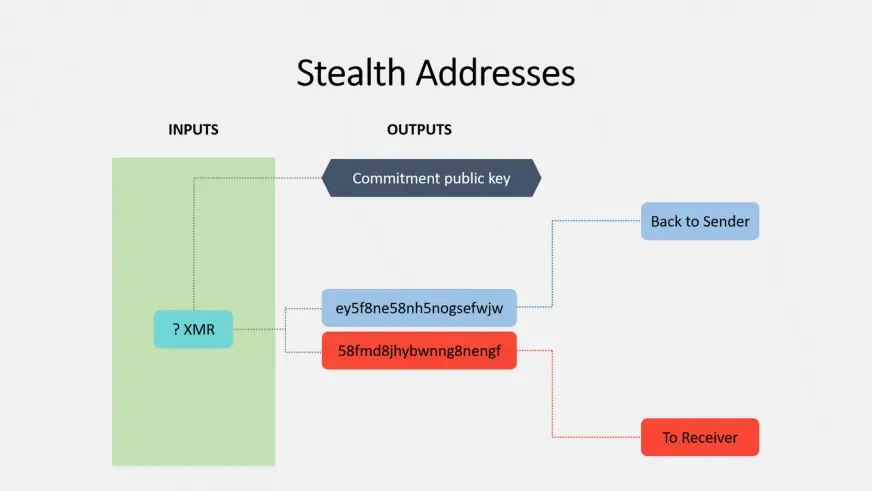
Stealth addresses are random and one-time-use addresses for each transaction, created by the sender. The recipient scans the blockchain with their private view key to detect incoming funds, then uses the private spend key to access them. So, this kind of dual-key system adds layers of separation and prevents address reuse risks, enhancing fungibility by preventing taint from previous transactions.
3. Dandelion++
Dandelion++ operates at the network layer. The main task is to obscure which IP address first broadcast a transaction. It sits outside the on-chain protocol. Without this, no matter if the transaction is cryptographically hidden, the ISP(Internet Service Provider) or a network criminal could link a transaction broadcast to the physical location.

4. RingCT (Ring Confidential Transactions)
RingCT shields transactions amounts from outside parties - only the sender and receiver know the amount sent. But since the amounts are hidden, the network uses arithmetic to verify the sum of all inputs equals the sum of all outputs, without knowing the specific values.
All these layers increase the cost and difficulty of attribution significantly, but metadata and operational breaches can reduce anonymity. In fact, the privacy of Monero is guaranteed only if the OPSEC is impeccable.
The American blockchain company, Chainalysis, cracks the privacy this myth. A leaked video from 2024 revealed that Chainalysis has been tracing Monero since 2021, using malicious nodes to capture users' IP addresses and link them to transactions.
Moreover, a real hacker got caught when converting ransom money to Monero, identified with Binance's KYC records. So, the exchanges are the real killers of anonymity. The KYC identity ruins any anonymity process. 73 crypto exchanges delisted privacy coins in 2024. Binance, Kraken, OKX, Coinbase Huobi or Bitstamp all removed or restricted Monero over compliance and traceability concerns.
Can we go back in time? YES!
Old transactions are exposed forever. Vulnerabilities can be exploited retroactively - most Monero transactions before February 2017 had fully deductible mixins.
The code seems solid, but the human error is inevitable.






