
Abu Hamid al-Ghazali (1058-1111)
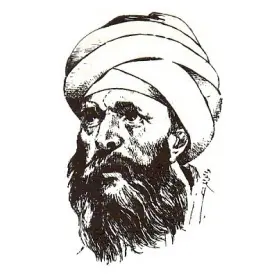
- Arab scholar, philosopher
- His description of the evolution of markets through voluntary exchange is remarkable. How market link and coordinate economic activities with the evolution of specialisation and division of labour?
- his emphasis on ethics and morality of economic activity, emphasis on the moderation and avoidance of excess accumulation of economic activity, the importance of charity and welfare, and he believed that everyone has the responsibility to the deprived and less fortunate people to obtain the basic needs for life
Saint Thomas Aquinas (1225-1274)
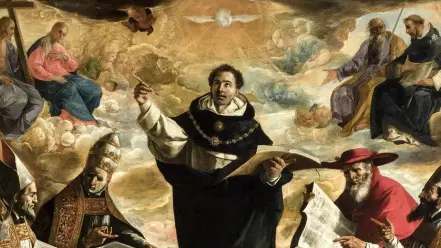
- A medieval theologian and philosopher
- “ Summa Theological”
- Among the most influential: are the theory of private property, the theory of the just price, and the doctrine of usury. An individual has the right to private property but this right was not absolute and must be balanced against the needs of the common good
- he believed that economic activities must be guided by justice and fairness,
Ibn Khaldun (1332-1406)
- Tunisian historian and philosopher
- “ Al-Muqaddimah” analyzes economic issues like the danger of monopolies, the benefit of division of labour and the profit motive, and the rise and fall of economic empires
- he believed that economics is inherently unstable and subject to rise and fall,
- Divided economic activity into two categories: Asabiyyah - refers to group solidarity and social cohesion which are important for economic development and RIda which refers to contentment and complacency which he believed to lead to economic decline.
- he also recognized the regulation of Government economic activity and promoting the common good
Mercantilism:
- The economic literature and practice between 1500 and 1750
- During this period both the quantity and quality of economic literature grew
- it is an economic theory which beliefs in building national power through the accumulation of precious materials, especially gold and silver. The primary goal of mercantilists is to accumulate as much gold and silver. Thus, to accumulate more, it emphasises positive international trade.
- Mercantilism is the period in history when colonialism was practised. Colonies are the best source of the raw materials and the marketplace for the finished goods which generate wealth.
Father of modern Economics (classical)
Adam smith
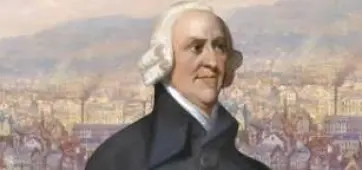
- Scottish thinker !8th century
- “wealth of nation”
- First, one to do a methodical study;
- Before him the study of economics was focused on how economics works, Adam Smith made the change of focus to how the economy should work.
- Advocating free trade, freedom for everyone to produce goods, sell anything or buy anything. Therefore, national and international trade must be free
- Humans also promote self-interest. The actions of the activities are guided by the invisible hands. Thus whatever policies government makes people watch them and works to get profit from them.
- Competition in the market is self-regulating hence; government must not take part in the market. No, interference from the state, no taxes, and no barriers leave the market aloof.
- Finally, achieve social and economic stability that led to prosperity
T.R. Malthus
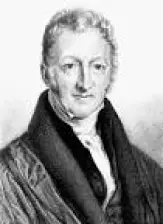
- “an essay on the principle of population” 1798
- focused to constrain capitalism, how to limit the growing demands of the middle-class people
- Malthus predicted that the growing population would outstrip the food supply. Malthus argued that the population grows exponentially, while food production grows only linearly. He didn’t see the technological innovations, these innovations with the increase in population increase productivity. there will be an equilibrium between population and productivity
- Till now, the economy was focused on the demand-supply side now with Mathus, there aroused a new concept of scarcity of food in economics.
Karl Marx
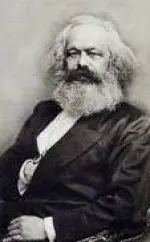
- The increased focus on scarcity led Marx to declare that production was the most important component of any economy
- Marx took further his idea and became convinced a class war was going to be sparked by the inherent instabilities he saw in capitalism
- Marx underestimated the flexibility of capitalism
- Business grows larger and more powerful to the degree that free market capitalism allows:
David Ricardo:
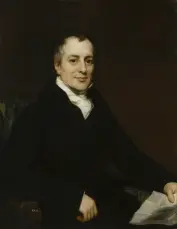
- “Principles of political economy and taxation” (1817)
- Comparative advantage theory: countries can benefit from international trade by specializing in the production of goods for which they have a relatively lower opportunity cost in production even if they do not have an absolute advantage in the production of any particular good
- The labour theory of Value: The value of a good could be measured by the labour that it took to produce it
- Theory of Rents: Benefits that accrue to the owners of assets solely due to their ownership rather than their contribution to any actual productive activity.
Marginal Revolution
- Economics turned their attention to more specific questions about how markets operate and how market prices are determined. Now the focus is on an individual unit
- Marginalism: if I am producing goods, I add one unit more to it what is the cost?
Mathematical economics: Speaking in Numbers
- Walras went on to mathematize his theory of marginal analysis and made models and theories that reflected what he found
- General equilibrium theory came from his work, as did the practice of expressing economic concepts statistically and mathematically instead of just in prose
- Alfred Marshall took the mathematical modelling of economies to new heights.
Keynes and Macroeconomics:
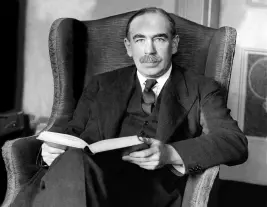
- He believed that their theories might apply to individual choices and goods markets, but they did not adequately describe the operation of the economy as a whole
- He presents the economy in terms of large-scale aggregates like the rate of unemployment, aggregate demand, or average price-level inflation for all goods
- Government must interfere
Neoclassical Synthesis:
- By the mid-20th century, these two strands of thought- mathematical marginality microeconomics and Keynesian macroeconomics- would rise to near-complete dominance of the field of economics throughout the western world
- This became the neoclassical synthesis
- Within the neoclassical synthesis, various streams of economic thought have developed, sometimes in opposition to one another
- The inherent tension between neoclassical microeconomics: which portrays free markets as efficient and beneficial and – Keynesian macroeconomics: which views markets as inherently prone to disastrous failure
Behavioural Economics:
- Classical economic theory and theory of markets, from smith through Friedman have rested largely on the assumption that consumers are rational actors who behave in their own best interest
- Current economists such as Richard Thaler, Daniel Kahneman, Gary Becker, and the late Amos Tversky, have shown that people often do not act in their own best material interests but allow themselves to be persuaded by non-material, psychological factors, and biases.
- Economics and psychology are brought together






