
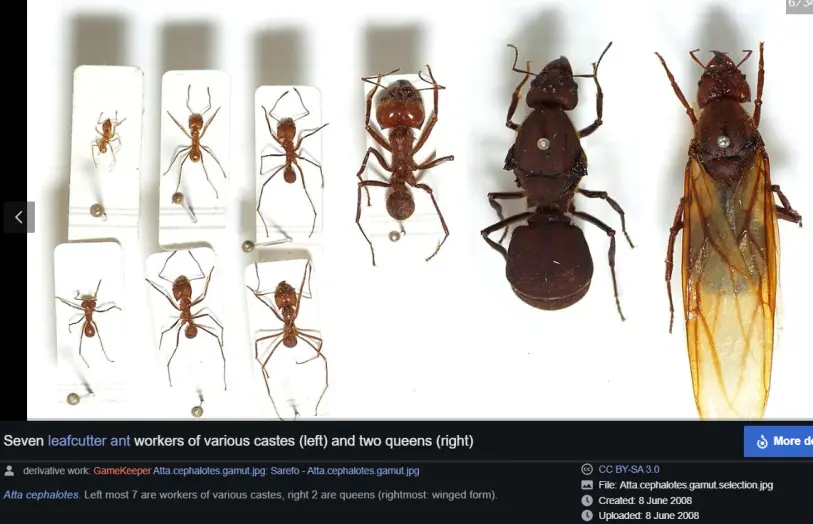
Have you noticed that insects are getting bigger? I have noticed this for over 30 years of observing them passively in Midwestern USA. Believe it or not, an ant queen can live for multiple decades, which means that there could be an ant somewhere that is older than you. Even so, just some tens of minutes ago I saw an ant that is at least the size of a wasp, earlier today a wasp the size of a dragonfly, and I only ever recall seeing wild ants or hornets being that large when I tried to steal some persimmons from a monastery. Despite me thinking that there were plenty of persimmons on that tree, the giant hornets that lived there did not agree and stung me in the head. It felt really weird for a while, possibly poisonous, but it was fine. For reference, queen bees typically only live up to around five years and wasp/hornet queens only one.
I also noticed this year that there appear to be fewer female mallard ducks than males in my local ecosystem, which I had never noticed before. It's easy to tell them apart, so you can observe them in courtship behavior. Even if both adult sexes looked the same, you might be able to tell which ones are female because many males appear to flock around the females. On a walk, I observed a third-wheel male mallard pursuing a couple and kind of felt bad later for not shooing it away, but that also might have been gay so I slightly wish I had known more about their relationship. I am not gay and I think I'm proud of that. On the other hand, maybe that's why I haven't mated as many times as that one duck may have so that's why I don't know. Maybe Ferdinand & Magnus von Wright noticed the same thing in 1853.

I am also certain that our endocrine systems are being bombarded with Bisphenols, and their presence may correlate with transsexuality because they interact fairly strongly with androgen and estrogen receptors.
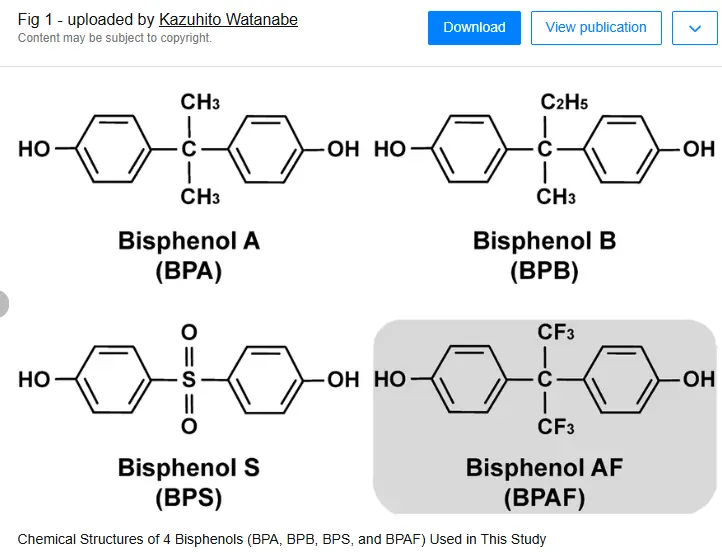
Bisphenols are basically the ink that is on the receipt paper instead of in the printer that make thermal printing work, which is kind of disgusting. While people were complaining about BPA in our aluminum cans, it rubbed off onto our skin nearly every time we touched a receipt too, especially if we had been using hand sanitizer more often or something... So yeah, that kind of makes sense. Of course, there is a chemistry book full of other toxins in urban and even rural environments, so we probably shouldn't give all the credit to the bisphenols.
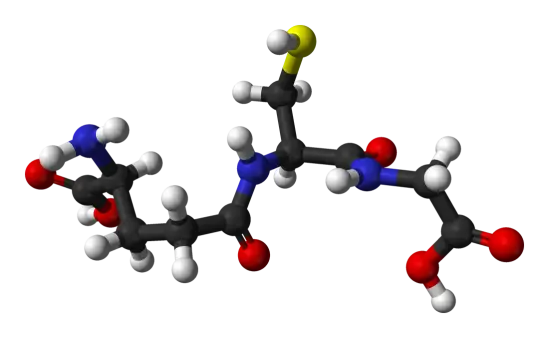
I more recently used to think that I shouldn't supplement so much to let my body deal with things on its own, but I'm also not sure of that due to the number of toxins that exist passively in our space (which is often large). I take 1 gram of Vitamin C pretty much every night and that might not be ideal, but it seems to help me. On the other hand, that could be because I trained my body to use it over several months to a year. The idea, though, is that ascorbate/DHA (which is not docosahexaenoic acid in this case; actually dehydroascorbate) is a tightly regulated redox-couple within us. It is a non-specific redox buffer system related to glutathione. Glutathione is arguably the most important peptide in humans because it is our endogenous redox buffer. I have more recently started taking up to 10 grams of glycine per day, but usually more like 5 grams or less. Glycine is a major precursor amino acid to peptides, proteins, and also a neurotransmitter. Glutathione is composed of amino acids glycine (the simplest), cystine (the Sulphur), and glutamate (the propyl carboxylic acid). Selenium and Molybdenum are also involved in sulfur metabolism, which is among the things at the heart of maintaining homeostasis.
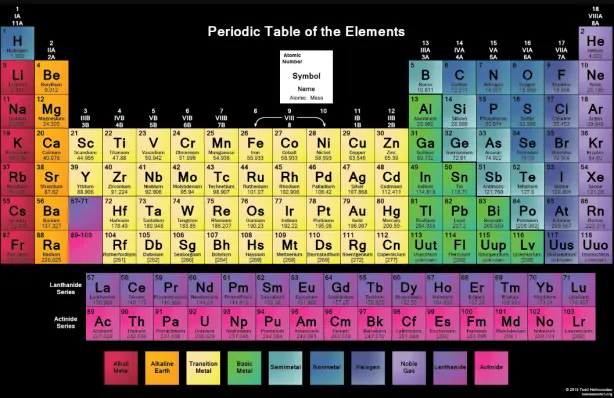
Lithium has been thought of as a pharmaceutical for decades, but it's actually a mineral in the same column as Sodium and Potassium, and also the third lightest element on the periodic table with 3 protons and 7 or 6 total nucleons (atomic mass units). Solanaceae like peppers, potatoes, and tomatoes can be pretty good sources of lithium (<0.1 mg/100 g), but the amount in food ultimately depends on the amount in the soil and water that grew the food. Some humans set a reasonable daily intake of lithium at 1 mg Li/day. Of course, this is in the form of the Li+ cation, just like sodium (Na+) and potassium (K+). For reference, though, the recommended daily intakes (RDIs) for sodium and potassium are on the orders of 1 and 2 grams, respectively, which is at least 1000x more than 1 mg by mass, but only 300-400x by number of ions.
Anyway, I had an idea for this but I wrote a lot of other stuff, so that's enough for now... I'd have done a better job citing sources, but I'm not being paid... Unless... 😏






