The Common Buzzard (Buteo buteo Linnaeus, 1758), also known as bozzago, bozzagro, bozzegro, buzzago, buzzagro or abuzzago, is a bird of prey in the family Accipitridae. Its range covers most of Europe and extends to Asia. It lives in all but the coldest areas. He prefers woods and hunting in open territories. Its prey is generally insects and small rodents.
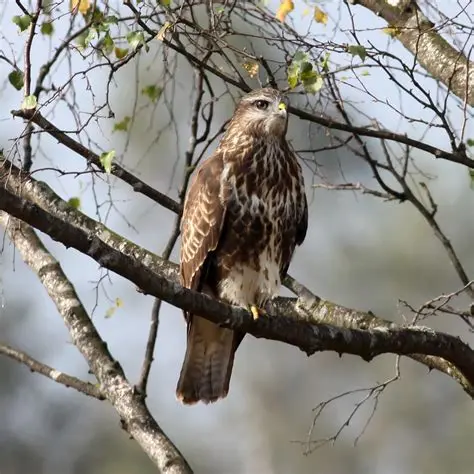
It has a length of between 51 and 57 cm with a wingspan of 110 to 140 cm while its weight is between 520 and 1000 g for the male and 700-1300 g for the female. The colorite is dark brown superiorly and very variable inferiorly; usually the lower surface of the wings is slightly barred brown with dark spot on the wrist and shaded light area in the center, while the tail has numerous thin dark bars.
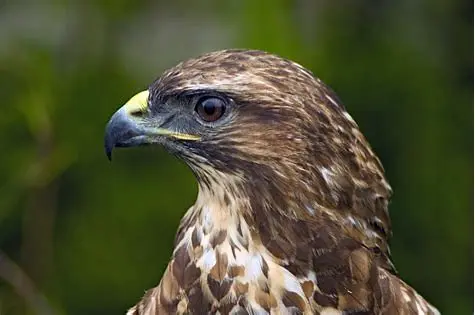
The cram builds a single nest on trees and isolated rocks (in rare cases, even on the ground). The female usually lays 2 or 3 (more rarely 1 or 4) eggs in the nest between March and May. Eggs are white with gray or brown spots. Brood usually lasts 34 days, and alternates with both males and females. The young remain in the nest for the next 40-50 days.
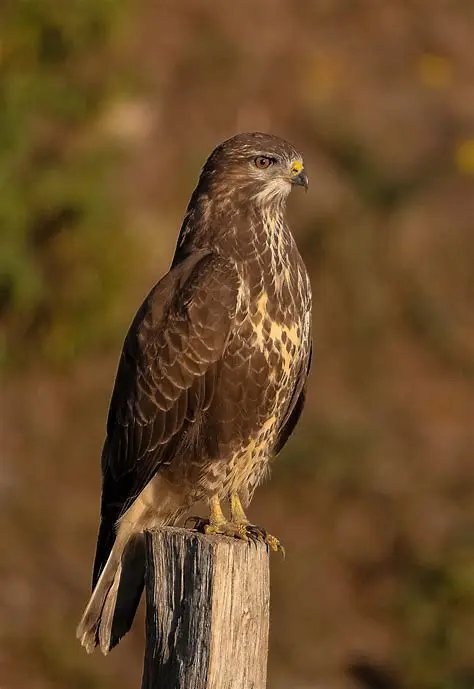
The restoration of the number of poianes is a clear sign that the species is well protected and is not at risk. In the past he was a victim of pesticide poisonings and herbicides released into the soils from which he hunted prey (as well as poachers). Its presence is also a good environmental indicator because it restores the environmental ecosystem by occupying the ecological niche of dominant predator of the food chain.





