
Symbol Si and atomic number 14 identify the element Silicon in the periodic table. It is a semimetal and a semiconductor. Less reactive than its chemical analogue, carbon, is the second most abundant element in the earth's crust after oxygen, making up 27.7% of its weight.
In its crystalline form, silicon has a gray color and metallic luster, but its color can vary. Although it is a relatively inert element, it reacts with halogens and diluted alkalis, but most acids (except hydrofluoric acid) do not affect it.
Silicon is an intrinsic (or pure) semiconductor and can be doped with arsenic, phosphorus, gallium or boron to make it more conductive and use it in transistors, solar panels or solar cells, and other semiconductor equipment, which are used in electronics and others high-tech applications.
Applications of silicon compounds:
- Silicon dioxide (or silica) in the form of sand and clay is an important ingredient in cement and brick.
- Silica from sand is a major component of glass.
- Silica and silicates are the basis of the refractory material used in insulation for high temperature production, and silicates are used in the manufacture of glazes and earthenware.
- Silicon carbide, also called carborundum, is one of the most important abrasives.
- Silicones are flexible compounds containing silicon-oxygen or silicon-carbon bonds; they are widely used in the form of gum gels, adhesives, breast implants, contact lenses and more.
- Hydrogenated amorphous silicon has shown promise for the production of low-cost solar cells and electronics.
The giveaway
After days of evolutions and experiments a little normality is needed.
This giveaway returns to the classic mode: the first 50 to comment on the article with their wax address will receive NFT as a gift.
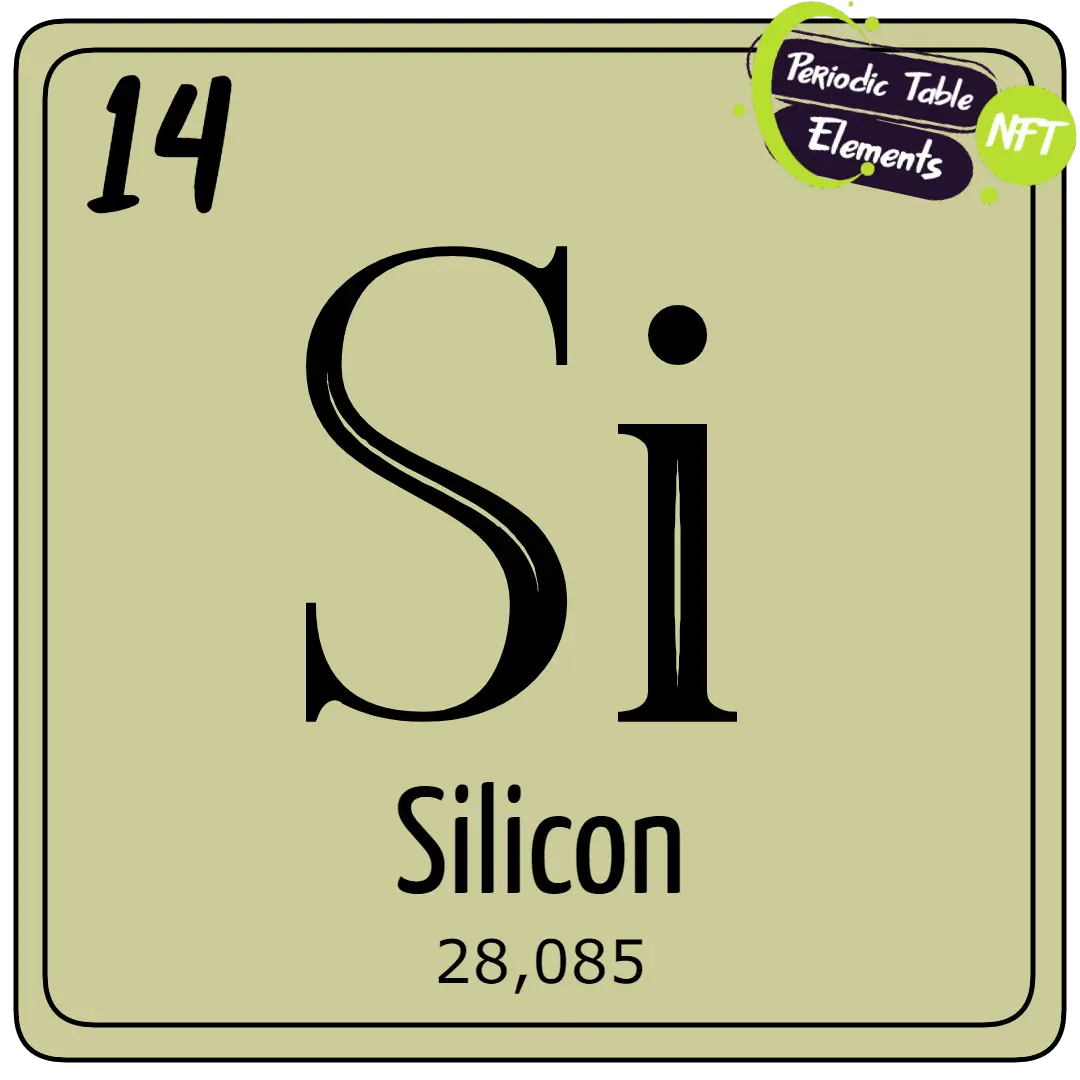
The Periodic Table NFT project
The Periodic Table NFT project aims to raise awareness of chemical elements in a modern key, basing the approach on blockchain and Non Fungible Token.
Day after day it will be possible to know the single elements that make up the table, to collect curiosities about each of them and about the table in general.
We are working to be able to learn, in a playful way, also what happens by combining the various elements.
The whole project is based on the collection of NFTs that can be bought on the site https://wax.atomichub.io/market?collection_name=periodicelem&order=desc&sort=created&symbol=WAX or by participating in simple giveaways published on publish0x.
Elements released
- #1 Hydrogen (max supply 200)
- #2 Helium (max supply 200)
- #3 Lithium (max supply 200)
- #4 Beryllium (max supply 99)
- #5 Boron (max supply 99)
- #6 Carbon (max supply 200)
- #7 Nitrogen (max supply 200)
- #8 Oxygen (max supply 299)
- #9 Fluorine (max supply 149)
- #10 Neon (max supply 200)
- #11 Sodium (max supply 299)
- #12 Magnesium (max supply 99)
- #13 Aluminiun (max supply 299)
- #14 Silicon (max supply 200)






