
You probably are looking to start mining your first cryptocurrency and came across the term “mining pool”. If you are wondering why you should share your hard-earned mined coins with some mining pool then this article is for you!
Here I will cover why mining pools are important and the different types of methods they operate under.
What Are Mining Pools?
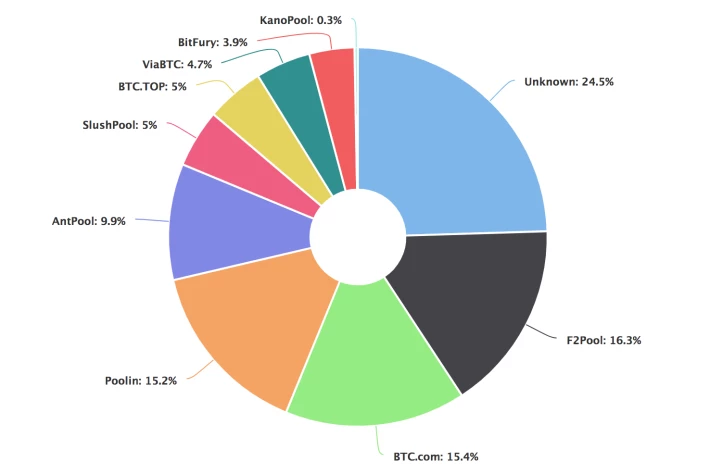
A mining pool is basically just a pooling of resources by miners who come together to share their hashing power. The entire idea of pooling together resources is to grant them more consistent results for the miner and to reduce the volatility on their returns.
If the mining pool that you are mining upon finds a block, you will receive a share of the block reward according to how much hashing power you contributed and the type of payment structure the mining pool operates under (don’t worry, I cover these below)!
The mining pool acts as a coordinator for all of the members that are mining together. The pool will manage each miner’s account and log how much hashing power each miner contributes. If the pool finds a block, the mining pool will automatically distribute the shares amongst the miners within the pool according to their contribution. The payments are then usually held on an account in the pool until a payout is made by the pool operator which typically occurs daily (depending on the pool).
The pool operator will generally be a miner themselves and will also take a small fee for their service from each miner to make their venture profitable.
Why Do You Need Them as an Amateur Miner?
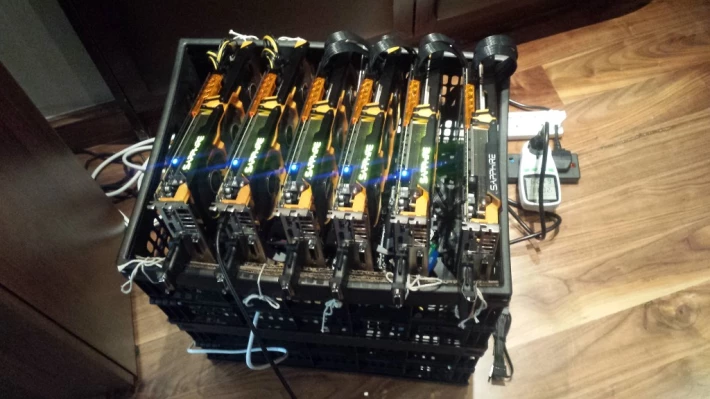
There are a host of reasons as to why you might need to use a mining pool. The main reason is the fact that if you do not have advanced hardware, your hashing power will be very little which would result in a very unprofitable mining operation.
You have to remember that mining involves 2 different processes and these occur simultaneously after each block is found. One of the processes is releasing new coins into the economy after each block is found. The other process is verifying and facilitating the transactions that are piled up in that specific block.
You see, the entire mining process is designed in a way that makes it more difficult to mine as more miners enter the network. As the ‘difficulty’ rating climbs for a specific coin, you will have less of a chance of finding a block on your own and will need to contribute your resources to a pool to receive more consistent results. However, if you choose to pool your resources with other miners in a pool, you will increase your chances of finding a block and still receive a payout that is proportional to your contribution.
Pros & Cons Of Pool Mining
Pros -
- It provides a more consistent revenue stream for those without powerful hardware.
- Anybody can join a pool with no minimum hashing rate required.
- Set up and go - no need to worry about maintenance.
- The pool will handle all network upgrades and syncing to the blockchain.
- Mining pools are particularly great for POS (Proof-of-Stake) coins as the block reward winner is based on the number of coins “locked up” for staking.
- Some mining pools have backup “pools” to switch to if they are attacked.
Cons -
- Mining pools are susceptible to downtimes in which miners make no profit until the pool operator fixes the issue.
- Some mining pools receive regular DDoS (Distributed Denial of Service) attacks to hinder the pool’s reputation and profitability.
- Mining pools can be attacked from outside attack vectors who aim to steal the newly coins mined on the pool.
- There is always a fee when using a mining pool.
Mining Pool Methods
The payout structure for every mining pool is different. This is all dependent on the pool operator and what type of coin they are mining. It is extremely important for you to understand each method to understand how much you can be expected to receive when the pool finds a block! There are some complex formulas here, but I have done my best to simplify this as much as possible.
Pay-Per-Share - PPS
This method involves removing the variance in a miner’s payout as the pool operator absorbs all of this risk. We have to remember that mining has a variable known as “luck” in which any miner (pool or individual) can actually find a block regardless of their hash rate, However, statistically, over a long period of time, this variance (luck) should even out to provide a payout that results according to the miners hash rate.
You can think of the mining process as a lottery. Let’s say that the entire hash rate of the entire network is 100 TH/s and the mining pool provides 10 TH/s to the pool. This would mean that they are providing 10% of the overall hash rate which should result in the pool finding 1 block out of every 10. Sometimes the pool may get lucky and find 2 blocks in 10 (or unlucky and find 0 blocks). However, over a longer period of time, this should even out to the corresponding 1 in 10 blocks found.
In the PPS method, the miner is always guaranteed a payout for their contribution to the pool based on the probability that the pool finds a block. Even if the pool doesn’t find a block the miner will be paid corresponding to the hash rate they provide and the pool operators absorb this risk. The payout is typically made from the mining pools existing balance and they are able to withdraw their payouts as often as they would like to.
This type of pool mining method removes the element of “luck” from the miner’s shoulders and places it onto the pool operator. For this reason, only large mining pools can offer this type of structure as they would need to have reserves of cryptocurrency to pay miners if they do not find blocks.
This type of method is particularly suited to Proof-of-Work (PoW) type cryptocurrencies.
Proportional
In this method, miners will continuously receive “shares” as they contribute to the pool hashing rate. The miner will continue to receive shares up until the moment that the mining pool finds a block, at which point the miner is then paid out proportional to the number of shares that they hold. It is important to note that miners can only collect shares during the current block. Once a new block is found, the share count will reset.
Pay Per Last N Shares (PPLNS)
This method is pretty similar to the proportional method, however, in the PPLNS system, the miner will continue to receive shares until an actual block is found (rather than being constrained to the number of shares collected in that block). In this method, you only get paid when the mining pool actually finds a block.
This method is beneficial for miners that are loyal to the pool as they have no incentive for “pool hopping” in which miners jump from pool to pool to find the lowest amount of shares.
Bitcoin Pooled Mining (BPM)
In this method, older shares from the beginning of a block round are given less weight than the most recent shares in that round. Each round is started once the mining pool actually finds a block, at which point each miner will receive a payout that is proportional to their shares submitted. This method also helps to prevent pool hopping.
Peer-to-peer Mining Pool
A P2P mining pool is a system that decentralizes the entire pool mining process and removes the chance of the pool operator from cheating its miners. It also helps to remove the point of failure from if the pool operators’ servers go down as the mining is secured by creating a P2P network of mining nodes.
In this method, the miners work on a “share chain” in which the mining has less difficulty that the main chain to mine upon. Miners will be rewarded shares after the completion of a portion of work which is logged into the share chain (similar to the structure of a blockchain). Once the share block reaches the bitcoin network target it is merged onto the main blockchain itself. Miners are then rewarded proportional to the shares submitted in the share chain.






