
Hey guys what’s up? How are you holding up these days during the ongoing market bloodbath?
I know it's tough and your emotions are probably running high, but just remember, in times like these it’s a good moment to remind ourselves that Bitcoin and other cryptocurrencies were created especially for the times like this.
While the house of cards stock market comes crashing down and governments begin company bailouts and turn the fiat printing press on overdrive to pay for it, just remember that you can put your hard-earned money in a decentralized cloud so to speak. Somewhere where it’s value won’t be stolen due to inflation and poor monetary policies.
Now is the time to remember what crypto was really created for – to decouple money from the state (governments) and to establish a new monetary system. So, keep your chin up and know that this market bloodbath and financial crisis is actually good for Bitcoin and crypto, even though their prices are going down in the short term.
Now, putting all that aside, those who follow me know that I'm into all stuff on privacy, Monero, hashes, etc.
And while I’m also a big fan of Bitcoin and cryptos in general, most cryptos (including Bitcoin but excluding privacy coins like Monero) are only pseudonymous, not anonymous.
I believe that privacy is of the ethos of cryptocurrencies along with the decoupling of money from the state and establishing a new monetary system.
Therefore, I’ve put together this honest guide for those who value their privacy and want to deal with cryptos other than just Monero and other full-privacy focused coins alike.
So, if you don’t care about real privacy when dealing with crypto, stop reading here.
Or
If you want to go full anonymous with crypto, here’s the deal...

If you’re still reading, I see you took the red pill. Wise choice.
Now let’s get to it.
Generally speaking, you don’t need a VPN if you deal with crypto only on platforms where you needed to perform any KYC/AML activity in order to buy or trade, ie. Coinbase/Binance.
This guide is for those who seek an extra layer of anonymity when sending crypto via web wallets (myetherwallet), using DeFi tools such as DAI creation, and most importantly trading on DEXes which with a VPN will be 100% anonymous.
Even that relayer service won’t be able to track who you really are.
I cannot stress how important a VPN is for anyone who is concerned about their privacy while online. There are a bunch of VPNs to choose from and a few metrics to be aware of when choosing your provider. Personally, I use NordVPN, an established company with years of impeccable reputation in the industry, but there are other choices out there.
Though this isn't a post about NordVPN or it's competitors. That's for another time. Now, let's get to understand how VPNs work and why we should use them.
Should You Use a VPN?
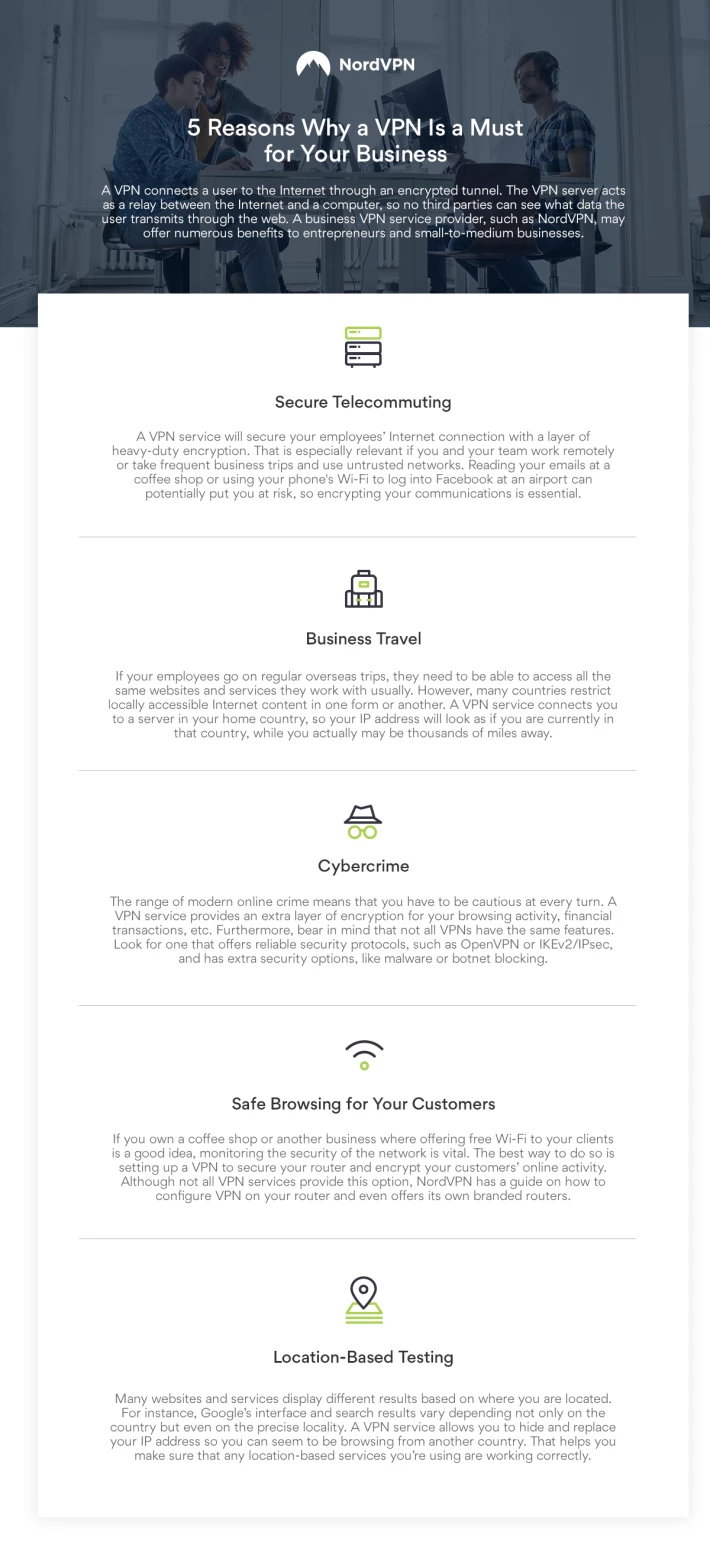
In Short: How Does a VPN Work?
Before I divulge the inner workings of a VPN, it helps to first understand the basics of what a VPN is and what it does.
A VPN (Virtual Private Network) is as the name implies – a network in which internet users can connect to, to use the internet in a safe, secure, and private way. The purpose of a VPN is to keep your private information private.
The way it works is:
A VPN routes your devices internet connection through a private server rather than your internet service provider (ISP) so that your data comes from the VPN rather than your computer.
Additionally, your routed data is encrypted so that no one including hackers, governments, or corporations can read your private data. It’s as if it travels through a private tunnel making it unreadable until it reaches its destination.
Now that we know what a VPN is and how it works, we can begin to understand how it adds an extra layer of anonymity when using crypto in the following ways:
- Sending crypto via web wallets
- Using DeFi tools
- Trading on decentralized exchanges (DEXes)
Sending Crypto via Web Wallets
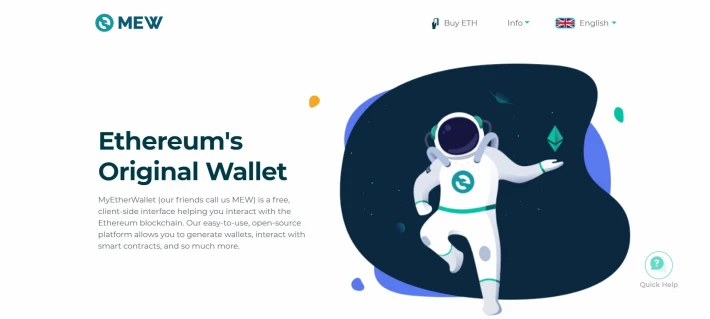
MyEtherWallet (MEW) website homepage
One of the most popular web wallets for sending and receiving Ethereum and ERC-20 tokens and for interacting with smart contracts is MyEtherWallet (MEW). Since MEW is a web wallet, it’s accessible via an internet browser and if you don’t route your data through a VPN when using MEW, your privacy will be at risk.
Hackers, government officials, or forensic analysis firms are potentially tracking people using crypto web wallets like MEW.
However, these entities cannot track your activity if you use a VPN, which hides your IP address and encrypts your data as it is sent through the internet network making it extremely difficult to intercept.
Additionally, using a VPN while accessing web wallets like MEW also adds an extra layer of security against malware, viruses, and phishing attacks. Therefore, using a VPN with web wallets not only preserves your privacy but further enhances your wallet's security as well.
Using DeFi Tools
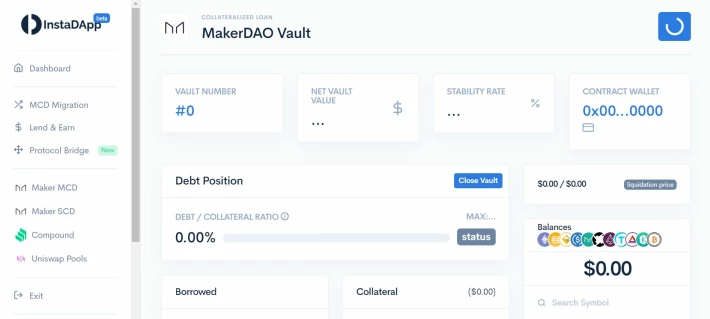
InstaDApp website MakerDAO page
InstaDApp is an up-and-coming decentralized finance (DeFi) application that enables its users to interact with DeFi protocols such as MakerDAO. Essentially, InstaDApp acts as a decentralized bank built on top of the MakerDAO protocol and it enables people to create a Collateralized Debt Position (CDP) for issuing loans to yourself in DAI.
What’s interesting about InstaDApp is, users are not required to provide identifying KYC (know your customer) information. Users can participate in crypto lending, issue loans, earn interest, and more, all while staying completely anonymous.
However, what some users don’t realize is that if they are not using a VPN, their identity and security is at risk of being compromised. Hackers can identify and target unsuspecting individuals with malware, viruses, and phishing attacks. Governments and analysis firms can track and flag certain individuals based on their activity using these DeFi applications.
But users who take certain measures and precautions to protect their security and privacy with the use of a VPN can rest assured that their security and identity will not be compromised.
Trading on Decentralized Exchanges (DEXes)
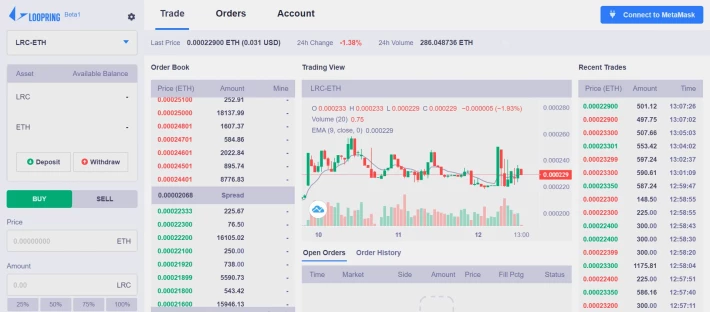
Loopring.io DEX
Non-custodial decentralized exchanges like the Loopring DEX enables people to buy, sell, and trade cryptocurrencies completely anonymously. They do not require sensitive and identifying KYC/AML information like centralized exchanges and they enable users to maintain full control of their funds
However, these benefits of a DEX can potentially be stripped away if a malicious third party or hacker identifies who you are by tracking your IP address. When your identity is no longer hidden, hackers have many different ways to exploit your information.
Therefore, DEX users who truly care about preserving their identity and increasing their security should be using a trustworthy VPN service.
What VPNs You Should Avoid
VPN providers are a dime a dozen, but not every one is the same. In fact, some VPNs should be completely avoided as they are not very reliable when it comes to preserving privacy and anonymity.
So, which VPNs should you avoid?
First off, you should avoid free VPNs for your crypto activities, as nothing is truly “free”, everyone needs to profit somehow. Free VPN service providers tend to fund themselves by selling your private data to surveillance programs, advertisers, and big data companies. This defeats the purpose of using a VPN for privacy and security reasons and therefore should not be used for crypto activities.
In addition to avoiding free VPNs, you should also avoid paid VPNs that store data logs. VPNs that use data logs collect your browsing data and can either sell it to advertisers or simply turn it over to governments and surveillance programs.
Additionally, you should avoid VPN providers that are based in high-surveillance states or countries with mass surveillance programs as their governments force VPN providers to collect and store user data. Such countries include the United States, United Kingdom, Australia, New Zealand, and Canada, otherwise known as the “Five Eyes” countries.
Typically, the best VPN providers are based out of countries like the British Virgin Islands, Panama, and Switzerland, as they don’t impose mass surveillance techniques or require VPN data logs.
Lastly, you should avoid VPNs that DO NOT have a kill-switch function. The kill-switch function is important because it terminates your connection to the internet if there is a problem connecting to the VPN. Therefore, if for whatever reason you become disconnected from the VPN, your IP address will not be compromised because you will be disconnected from the internet.
What VPN To Choose for Full Anonymous Coverage When Dealing with Crypto?
Taking the aforementioned points about what VPNs to avoid into consideration, you are left with a handful of viable VPN options to choose from.
For me personally, I like to use NordVPN.
Why might you ask?
Well, to be honest, after seeing NordVPN ads pretty much everywhere, I decided to do a little research and give them a try. It’s now been a few weeks since I started using NordVPN and I couldn’t be happier with a VPN service.
NordVPN is based out of Panama, it's easy to set up, it doesn’t store data logs, it has a kill-switch feature, a low price, and it accepts cryptocurrency payments.
I hope you enjoyed this piece on using a VPN for cryptocurrency activities :)
If you have any further questions or comments about VPNs and cryptocurrency usage, please let me know in the comment section below so that we can keep on learning together.






