
A funeral blocked me from leaving a cemetery the other day. I heard nearby mariachi music while I was walking between the graves, and after awhile thought it might be cool to find out where the music was coming from. The search was not difficult. The music was standing at the gate, preventing people from going in or out.
There was a Hummer from the funeral home parked just inside the gate with its headlights on. Somebody had converted it into a hearse. Immediately behind the Hummer, a coffin stood on a kind of specially-built table with wheels. It was wrapped in plastic. I have never seen a Hummer hearse or a shrink-wrapped coffin before. A guy walked up to the coffin and kissed it. The mariachis were playing, and everybody was singing along. They played several songs. Almost no one was formally dressed.
It would be disrespectful to film the proceedings directly, but I got a few seconds of footage surreptitiously, from a distance.
After awhile, the procession into the cemetery began. In spite of the fancy hearse, the funeral party was clearly from the street. Several people were holding bottles and smoking cigarettes as they walked. One of the pallbearers had a neck tattoo which read "Smile," or possibly "Smiley," in English. I was trying not to stare, and didn't get the best look.

The roughness of the people in the funeral party, combined with the narco-gangster-looking hearse, made me wonder if it was some kind of cartel-affiliated person who had died. Someone who was at least in one of the cartels' good graces, if not directly working for them. Of course I'll never know. Maybe Hummers are the new thing in hearses, and are everywhere. Maybe there's nothing unusual about smoking cigarettes and drinking from a 40 while walking behind the casket. Maybe it simply isn't customary to dress up for funerals in Mexico. This isn't a rich country. Some of the crypts are only covered in concrete. No marble, no beveled engravings, no headstone. The mourners carve their loved one's name in the cement, like you might do if you found some wet cement on the sidewalk. They use coffee cans as a flower vase, and leave gift-wrapped shoeboxes containing God knows what, as a tribute to the deceased.
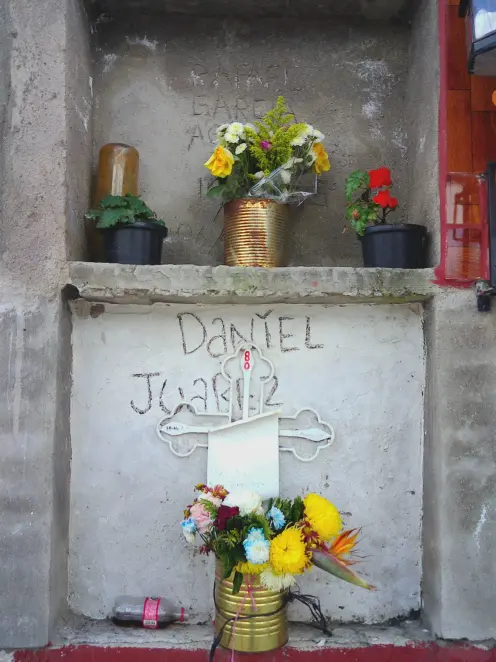

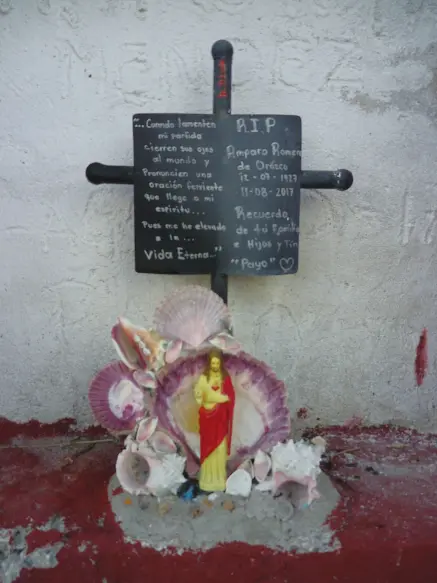
Also, people all over the world offer alcohol as a tribute to the departed. And anyway, who's going to tell you not to drink while you're following your brother to his final resting place? The same people who aren't going to tell you not to put bottles and flowers and beads and seashells and anything else you like around the grave. Nobody.

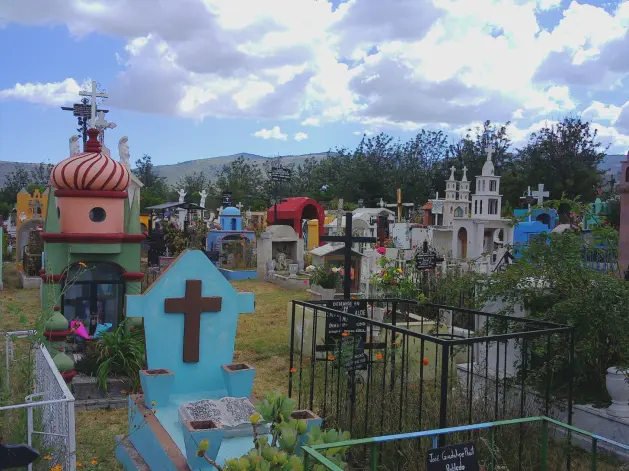
I also find the interred sites interesting. Mexican graveyards look like the rough side of Christmas Village. The part of town Santa advises his elves to avoid. Colorful, festive, and slightly dangerous. From the tiny homes with a picture of the deceased painted on the side:
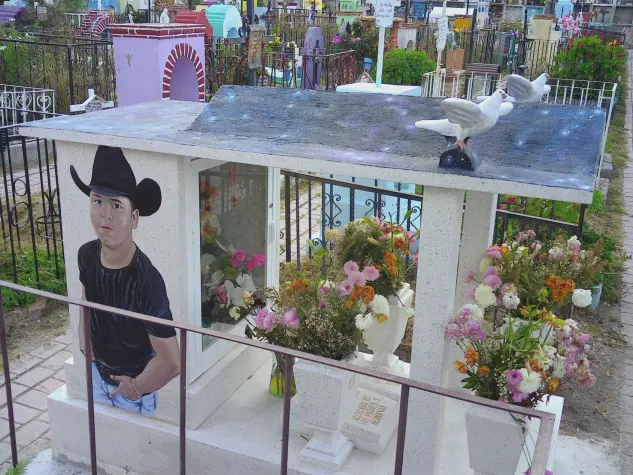
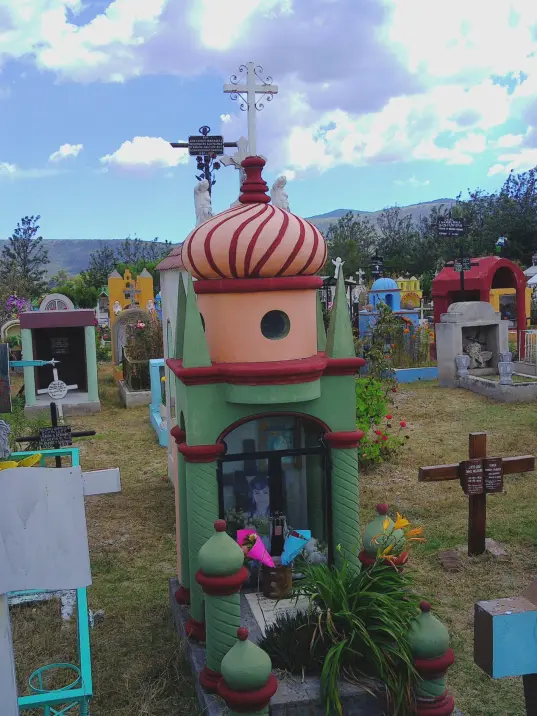
To colorful Arabian Orthodox huts:
To buried four-poster beds festooned with streamers fit for a princess,

Mexican cemeteries are full of touching, highly-personalized examples of the infinite depths of suffering and love people can have for each other. Somebody put a great deal of care into arranging the pink streamers around their daughter's burial place. That one in particular is one of the most beautiful graves I've ever seen. I've always enjoyed cemeteries; they're quiet and contemplative, and you can look at the tombstones and wonder what the peoples' lives were like, and marvel at how early (or late) they died. Aside from being peaceful, cemeteries can give a sobering perspective about life, but I am very rarely moved by what I see. Mexican cemeteries are full of heart. The love and heartbreak that went behind stringing the pink cloth and streamers between the poles, arranging the flowers in the coffee can, affixing the bows to the arms of the cross and sticking the Virgin Mary on top, all without a thought about the cemetery's policy of "keeping the graves clean" (which doesn't exist), really moves me. It is profoundly beautiful and sad.

While I was waiting for the funeral to unblock the gates, somebody came up to me and told me not to film the funerals (there were 2). He was polite, but adamant. There was nothing officious about him, and he wasn't threatening, but he had an air of a man who meant business, and whom you wouldn't want to cross. It was like a friendly warning. I told him I respected the dead, and wouldn’t want to disrespect or disturb anybody by filming them at a funeral. He told me that was acceptable, as long as I didn’t get any of the names of the dead on film. It is impossible to keep people's names out of pictures of their graves, but I didn't say anything. Mexicans don’t like being photographed or filmed, I have noticed. I assured him I had respect for my surroundings, and I didn't say it directly but I let him know with my tone and demeanor I was aware we weren't in a tourist spot. He seemed satisfied. I thanked him for speaking with me, and we went our separate ways.
Not long after, the funeral began its procession to the grave site.
The mariachis played as the mourners made their way through the cemetery, smoking, drinking, and singing. I left them to their business and walked out into the street.






