
Women that get attention for something crypto-related often get nicknamed "Crypto Queen", and there are two in the news right now for very different reasons. One is a wanted criminal and the other is a US Senator.
Meet the queens (a quick introduction)
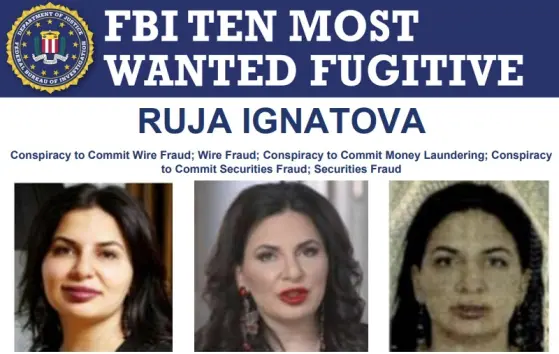
Ruja Ignatova is the self-proclaimed "Cryptoqueen" and is sometimes referred to as the "Missing Cryptoqueen" because she's been on the run since 2017 after defrauding victims of more than $4 billion in a cryptocurrency Ponzi scheme. Her recent news is that the FBI just added her to their Ten Most Wanted Fugitives list and they are offering up to a $100k reward for information leading to her arrest. She's only the 11th woman to ever make the Most Wanted list since its inception in 1950.
Cynthia Lummis is a US Senator that is also referred to as a "Crypto Queen" and sometimes more specifically the "Washington Crypto Queen" or "Capitol Hill Crypto Queen." She originally got this nickname for owning around $100k USD of Bitcoin (BTC), being one of only a few Congress that hold crypto. Her recent news involves writing a bill with Kristen Gillibrand that aims to regulate the crypto industry called the Responsible Financial Innovation Act.
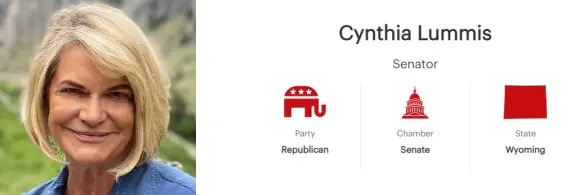
The former is a Bulgarian-German scammer who's wanted for wire fraud, money laundering, and securities fraud. The latter is a Republican Senator from the state of Wyoming who wants to regulate the crypto industry within the US. Yet they both have been labeled Crypto Queen.
Ruja Ignatova
Ruja Ignatova was the founder of OneCoin, often described as one of the largest Ponzi schemes in history. This scheme lasted from 2014 to October 2017, over which it is estimated that victims were defrauded out of more than $4 billion.
"She timed her scheme perfectly, capitalizing on the frenzied speculation of the early days of cryptocurrency."
Damian Williams, United States Attorney
Victims were misled to purchase OneCoin because of false statements and representations while also being pushed to bring in their friends and family. OneCoin was marketed as the "Bitcoin killer," despite being a fake cryptocurrency.
OneCoin was a cryptocurrency existing only in the minds of its creators and their co-conspirators. Unlike authentic cryptocurrencies, which maintain records of their investors’ transaction history, OneCoin had no real value. It offered investors no method of tracing their money, and it could not be used to purchase anything. In fact, the only ones who stood to benefit from its existence were its founders and co-conspirators. Whether you’re dealing with virtual currency or cold, hard cash, we urge the public to exercise due diligence with any investment.
William Sweeney Jr., FBI Assistant Director-in-Charge
Ruja Ignatova was last seen in October 2017, shortly after a United States federal warrant was issued for her arrest. On February 6, 2018, a superseding indictment was issued charging her with one count each of Conspiracy to Commit Wire Fraud; Wire Fraud; Conspiracy to Commit Money Laundering; Conspiracy to Commit Securities Fraud; and Securities Fraud.
Cynthia Lummis
Senator Lummis was elected to the Senate in 2020 and when she assumed office in January 2021, she became one of only a few members of congress and the first Senator to own crypto. She bought her first Bitcoin (BTC) in 2013 in an attempt to befriend her daughter's boyfriend at that time, who's now her son-in-law.
Recently she put her BTC holdings in a blind trust to avoid any perceived conflicts of interest, a move that was presumably related to optics for the crypto regulation bill she released with Senator Gillibrand.
Their proposal addresses the debate about whether cryptocurrencies should be classified as securities or commodities by saying that it depends on the individual cryptocurrency in question. As such, their bill relies on both the Securities and Exchange Commission (SEC) and the Commodity Futures Trading Commission (CFTC) for regulation.
The cryptocurrencies with the largest market value — bitcoin and ether — are definitely commodities that will be regulated by the CFTC. But there are a number of very small cryptocurrencies that are going to probably be at the Securities and Exchange Commission. These are assets that need disclosure, where the public needs consumer protection because some of these are just fraudulent.
Senator Cynthia Lummis
My Previous Post
SEC crypto/cyber series: v. NVIDIA Corporation (2022)






