
AI capability is exploding.
But trust is lagging.
And valuations are paying the price.
That disconnect has a name.
It’s called the Interpretation Gap .
And right now, it’s quietly shaping who wins, who stalls, and who gets discounted by the market.
What Everyone Is Missing About “AI Failures”
Scan the headlines and you’ll see the same story framed again and again.
-
The tech worked
-
The investment was real
-
The talent delivered
Yet adoption slowed.
Confidence cracked.
Valuations lagged behind performance.
That’s not a technology problem.
It’s an interpretation failure.
The systems evolved faster than people’s understanding of them.
When shared understanding breaks, trust collapses.
When trust collapses, markets pull back.
Markets don’t price raw capability.
They price confidence.
Capability Is Compounding Faster Than Comprehension
AI products now change weekly.
Policies move quarterly.
Shared mental models trail indefinitely.
That gap creates what insiders call comprehension debt.
It works just like technical debt.
-
Invisible at first
-
Accumulates quietly
-
Paid later, under pressure
When teams can’t clearly explain how AI fits into their work, risk posture, or governance, they don’t revolt.
They do something worse.
They route around it.
Shadow tools appear.
Unofficial workflows spread.
Trust erodes without a single public failure.
Why Buying AI Tools Without Meaning Backfires
Most organizations did the same thing.
They bought tools.
They skipped interpretation.
No workflow redesign.
No clarity on decision ownership.
No shared guardrails.
The result was predictable.
-
Official usage dropped
-
Shadow systems grew
-
Internal confidence fractured
This wasn’t “employee resistance.”
It was meaning left undefined.
Tools didn’t fail.
Interpretation did.
When Legal Certainty Disappears, Interpretation Takes Over
Copyright. Ownership. Attribution.
None of it is fully settled.
Yet adoption keeps moving forward.
Legal teams shifted from bans to guardrails.
Executives accepted ambiguity in exchange for speed.
That changed the system.
When guarantees disappear, interpretation becomes the control layer.
- Who decides what’s acceptable
- Under which constraints
- With what safeguards
- And who owns the call when things get fuzzy
These aren’t just legal questions.
They’re interpretation decisions.
How Disney and OpenAI Quietly Solved the Problem
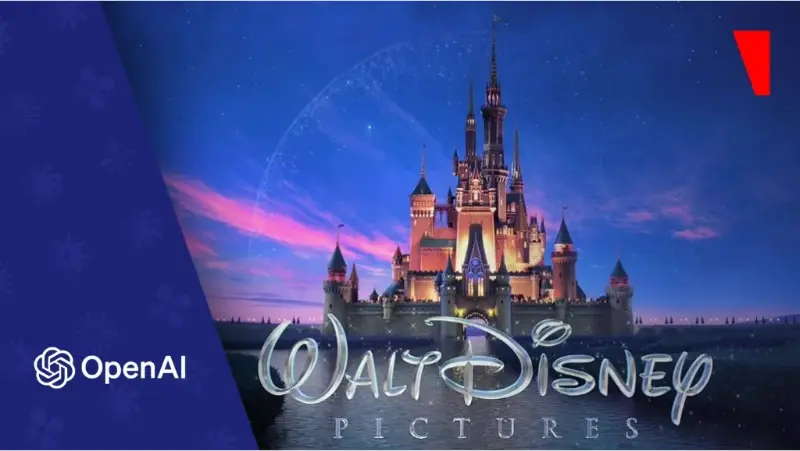
When Disney partnered with OpenAI, headlines focused on technology.
That missed the real move.
Disney didn’t “embrace AI.”
They governed meaning.
They defined:
-
Which characters could appear
-
In what contexts
-
Under which safeguards
-
Where authority lived when ambiguity appeared
They didn’t wait for perfect laws.
They engineered trust boundaries.
That’s interpretation governance.
And by acting early, they reduced backlash risk, investor uncertainty, and valuation drag before scale forced the market to guess.
The Hidden Cost of Ignoring the Interpretation Gap
When interpretation is unmanaged:
-
Employees bypass official systems
-
Customers hesitate despite strong products
-
Investors discount potential
-
Momentum feels fragile instead of inevitable
The most dangerous phase isn’t failure.
It’s partial adoption.
Powerful enough to matter
Not trusted enough to lead
That’s where capable companies stall without obvious warning signs.
This Isn’t a Messaging Problem
Closing the Interpretation Gap isn’t about PR.
It’s about Narrative Architecture.
That means defining:
-
Where judgment lives
-
Who is accountable under ambiguity
-
How decisions are explained when outcomes are uncertain
Organizations that design interpretation early:
-
Adopt faster
-
Explain less
-
Move with quieter confidence
-
Get priced closer to true capability
Narrative Debt vs. The Interpretation Gap
The distinction matters.
-
Narrative Debt shows up inside organizations
-
Slower decisions
-
Misaligned execution
-
-
The Interpretation Gap shows up outside
-
Adoption drag
-
Investor hesitation
-
Valuation compression
-
Same failure.
Different layer.
The Real Risk No One Is Pricing In
The biggest threat isn’t competition.
It’s invisibility through misunderstanding.
Markets don’t price what they can’t explain.
And explanation isn’t documentation.
It’s interpretation.
When you don’t design it, the market does.
And it rarely does so in your favor.
Capability determines what’s possible.
Interpretation determines what’s trusted.
Trust determines what gets valued.
Most teams optimize the first.
The winners design the second.
If this hit close to home, you’re not alone.
Leaders across tech, media, and finance are rethinking how trust gets built before scale.
You’re probably wondering where your organization stands right now.






