Folklore of Today is on Pirates & Sealore, Grog what is it? Bumbo what is it? How did a couple of beverages effect the American Revolution?
Well read on my friends.
Here is an old Leprechaun's take on it.
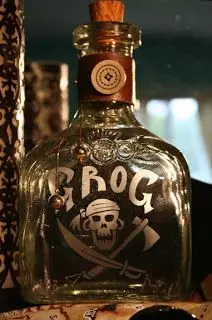
Grog was considered a sailors’s drink to prevent Scurvy.
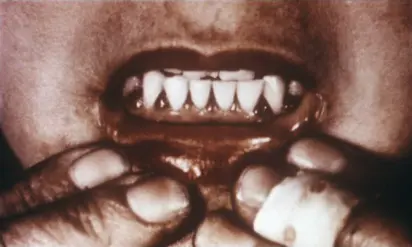
Scurvy according to Dictionary.com "is a disease marked by swollen and bleeding gums, livid spots on the skin, prostration, etc., due to a diet lacking in vitamin C."
Grog is still used as a cocktail in modern times. In Fiji their Grog is made with dry Kava root, In Sweden their Grog is named Glögg made from fruit and berries more like a mulled wine that Vikings drank.
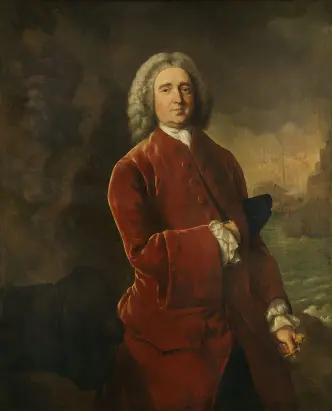
The inventor of Grog was Admiral Edward Vernon, nicknamed, “Old Grog” because of the Grogram or Grosgrain cloak he wore which was constructed of a coarse fabric of silk and mohair or wool. Now you know where the name Grog originated. Mount Vernon, George Washington's estate was also named after Admiral Edward Vernon.
Portrait of Admiral Edward Vernon, "Old Grog" by Thomas Gainsborough
Grog the beverage, was rationed to the sailors of the Royal British Navy in 1740. Grog originally was made with water a watered-down beer, called "small beer."adding rum,lime or lemon juice for Vitamin C.
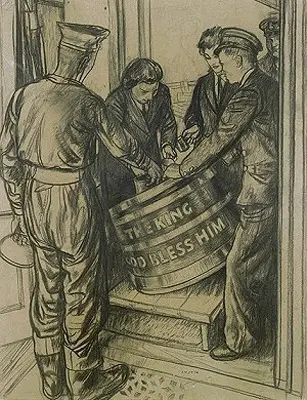
The British Navy served out Grog rations to the sailors unfortunately several of the crews became intoxicated so the Navy had to water it down this continued until July 31, 1970, by 1881 officers were cut off their Grog and just given a lime hence the term "Limey," to prevent scurvy since it was the Vitamin C that kept their gums healthy and scurvy free.
Pirates concocted their own elixir of Grog which they called Bumbo. They’d mix the standard rum and water, as in grog, but then would add sugar and dash of nutmeg, too much Nutmeg can make one very ill so remember to always go lightly on the Nutmeg.
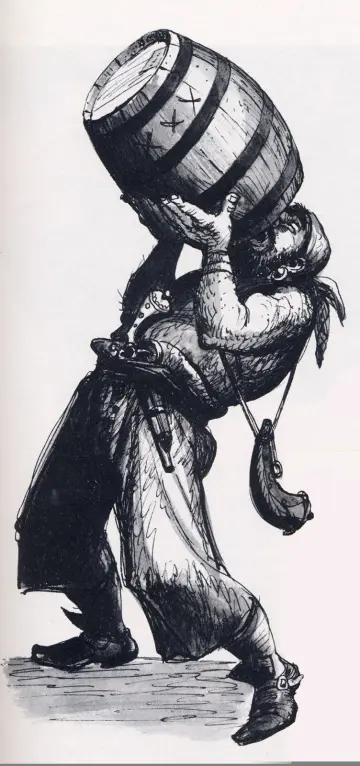
In the past some politicians,used Bumbo to sway voters during election time.
According to the 1989 book Campaigning in America: A History of Election Practices," by Robert J. Dinkin.
"If a Candidate ignored the custom of treating, he often found himself in great difficulty, Dinkin continues, "When James Madison attempted to campaign in 1777 without "the corrupting influence of spiritous liquors and other treats," "he lost to a less principled opponent."
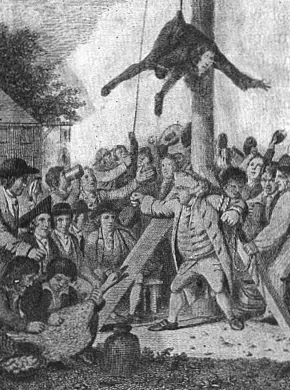
Rum eventually became New England's biggest industry. Stats say three gallons of rum was consumed per year by each person in the American Colonies right before the American Revolution began. The Sugar Act of 1764 aka American Revenue Act upset American colonials and they had to increase the price of rum, this paved the way for the British West Indies to increase their market share of rum sales. The Sugar Act as well as the Stamp Act, caused such anger among the Colonists it started the 1776 American Revolution war cry of "No Taxation without representation!"
Enraged American Colonists(Patriots) hoist a Loyalist up image in Wikipedia Public domain
It seems many of these type of scenarios come full circle as we watch the economy of the Western nations middle-class attacked by the ever eternal Bogeyman propagated by Archonic bureaucrats (debt, wars, plagues, etc.) of today allowing only a a super rich class with their Big Corporations to reap hard working Americans and Westerner's wealth and resources. Resulting in a wasteland of debt, busted businesses, unemployment, homelessness, despair and disease and no inheritance for future Americans or Western nations.
Is there another American Revolution around the corner?
Only Time will tell.
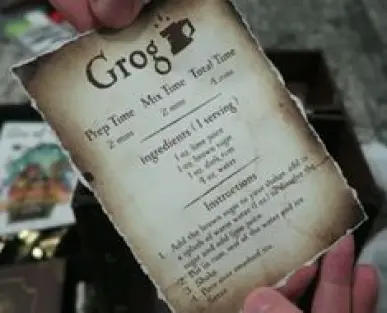
Grog Recipe
Ingredients:
1 oz. Lime or Lemon Juice
1 oz. Dark Rum
1 oz. brown Sugar
Place in a shaker and shake add a bit of warm water and shake. Pour into tumbler and add ice if desired.
Cheers!
Source & References:
- Feautued Art Emanuel Leutze's famous 1851 depiction of Washington Crossing the Delaware
- http://www.contemplator.com/history/grog.html
- Pictures in Wikipedia & Public Domain shows recipe, Grog of today and Royal Navy dishing out rations of Grog.
- Dictionary.com online
- Robert J. Dinkin, Campaigning in America: A History of Election Practices, Westport: Greenwood 1989 pg.223
- https://web.archive.org/web/20070715211559/http://www.royalnavalmuseum.org/info_sheets_edward_vernon.htm
- Kennedy, Frances H. The American Revolution: A Historical Guidebook (2014) A guide to 150 famous historical sites
- Resch, John P., ed. Americans at War: Society, Culture and the Homefront vol 1 (2005), articles by scholars