Groundhog Day, originated from North America & Europe.
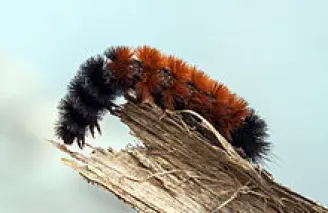
In North American weather lore, a Banded Woolybear Caterpillar or Isabella Tiger Moth or Pyrrharctia isabella (J.E. Smith, 1797 was used in place of a groundhog to predict the near future, weather. The weather was foretold by how wide was the Woolybear’s dark brown band on his coat. A wide band bode a short winter while a thin band forecast a long winter.
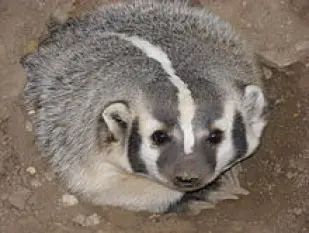
Later, weather-lore was relayed from Germany where the badger became the forecasting animal. This version of the lore that clear weather on the Christian Candlemas forebodes a prolonged winter. Candlemass is a Christian Holy day also called 'Badger Day.' Celebrated on February 2nd.
An adult female (sow) American Badger by Jona Thunder
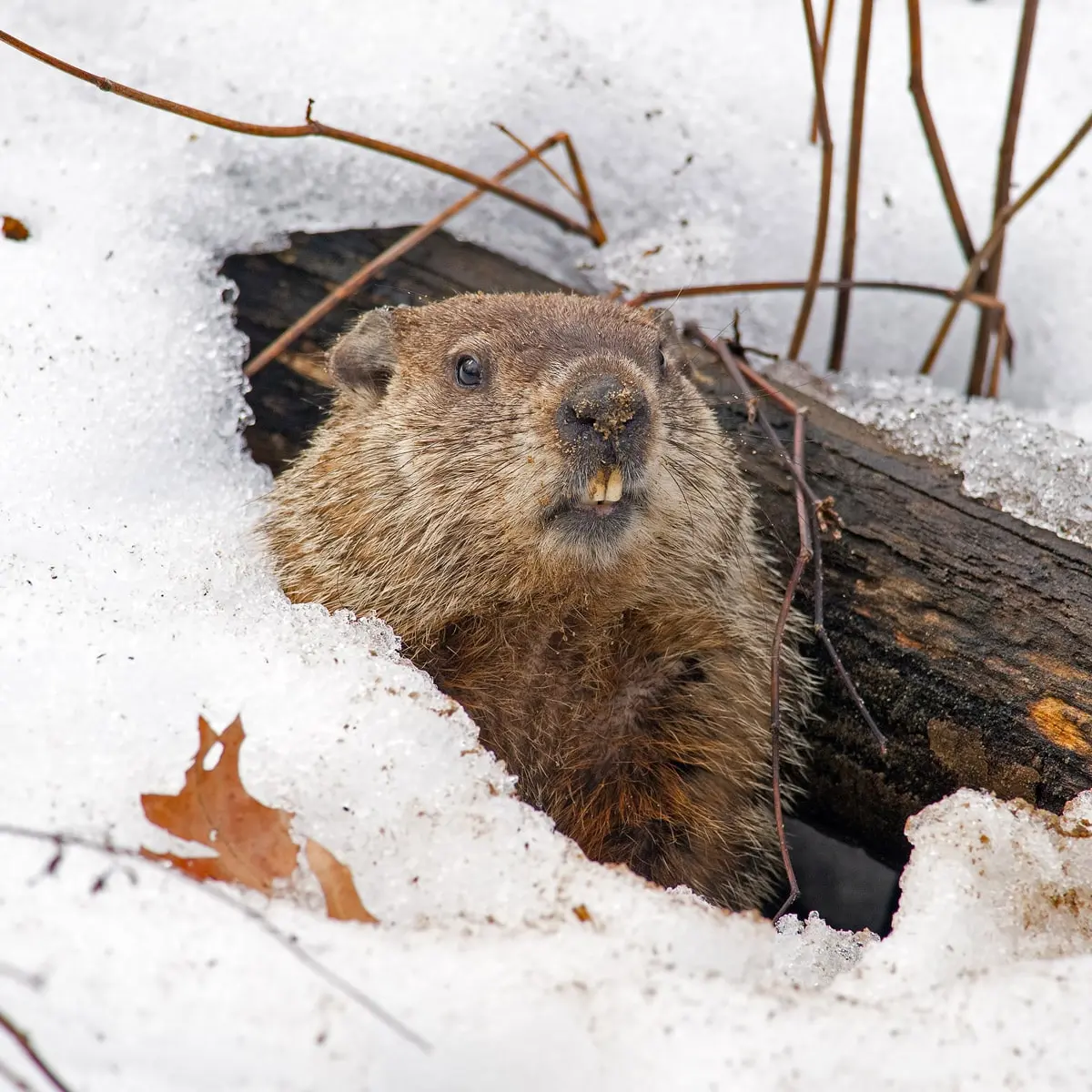
It originated from the Pennsylvania Dutch (which are diaspora Germans,) that if a groundhog pops out from its burrow on this day and spots its shadow due to clear weather, it will retreat to its den. This results in winter continuing for six more weeks; but if it does not project its' shadow because of an overcast sky, an early Spring will appear. A Groundhog is much more gentle than a Badger to pull out of its' burrow and replaced the fierce badger.
Today North Americans have a group of people mainly (politicians) dressed in top hats and costume who pull a sleepy groundhog out to predict the weather each February second.
Note: Today, Punxsutawney Phil saw his Shadow, 6 more weeks of Winter folks.
Photo: Public Domain
Happy Groundhog Day!
Source & Reference:
- Featured Punxsutawney Phil photo on Wikimedia Commons
- CC BY-SA 2.0, https://commons.wikimedia.org/w/index.php?curid=216601
- Davis, Christopher R. (April 1985), "Totemism and Civic Boosterism in Punxsutawney, Pennsylvania, 1899–1909", The Western Pennsylvania Historical Magazine, 68 (2)
- Yoder, Don (2003). Groundhog Day. Mechanicsburg, Pennsylvania: Stackpole Books. ISBN 0811700291. OCLC 52542605.
- Boeckmann, Catherine (28 August 2019). "Woolly Bear Caterpillars and Weather Prediction". Old Farmer's Almana.