
The team behind PIVX has accused John McAfee and his privacy token project GHOST of plagiarizing an outdated version of PIVX’s whitepaper, the project stated in a blog post on May 17.
The thread of tweets does indeed showcase many similarities between GHOST’s whitepaper and the 2018 whitepaper published by PIVX, which at that point used the Zerocoin protocol to implement privacy.
The particular specifications, protocols and features that PIVX highlighted, for which they provide some evidence of plagiarism, possesses several critical issues.
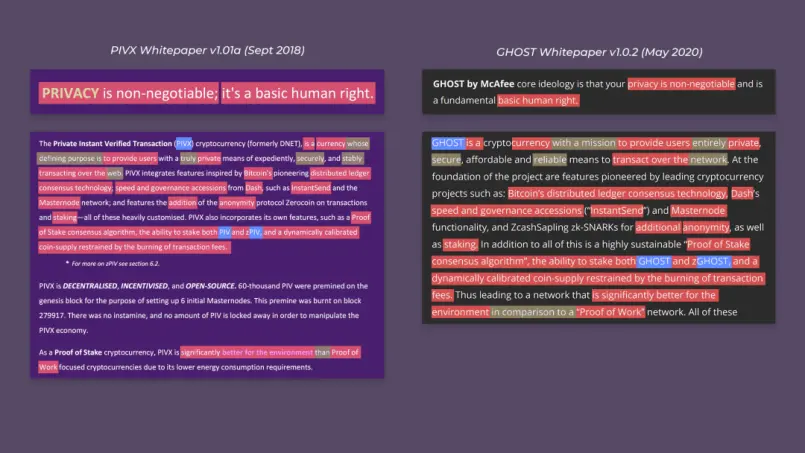
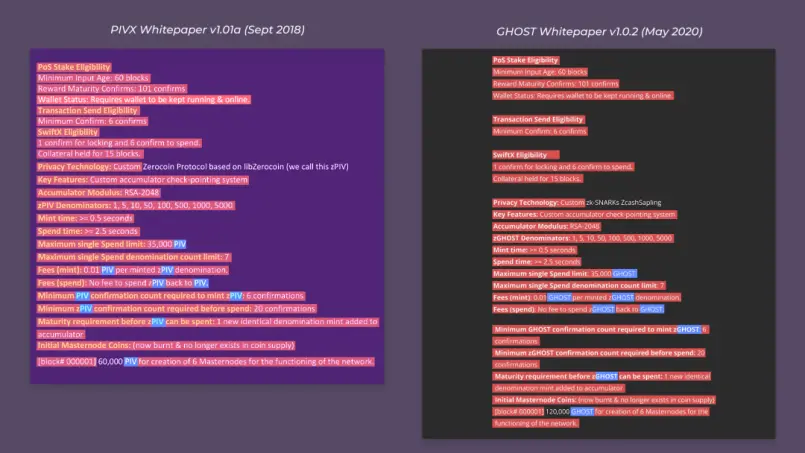
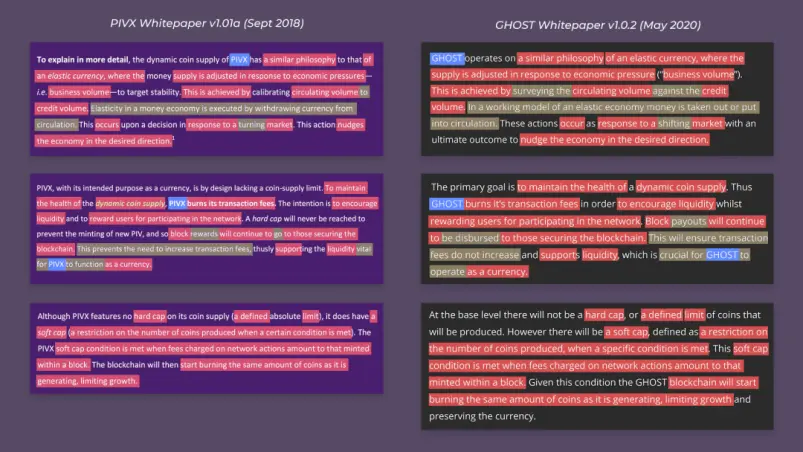
Several other such images were posted. The team states that it most likely PIVX that has been used because of the heavy similarities,
We do not know what code base Ghost is forked from yet, but given the above, it is most likely PIVX. At least 20 of the 26 total pages (not including front and back covers) found in the Ghost whitepaper contain material directly plagiarized from the 2018 PIVX whitepaper.
McAfee announced the GHOST token on April 11 on Twitter, saying that it would be available on several exchanges. Users largely reacted to the announcement with criticism, and pointing to the several successful privacy tokens that already exist.
GHOST states that it will run on a Proof-of-Stake consensus algorithm, use masternodes, like Dash (DASH) and offer privacy through zk-SNARKs.
PIVX plans to implement the zk-SNARKs protocol in Q4 2020, an increasingly popular reliable solution to completely anonymize transactions.






