Late autumn walks annually abound in this species of mushroom. Some say it is edible others say it is conditionally edible. I don't collect it, but it has its own charm, and it's worth stopping by.
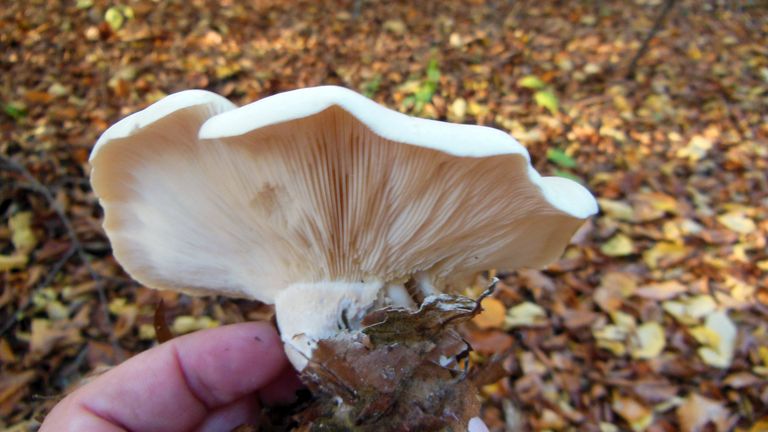

The very firm and fleshy cap can be up to 25 cm in diameter. I have not encountered specimens with a cap larger than 15 cm in diameter. The young mushroom has a convex cap, which flattens out and even becomes concave over time. It is often cracked. The surface of the hat is matte. Color from light gray on the edges to dark gray in the center of the cap. The edges of the hat are rolled up.

The plaques are usually white, sometimes slightly gray or cream. Quite dense, attached to the stem.


These outdoors are where we find this species of fungus. We don't have to walk far, because it grows quite a lot in the vicinity of our camp.


Mixed deciduous coniferous forests with a predominance of beech. Lots of pines and spruces in the area
The leg is the same color as the hat. It is bulbous, cylindrical in shape, relatively short. Very hard and firm, full inside.

Flesh slightly mushroom, but at the same time earthy smell, taste slightly mushroom, floury. White color


The fungus can be found already in August and grows until late autumn until the first frost. It is very common in Europe. The nutritional value is assessed as well. Apparently it is not a poisonous mushroom.