
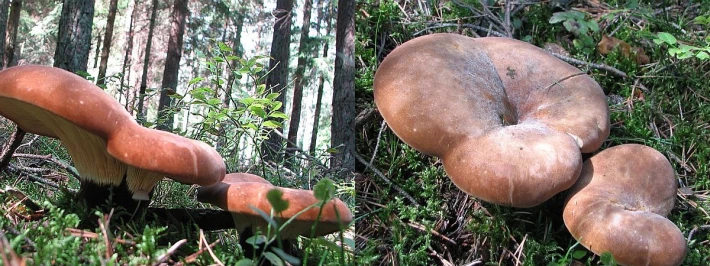
Tapinella atrotomentosa - Hat diameter 50 to 300 mm. Light-brown, olive-brown, brown, rusty-brown, dark brown. In the youth, gently arched, with a long folded edge, later flat, often sunken in the middle, sometimes shell-like, lingual. Surface dry, matte, smooth or slightly pubescent, leathery, in the dry period may be cracked.
Lamellae whitish, yellowish, rusty yellowish. Quite thick, dense, deeply converging on the shaft, sometimes laterally connected, with a smooth blade; after damage they turn brown.
Stem 30 to 70 mm high, 10 to 40 mm thick. Quite short, massive, full, sometimes rooted. Central or eccentric, even side; hat color. Velvet surface, covered with a rather long, dark brown cutter.
Flesh thick, juicy, hard, whitish, white-yellow, unchanging; taste tart, bitter, biting, odor poorly perceptible, unpleasant, musty in older fruitbodies.
Occurrence: In coniferous and mixed forests, on rotten trunks and roots, sometimes on buried in the ground remains of wood, especially pines and spruces, rarely deciduous species; moderately common. It grows singly or in groups, from July to November. Often encountered.
Value: Unaffected fungus.






