
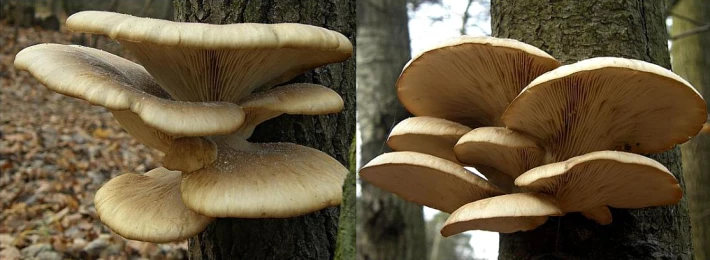
Pleurotus ostreatus - Hat with a diameter of 50-200 mm, and even larger, lateral. The shape of shells, sometimes spatulate, with a variable color: gray-green, gray-brown, steel-gray to dove-blue, almost black. In old age fading to light-leaved-brown. The surface is dry and smooth, the edge is sharp, in young fruitbodies it is strongly tucked up, the old is bent.
Lamellae broad, of various length, densely set, converging on the stalk, near the stalk with lateral connections, whitish, with age yellowing.
Stem or eccentric, short, sometimes residual, whitish, with hairy mycelium covered with the base.
The flesh is white, unchanging, fibrous and slightly bony, with a mild and pleasant taste and aroma.
Occurrence: Grows in tufts on dead trunks and living deciduous trees, especially beeches, poplars, birches and willows, rarely on coniferous wood. The individual fruiting bodies are arranged roofed one above the other, like the oyster colony, from late autumn to spring. To produce fruiting bodies needs light night frosts.
Value: Tasty edible fungus. Young sporocarps are suitable for consumption, older ones are gunky and unpalatable.






