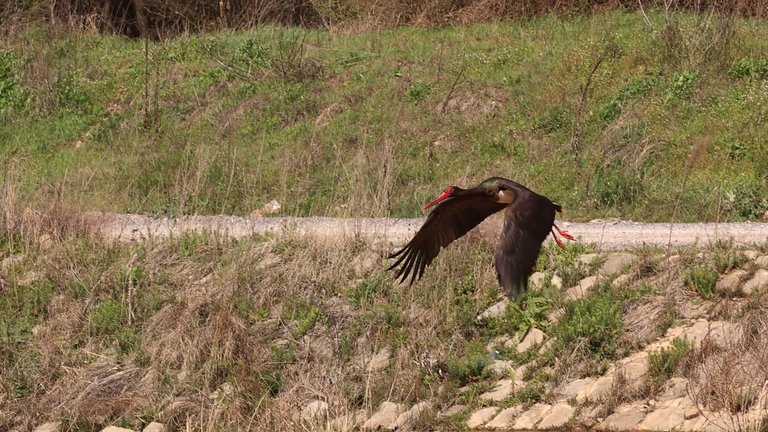
They don't like chimneys or electric pylons or the presence of people
Nie lubią kominów ani słupów elektrycznych, ani obecności ludzi

Although the Black Stork is quite a popular species in Europe, not everyone has had the opportunity to see it with their own eyes. The stork is usually associated with a large white bird, with a huge red beak that builds a nest on a house chimney or a pole. Many may have seen the black stork, but they did not associate it, because they do not know about its existence. There is a black stork variety, but it is considered a hidden forest bird, rather avoiding contact with humans. In Old Polish, the name of the black stork is "Hajstra".
Choć Bocian Czarny to dość popularny gatunek w Europie, to nie każdy miał okazję zobaczyć go na własne oczy. Bocian bowiem kojarzony jest zazwyczaj z wielkim białym ptakiem, z wielkim czerwonym dziobem który buduje gniazdo na kominie domu lub słupie. Wielu być może widziało bociana czarnego, ale tego nie skojarzyło, bo nie wie o jego istnieniu. Istnieje bowiem czarna odmiana bociana, lecz uważany jest za skrytego ptaka leśnego, raczej unikającego kontaktów z człowiekiem. Po staropolsku bocian czarny nazywa się "Hajstra".
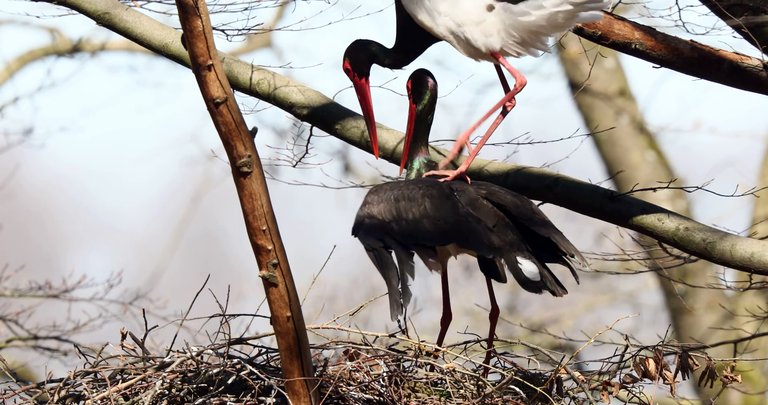

The Black Stork can reach a body length of up to 100 cm and about 3 kilograms in weight. The wingspan can reach 210 cm. the most beautiful element of this bird is its plumage. Although it is called the black stork and this color is dominant, there are still some characteristic and beautiful elements in its plumage.
Bocian Czarny może osiągnąć długość ciała do 100 cm i około 3 kilogramów wagi. Rozpiętość skrzydeł może osiągnąć 210 cm. najpiękniejszym elementem tego ptaka jest jego upierzenie. Mimo iż nazywa się bocianem czarnym i ten kolor dominuje, to jest jednak kilka charakterystycznych i pięknych elementów w jego upierzeniu.


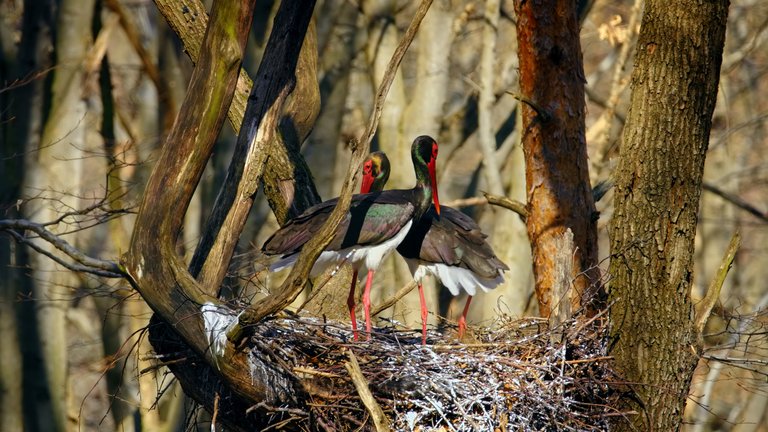
The stork's belly is white, while the neck is metallic black, where we can see metallic shimmering colors of different colors, green, blue, red, purple. The beak and legs are distinctly red. The eye rim is also red.
Brzuch bociana jest biały, szyja natomiast jest metalicznie czarna, gdzie dopatrzeć możemy się połyskujących metalicznie różnych kolorów, zielonego, niebieskiego, czerwonego, fioletowego. Dziób i nogi są wyraziście czerwone. Czerwona jest również charakterystyczna obwódka oka.

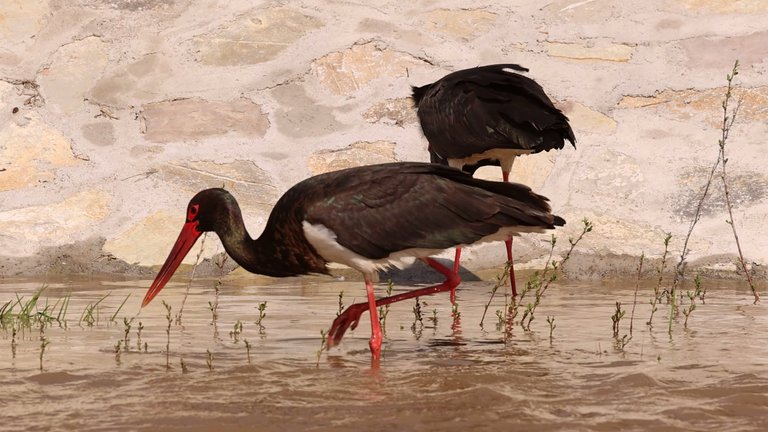


The black stork's nest is not just any and any place
Gniazdo bociana czarnego nie jest byle jakie i byle gdzie

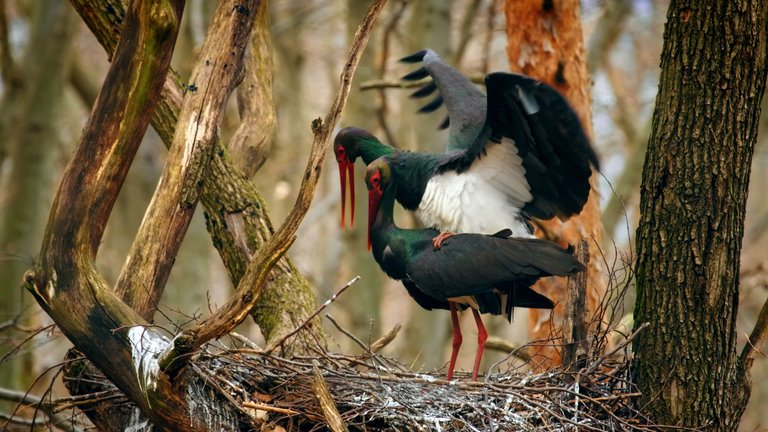
These birds need suitable trees to build a nest. Large old oaks are a favorite place, most often the nest is located on the thickest branch or at the fork of the tree crown. Stork nests are quite large and can be up to 2 m in diameter and located at a height of 25 m above the ground. Of course, oak is not a priority when building a nest. If the environmental conditions are appropriate, i.e. the forest areas are sufficiently wet, there are some lakes or ponds, swamps, peat bogs in the vicinity, even ordinary alder, ash, beech or even pine may be suitable for building a nest, and it does not necessarily have to be an old, aged tree. The stork builds its nests in lowlands and in the mountains, often on rocky shelves. It is estimated that in Poland there are about 2,000 breeding pairs of this species of bird, and it is under strict protection.
Ptaki te potrzebują odpowiednich drzew do budowy gniazda. Ulubionym miejscem są duże stare dęby, najczęściej gniazdo znajduje się na najgrubszej gałęzi lub na rozwidleniu korony drzewa. Gniazda Bociana są dość duże i mogą mieć nawet do 2 m średnicy i umiejscowione na wysokości 25 m nad ziemią. Oczywiście, dąb to nie priorytet przy budowie gniazda. Jeśli warunki środowiskowe są odpowiednie czyli tereny leśne są wystarczająco podmokłe, w okolicy są jakieś jeziora, czy stawy, bagna, torfowiska do budowy gniazda nada się nawet zwykła olcha, jesion, buk czy nawet sosna, i niekoniecznie musi to być stare, wiekowe drzewo. Bocian buduje swoje gniazda na terenach nizinnych jak i w górach, często na skalnych półkach. Szacuje się że w Polsce jest około 2000 par lęgowych tego gatunku ptaka, i jest on pod ścisłą ochroną.

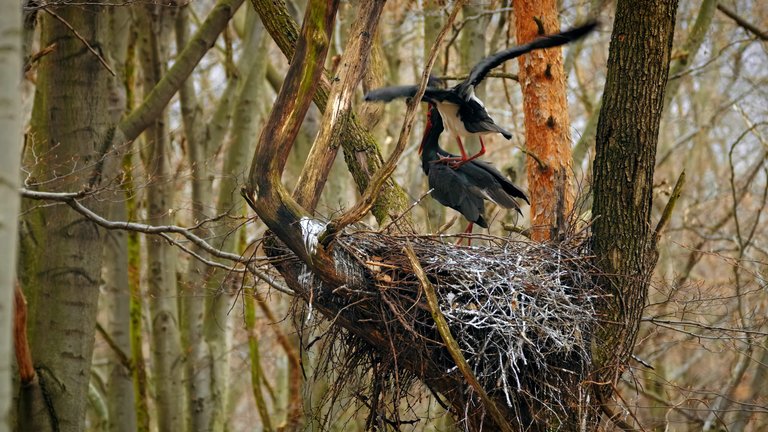
Stork broods
Lęgi


The breeding season is from April to the end of May. The Black Stork lays up to 5 white, light gray eggs, the size of large duck eggs, and incubates them for about 35 days. After two months, young storks are ready to fly. The black stork departs more or less at the turn of August and September, and returns at the end of March. It moves to Egypt, Lebanon, Ethiopia and Israel, among others.
Okres lęgowy trwa od kwietnia do końca maja. Bocian Czarny składa do 5 białych, jasnoszarych jaj, wielkością przypominające duże kacze jaja i wysiaduje je około 35 dni. Po dwóch miesiącach młode bociany gotowe są do lotów. Bocian czarny odlatuje mniej więcej na przełomie sierpnia i września, natomiast wraca pod koniec marca. Przemieszcza się między innymi do Egiptu, Libanu, Etiopii czy Izraela.


A wide dietary range of the Black Stork
Szeroka gama dietetyczna Bociana Czarnego

The Black Stork's menu is well-developed. It eats fish, frogs, snails and insects first. But it can also eat hedgehogs, moles and chicks of other bird species.
Menu Bociana Czarnego jest dobrze rozbudowane. Spożywa w pierwszej kolejności ryby, żaby, ślimaki, owady. Ale może również skonsumować jeża, kreta czy pisklęta innych gatunków ptaków.


Enjoy 😉