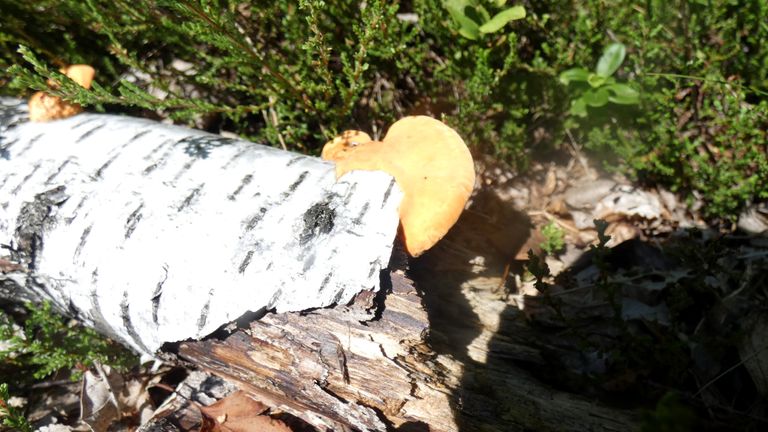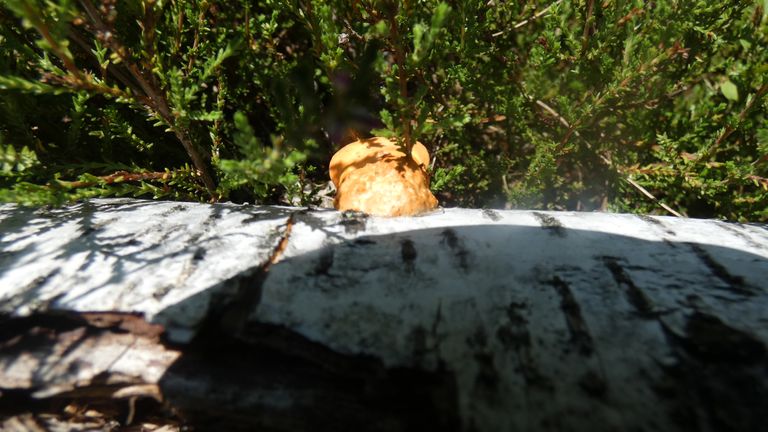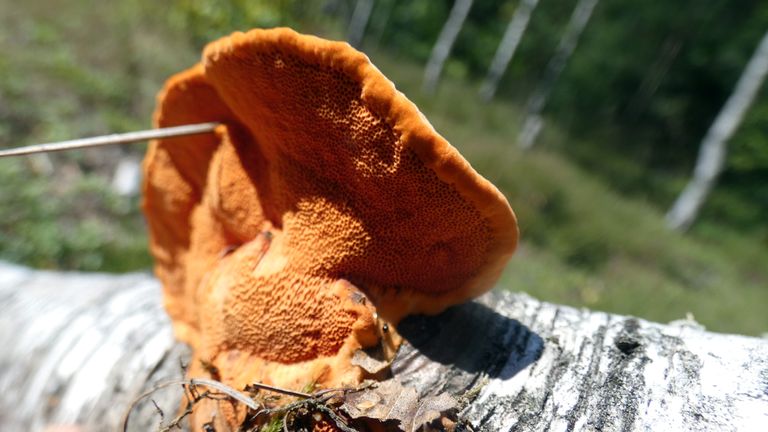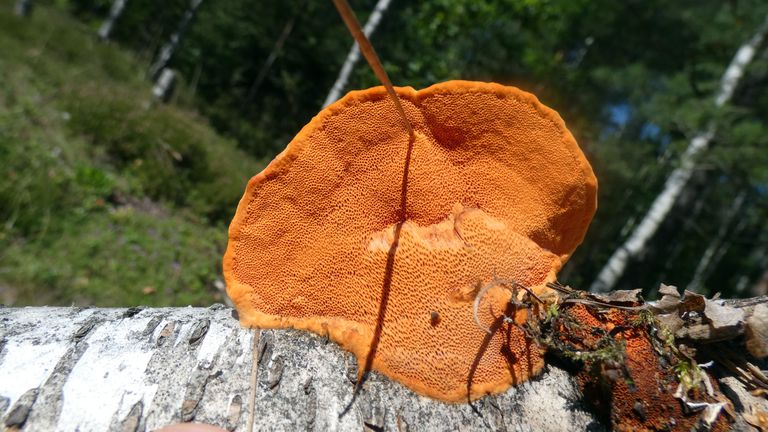
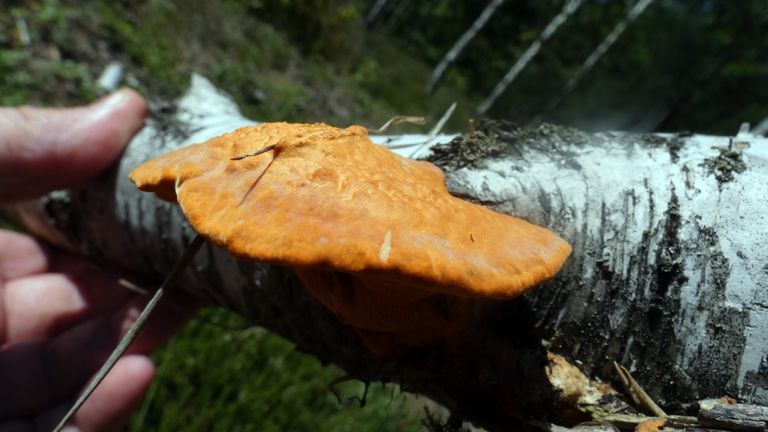
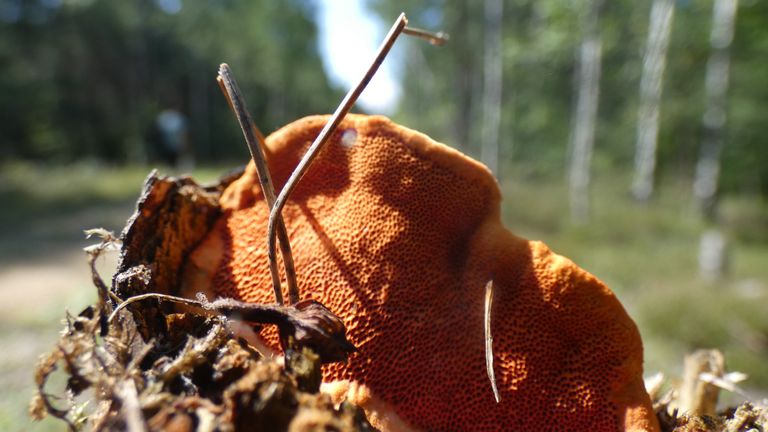
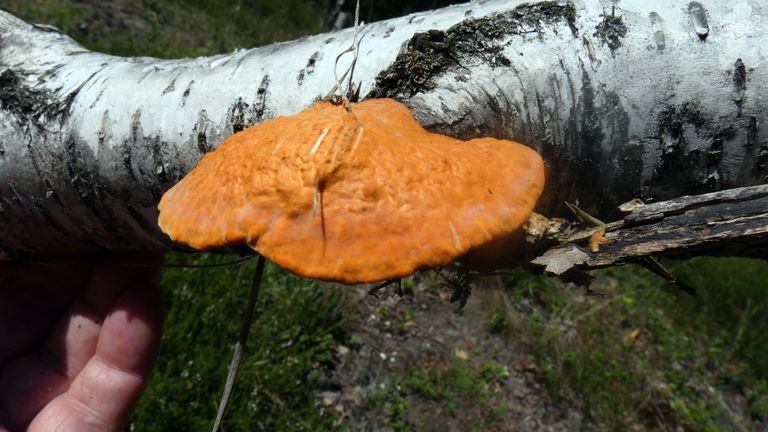
This is an example of an arboreal fungus that occurs practically only on dead branches. The name of such a species is sporophyte. Most often I meet it on fallen birch branches, where it beautifully contrasts with its orange or red color against the background of the white bark of a birch tree.
To przykład grzyba nadrzewnego, który występuje praktycznie tylko na obumarłych gałęziach. Nazwa takiego gatunku to sporofit. Najczęściej spotykam go na opadłych gałęziach brzozy, gdzie pięknie kontrastuje swoim pomarańczowym lub czerwonym kolorem na tle białej kory brzozowego drzewa.

This mushroom has a variable shape, it can be oval, kidney-shaped, fan-shaped, sometimes it looks very heterogeneous and it is difficult to define its shape at all. However, its size, like a hat, does not exceed 10-11 cm in diameter.
Grzyb ten ma zmienny kształt, potrafi być owalny, nerkowaty, wachlarzowaty, czasami wygląda bardzo niejednorodnie i trudno w ogóle określić jego kształt. Niemniej jego wielkość jakby kapelusza, nie przekracza 10-11 cm średnicy.
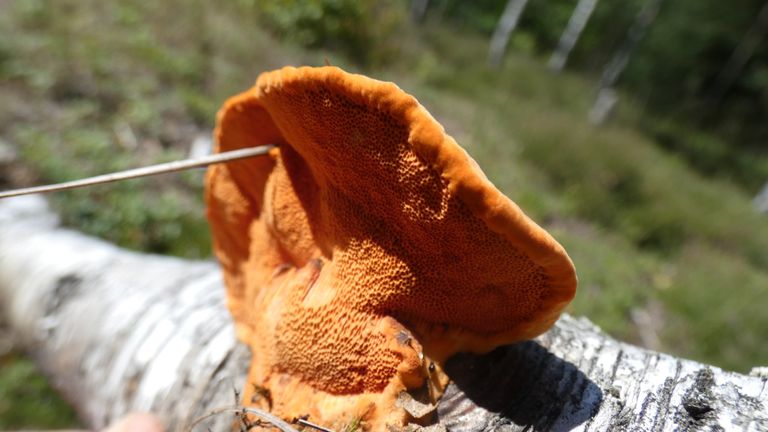
It is an annual mushroom, and I have never seen the same fruiting body in the following year. It is distinguished by a characteristic orange or orange-red color, which it owes to a dye called cinnabarina.
To grzyb jednoroczny, i nie spotkałem tego samego owocnika nigdy w następnym roku. Wyróżnia go charakterystyczny pomarańczowy, lub pomarańczowo-czerwony kolor, który zawdzięcza barwnikowi o nazwie cinnabarina.
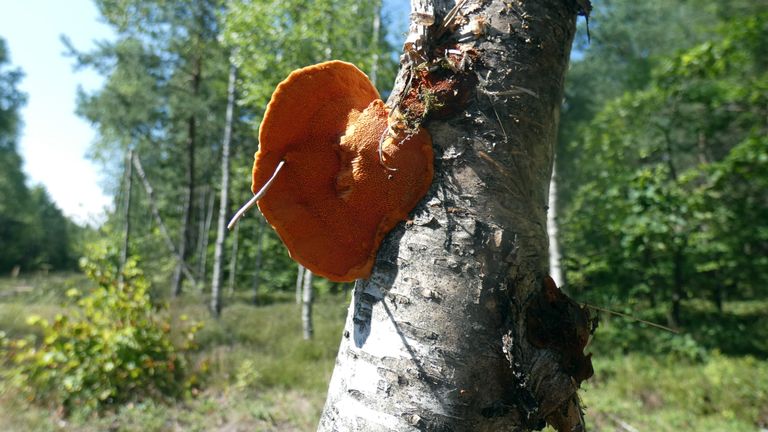
The top of the mushroom cap is delicate, velvety, becoming wrinkled, furrowed with age. The color of the young fruiting body is extremely bright orange, so much so that the mushroom can be seen from several dozen meters. In older mushrooms, the surface of the hat darkens, becomes more red, brick-red.
Góra kapelusza grzyba jest delikatna, aksamitna, z wiekiem staje się pomarszczona, bruzdowata. Kolor młodego owocnika jest niesamowicie pomarańczowo-jaskrawy, do tego stopnia, że grzyba widać z kilkudziesięciu metrów. U starszych grzybów powierzchnia kapelusza ciemnieje, staje się bardziej ruda, ceglasta.
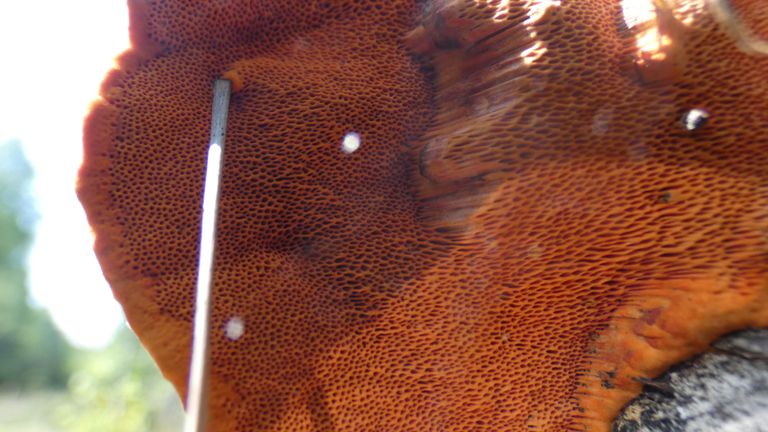
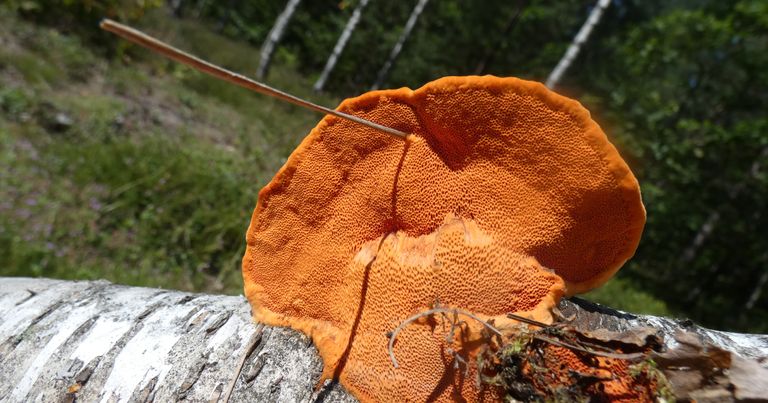
The mushroom does not have a classic leg, while the flesh is pale vermilion red. As with most of this type of mushroom, it is soft at first, and then hardens and becomes corky.
Grzyb nie posiada klasycznej nóżki, natomiast miąższ jest blado cynobrowoczerwony. Jak u większości tego typu grzybów jest na początku miękki, a z czasem twardnieje i staje się korkowaty.
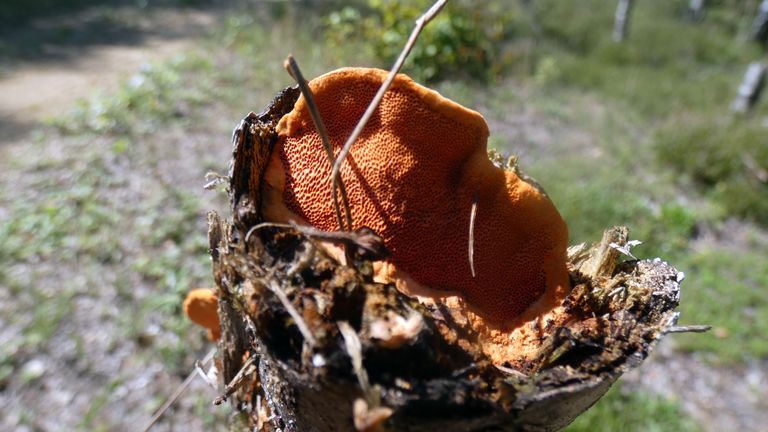
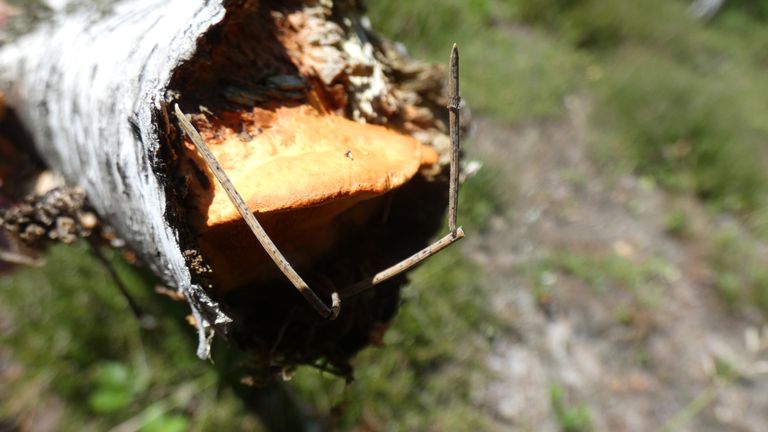
The fungus appears in summer and grows until autumn, it is not very common, but because of its color it is easy to find. He mainly likes deciduous trees, poplar, beech, but most often he appears on birch trees, and these are also the photos I present.
Grzyb pojawia się latem i rośnie do jesieni, nie jest zbyt częsty, ale przez barwę łatwo go znaleźć. Lubi głównie drzewa liściaste, topolę, buk, ale najczęściej pojawia się na brzozie, i takie też zdjęcia przedstawiam.
It is an inedible mushroom, but this is due to the lack of taste properties, but it has no toxic properties.
Jest grzybem niejadalnym, ale to ze względu na brak właściwości smakowych, natomiast nie ma właściwości toksycznych.