Introduction

Blockchain was born with the objective of creating a decentralized space where virtual assets support a free and secure economy, which is not controlled by any entity and is capable of offering trust.
We will assume as a reference to bitcoin. For being the cryptocurrency with more experience and influences on a global scale.
It should be noted, beyond the purpose of its creation and its virtue in cryptography, bitcoin is also involved in a series of limitations associated with its transactional capacity and difficulties in maintaining a scalable model.

"Today we find a slow network that is still waiting for a technical solution that has the necessary consensus to at least offer fast and low-cost transactions again..." | source: es.cointelegraph.com | Bitcoin: a slow and expensive network|
A look at the present
Bottlenecks are part of these limitations; The impossibility of issuing a timely response to the growing demand is an increasingly common symptom in the Bitcoin, ALTCoin and Ethereum chain. Like the high operational rates that sometimes become unpayable for many who negotiate with this Crypto.
Currently, bitcoin is capable of processing 7 transactions per second, followed by the Ethereum chain with approximately 15 TPS.
"With the growth in the number of users and transactions we find several “bottlenecks” that generate delays in their confirmation and therefore significant increases in commissions..." | source: es.cointelegraph.com | Bitcoin: a slow and expensive network|
In the search for new technologies

The transfer of securities without intermediaries must go hand in hand with technological advancement and the creation of new systems that allow speeding up transactions in the encryption environment.
Therefore, the intention is to propose a robust infrastructure capable of supporting the growing demand for cryptocurrencies, without generating cost increases.
It is vital to launch a new platform, fast and secure enough to solve the aforementioned problems.
"Only in this way can the customer be satisfied, with due enthusiasm and the financial liquidity necessary to recover his investment."

Harmony | Blockchain based on fragmentation

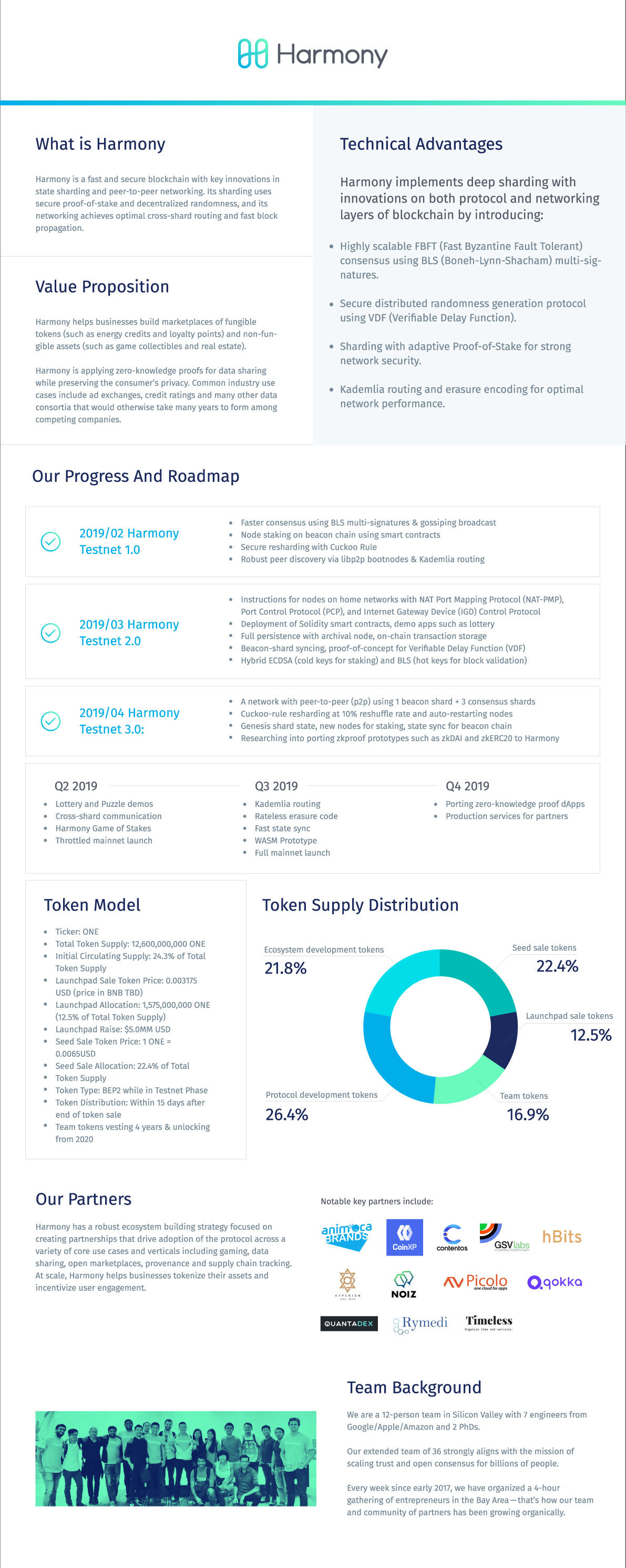
Within this current panorama in the world of virtual assets, Harmony emerges, a blockchain project aimed at optimizing the flow of transactions in the network through a process called fragmentation.
Harmony's challenge is to scale blockchain while maintaining inclusion without sacrificing the decentralized character of the chain.
It will allow an economy for 10B of people in the future with a high performance platform.
How does fragmentation work?
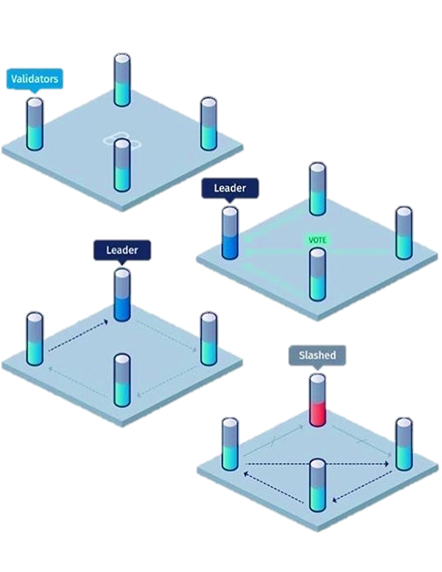
By grouping "multiple consensus groups", Harmony manages to increase data processing in the shortest possible time, since transactions can be validated simultaneously, which translates into performance and scalability.
State sharding allows more nodes that work together to be added, ensuring rapid and sustained growth where developers can launch DApps and companies integrate new technologies attracted by the efficiency proposed by the Harmony Project.
Harmony Vs. traditional model
We know the consensus by proof of work (PoW), the consensus of proof of participation (PoS) or the delegated participation test (DPoS).
All these models, where the validation of a block is commonly achieved by voting, by randomness, by possession of tokens or by work performance, have so far served to make sense of the digital currency trading environment.
But they have compromised decentralization, without providing basic solutions, to the problem of transactional latency and the disproportionate increase in rates.
Next-generation fragmentation, fully scalable
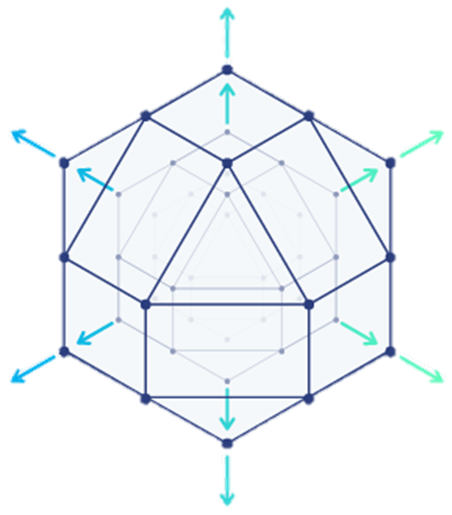
Harmony achieves blockchain fragmentation as such, in a randomized distributed process (DRG) which is unpredictable and insensitive, which allows you to work in an environment without trust while maintaining anonymity.
Harmony fragmentation is a progressive process that constantly alternates the evaluated groups, continuously distributing the information to keep the slowly adaptive Byzantine adversaries away.
In this way, it protects the information, leaving at all times a traceable record of the blockchain which is subject to audit.
Harmony Protocol
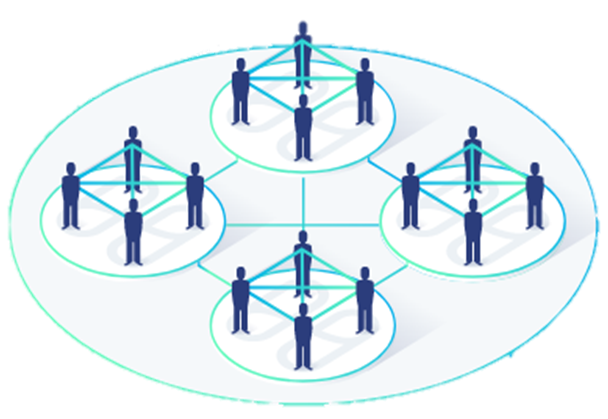
The Harmony consensus protocol stands out in three aspects:
-
Proof-of Stake: Holders can exercise prominence by participating in the validation of a block and contribute to network security.
-
Deep Sharding: The "fragments" work together and without interruption, which translates into efficiency and adaptability.
-
Network Optimized: The communication is divided into small shared fragments, to maintain a routing without trust (Kademlia routing).
Harmony | Validator Registration
Through the participation test (PoS), the affected users bet a certain amount of tokens to validate a block, thus preventing Sybil attacks, obtaining a validation vote through the BFT consensus.
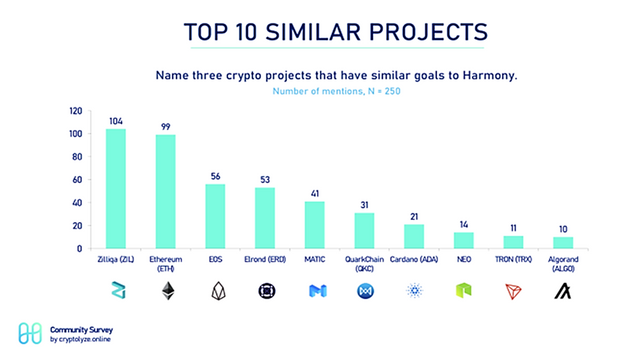
The miner will not have to make complexes like in the bitcoin and ethereum (PoW) chains, at the same time similar to the block chains based on fragments such as Zilliqa or Quarkchain which we also use (PoW).
In this way the Harmony proposal becomes more attractive for mass adoption given its easy understanding.
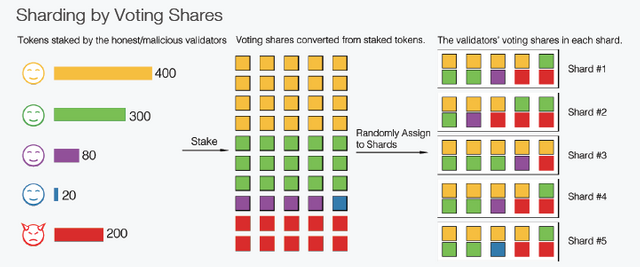
| source: harmony.one/whitepaper. | 3.3 Staking-based Sharding|
The active participation of users plays a leading role in solving security problems that involve them in the validation process and the proper functioning of the system.
A bettor can validate the fragment where he has voted. The voting quota becomes a consensus vote when acquiring tokens, whose right is subsequently randomly redistributed in the total universe of fragments.
This keeps malicious validators away, who may not have more than 3 voting rights actions in a single fragment.
Thanks to the BFT consensus algorithm it is possible to establish this security mechanism;
"Harmony's adaptive threshold PoS guarantees previous security requirement adaptively adjusting the price of a share with voting rights and assigning individual votesShare with fragments instead of individual validators." | source: harmony.one/whitepaper. | 3.3 Staking-based Sharding|
Harmony | Speed and security
The speed of validation of a block is achieved with the application of the scalable BFT (Byzantine Fault Tolerance) consensus algorithm.
Based on stake test (PoS) where malicious stakers cannot concentrate their power on a single fragment since it is 100% faster and the game threshold adjusts to the total stakeout volume so that a node can join the network.
This will invalidate any type of phishing attack and in turn favors the distribution of rewards taking into account machines with limited resources of smaller punters, for greater decentralization.
Creating as the name implies; a fragment validation that attributes operational "Harmony", which offers a safe and scalable user experience.
Fast State Synchronization
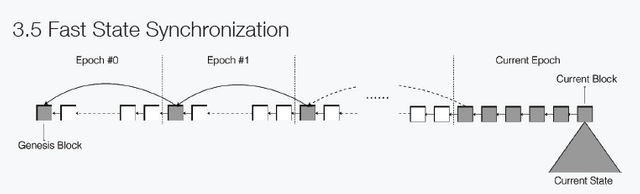
A validator must quickly update the current state of the fragment to validate new transactions. The traditional blockchain process consists of downloading all the transaction history until you find the block and rebuild the current state, which is a process that is too slow that can take days to fully synchronize, such is the case of the chain ethereum
Harmony corrects the aforementioned problem, by working on smaller fragments, allowing the download of the current state in a time register and the new validation can begin instantly.
The new node works effectively in the verification of signatures, you can have the cryptographic record in less time starting from the current state until the genesis.
The detailed validation process is shown in the following graphic.
| source: harmony.one/whitepaper. | 3.5 Fast State Synchronization|
Harmony Economy
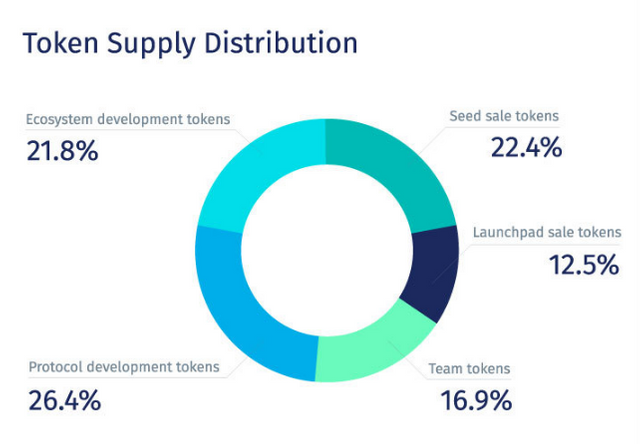
ONE Tokens distribution model:
"The total supply of chips will be 12,600,000,000 ONE, of which the initial circulating supply is 24.3% of the total supply."
-
LaunchPad Sale Token Price: 0.003175 USD.
-
Launchpad Allocation: 1,575,000,000 ONE, corresponding to 12.5% of total supply.
-
Launchpad Raise: $5.0MM USD.
-
Seed Sale Token Price: 1 ONE 0.0065 USD.
-
Seed Sale Allocation: 22.4% of total.
"The Token ONE will be of the type: BEP2 while in the test phase, the distribution will take place 15 days after the completion of the Token sale. The token of the equipment acquired 4 years and has been unlocked since 2020."
Watch this video for more info:
Harmony | Roadmap
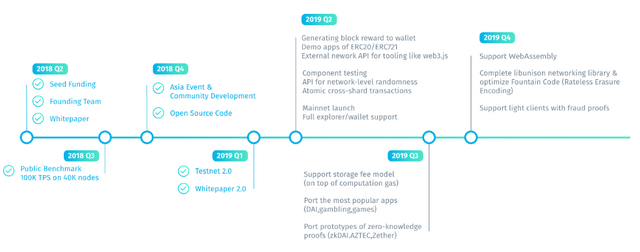
Through the following graph it is observed chronologically, as Harmony has come to fulfill each of its assumed commitments, from the second quarter of 2018, to the current date:
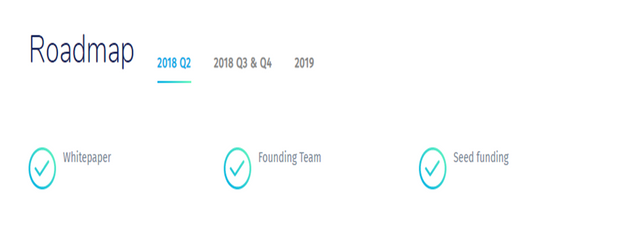
In the course of the second quarter of 2018, they carried out the elaboration of the whitepaper, the establishment of the founding team and the funding seeds.
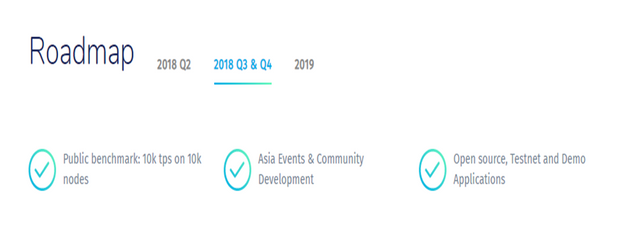
The first public benchmark was installed with capacity for 10k transactions per second and 10k consensus nodes.
They held events in Asia and community development, remembering that Harmony is more than a computer platform, it is also an ecosystem formed by a group of highly valued human beings who participate and develop social activities in collectives.
Open source tests, testnet and demonstration applications (DApps) culminated in the third quarter.
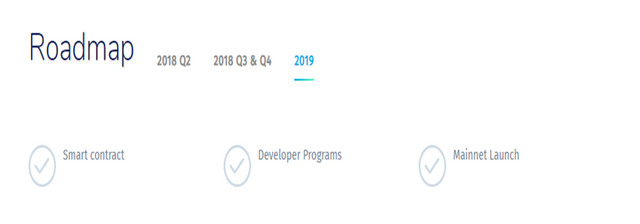
During the year 2019, the following activities are carried out:
- Smart contract
- Developer programs
- Mainnet launch
As for the developer programs, remember that Harmony seeks the adoption of new DApps and high-tech projects that contribute to the sustained growth of the network, for this it calls on developers and companies that want to subscribe their projects.
The launch of the Mainnet is currently in phase 2, and through the social networks Twitter, Medium and Telegram Group, information about the progress of these activities can be obtained.
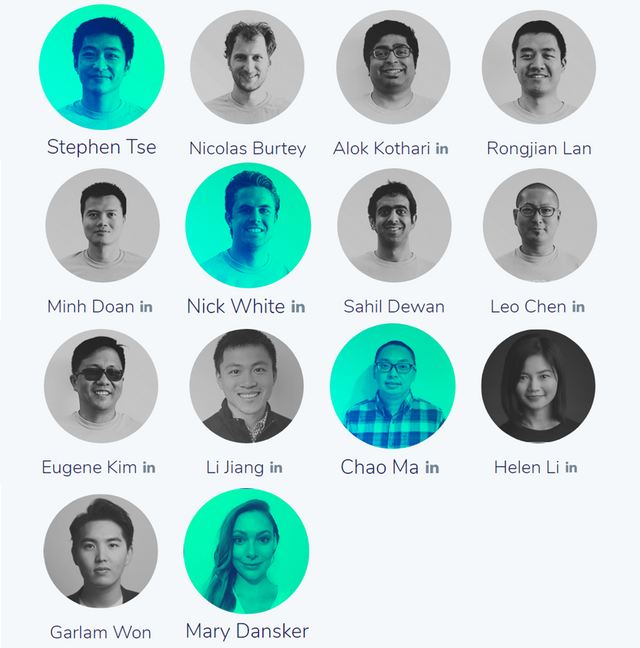
Introducing the people who make the Harmony project possible:
Harmony TEAM
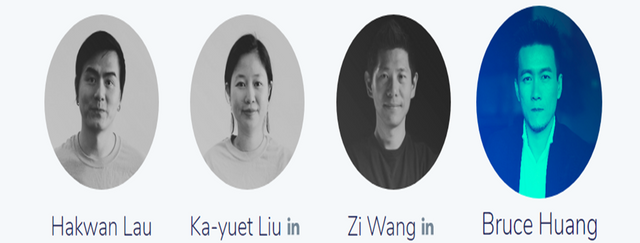
Harmony ADVISORS
Harmony has the support of the following Organizations:
Investors in Harmony
Harmony Partners
More Information & Resources:
- Harmony Website
- Harmony OnePager
- Harmony WhitePaper
- Harmony Medium Blog
- Harmony Telegram Group
- Harmony Twitter
- Harmony LinkedIn
- Harmony Instagram
Thanks:
@nachomolina (Author)
Also published on:
Twitter: https://twitter.com/addverso/status/1165880232949276674?s=20
Twitter Comment: https://twitter.com/addverso/status/1165885031262408704?s=20
Instagram Graphic: https://www.instagram.com/p/B1nmg4wDh8M1lfM3haMRfXzsZ4PrdUNJQv-h2s0/
Also published in my personal account of the Steemit.com platform. If you want to check the publication, here it is the link: