
The most important development of the week was Trump’s landslide victory. Trump is heading to the White House with stronger results than the previous two elections. Republican candidate former President Donald Trump was elected the 47th President of the United States, beating Democratic Party candidate and current Vice President Kamala Harris. According to the latest AP data, Trump reached 301 delegates, exceeding the 270 delegates required for the presidency, while Harris remained at 226 delegates. Since the results in Arizona have not yet been made official, the delegate count is uncertain. However, according to the latest results, Trump is ahead there as well and will finish the election with 312 delegates, barring any surprises. The latest figures in the total number of votes show Trump with 74.2 million votes and Harris with 70.3 million votes. Trump won all 7 of the 7 critical swing states, including Arizona.

This election marks a new era for the United States and the world. Trump is likely to make efforts to implement his campaign promises of high import tariffs, more confrontational relations with traditional allies, and a major crackdown on illegal immigration. In his victory speech, Trump said, “America has given us an unprecedented, powerful mandate.” Trump has benefited from the public’s reaction to the Biden and Harris administration’s policies, including high inflation, increased immigration at the southern border, failure to end the wars in Ukraine and the Middle East, and liberalism on social issues.

Note: The visual shows the vote changes from 2020 to 2024. A very serious vote change is observed especially in Central and South America, where conservative voters live. Although one leg of the desire for change is the economy, it seems that the US people are reacting to Democrats who support a cultural view that is incompatible with most Americans in social events - especially gender and sexuality.
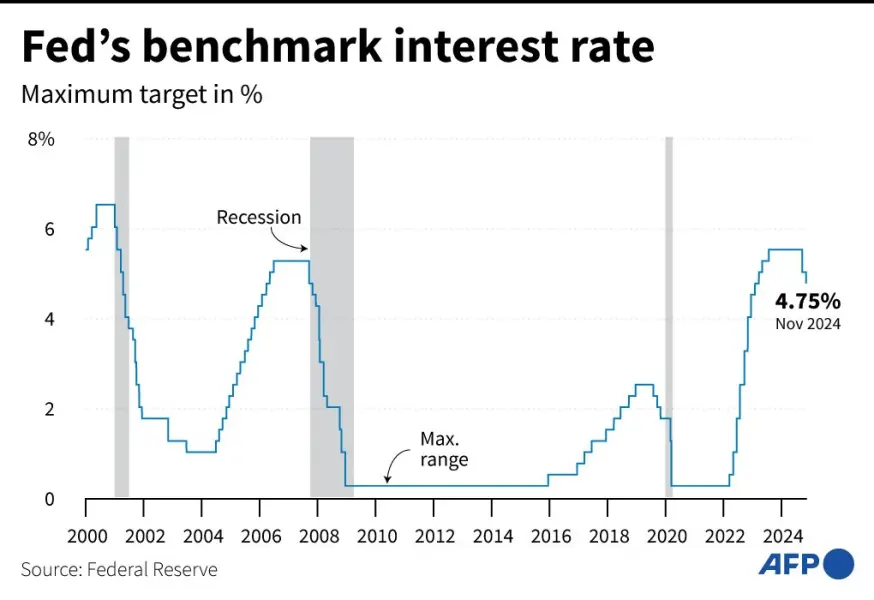
The Fed lowered its benchmark interest rate by 25 basis points at the FOMC meeting held in the shadow of Trump’s landslide election victory. The Fed unanimously lowered its policy rate to 4.5-4.75% and slowed down the pace of interest rate cuts following a half-point rate cut in September to prevent weakness in the US labor market.
The decision text stated that the economy was growing at a ‘robust pace’ but that labor market conditions had slowed compared to the beginning of the year. The FOMC stated that the risks of maintaining stable inflation and achieving a healthy labor market were ‘balanced’.
Fed Chair Jay Powell refrained from speculating on how the central bank would respond to the new Trump administration and said it was too early to assess what the content of the new administration’s economic policies would be. Powell said in response to questions, “We do not speculate, we do not speculate, and we do not assume.” Trump had criticized the Fed for not lowering interest rates quickly enough in his first term. Powell stressed that it was not legally possible for the new administration to remove her from office before her term ends in 2026 and stated that she would reject such a request.
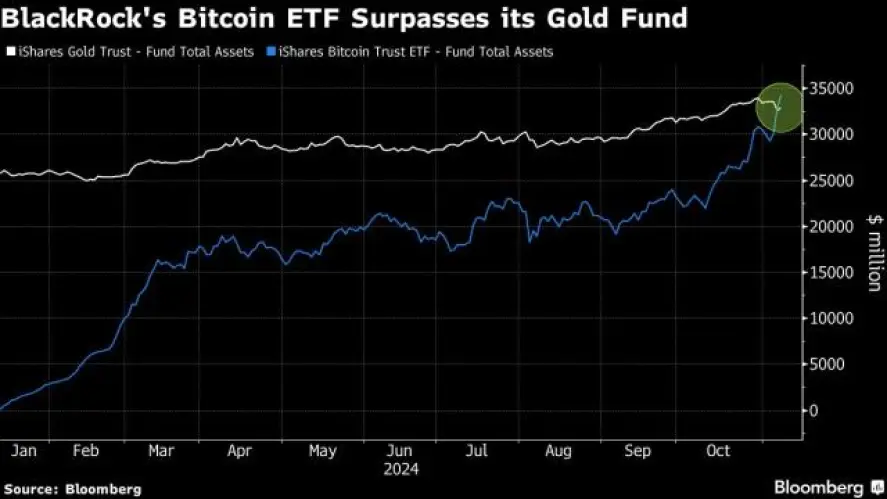
Bitcoin is constantly breaking records after Trump's victory. Trump's pro-crypto rhetoric and election success gave Bitcoin momentum. In addition, the FED's 25 basis point cut in the policy rate at its first post-election meeting supported Bitcoin pricing. As a result of these developments, Bitcoin reached an all-time high of over $77,000. Bitcoin, which has increased by over 60% throughout 2024, has outpaced traditional assets such as global stocks and gold.
Crypto investors are hoping that Trump will fulfill his presidential promises; these include creating a US Bitcoin strategic reserve and dismissing SEC Chairman Gary Gensler. The SEC has filed lawsuits against many crypto companies such as Coinbase, Kraken and Crypto.com. Meanwhile, Bitcoin's rise was supported by inflows into US exchange-traded funds that invest directly in crypto.
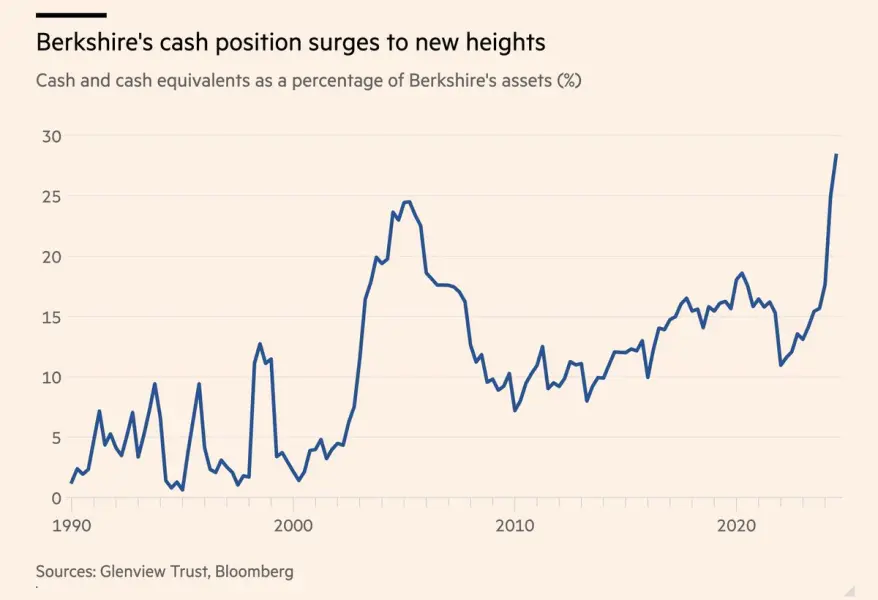
Warren Buffett and Berkshire Hathaway increased their stock exits in the third quarter. Buffett made a $97 billion gain on Apple and other stocks in the third quarter, bringing Berkshire’s cash level to $325 billion. That amount is equivalent to 28% of Berkshire’s assets, the highest level since 1990.
This large cash position has investors questioning the motivation behind these sales. Some investors believe Buffett is sticking to the principles of Benjamin Graham, the pioneer of value investing, which he studied. Apple’s rising price-to-earnings ratio and its lower future profitability expectations are cited as the reasons for these sales.
Concerns that Apple’s investments in artificial intelligence are costly and that it will not be able to offer products as profitable as the iPhone also contribute to this. Another view is that Buffett wants to leave a large cash reserve for his successor, Greg Abel. Investors will have to wait another three months to learn Buffett’s real thoughts behind this move. Buffett is expected to share more information on the subject in his annual letter to be published in February.
Germany’s unpopular and controversial coalition government fell apart after Chancellor Olaf Scholz dismissed Finance Minister Christian Lindner. The third member of the coalition, the FDP, withdrew from the government after Lindner’s dismissal. Chancellor Scholz said he would call a vote of confidence in parliament on January 15. Many political analysts believe Scholz will fail to win a vote of confidence and will call early elections in March. Lindner’s dismissal was due to a disagreement over next year’s budget. The three coalition partners, the Social Democrats (SPD), Lindner’s FDP and the Greens, could not agree on how to close the €9 billion budget deficit ahead of a meeting of the parliamentary budget committee next week.
Scholz said he had asked Lindner to agree to relax the debt limits in the constitution, which the SPD and the Greens have long wanted to reform. However, Scholz said Lindner rejected these proposals and insisted on sticking to the debt limits. “Anyone who rejects a solution, a compromise proposal in such a situation is acting irresponsibly. As a chancellor, I cannot tolerate this,” Scholz said.
If Scholz loses the confidence vote on January 15, he will have to ask President Frank-Walter Steinmeier to dissolve the Bundestag and call early elections. Polls predict that the main opposition Christian Democratic Union (CDU), led by Friedrich Merz, will win the likely elections. However, popular discontent with economic and political instability could also give rise to the success of populist opposition parties, especially the far-right Alternative for Germany (AfD) and the left-wing Sahra Wagenknecht Alliance.
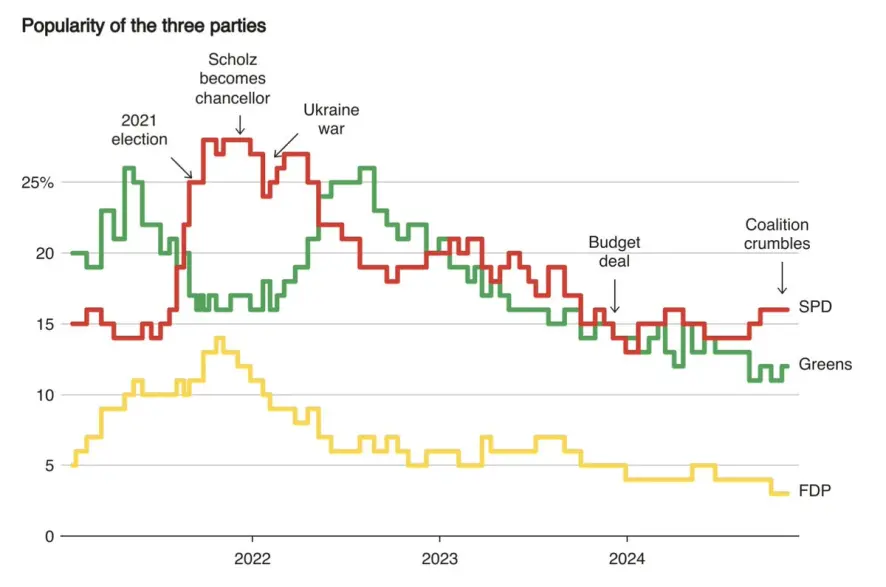
Image: Change in the popularity of the three parties forming the coalition over time
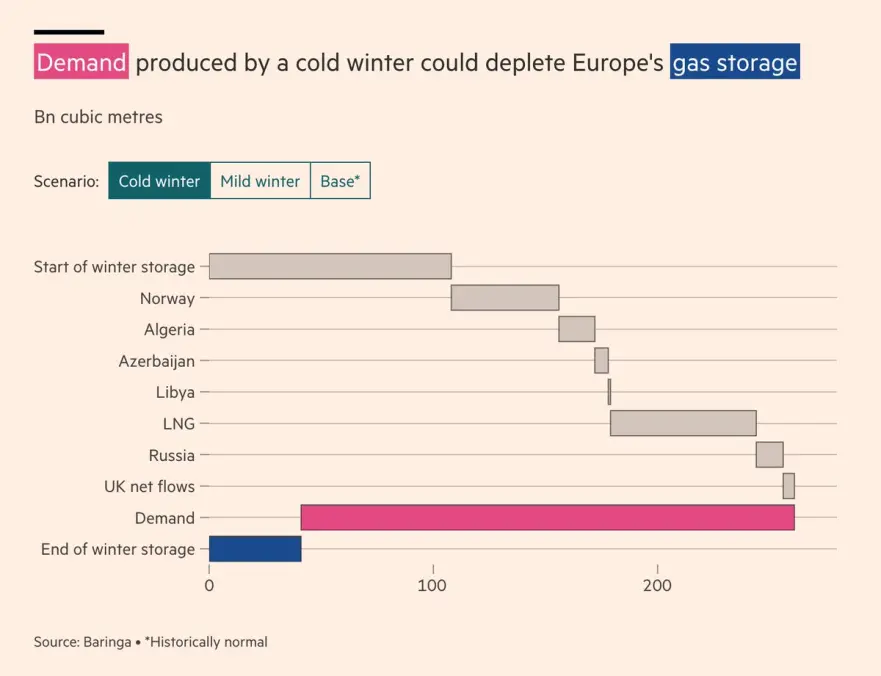
We have entered a period where we will once again be monitoring Europe in the energy market. Europe has become more sensitive to global energy markets by increasing its dependence on LNG after Russia used natural gas as a weapon in the last 2 years. Projections for this winter seem a bit more negative than the previous 2 winters. Currently, Europe's gas storage is full and the winter balance looks positive, but possible supply disruptions or a colder than expected winter could rapidly increase gas demand. In particular, the termination of the transit contract for one of the lines carrying gas through Ukraine and the possibility of Europe exporting gas to Ukraine throughout the winter are increasing concerns.
Competition with Asia, where LNG is in demand, could push prices up in Europe. Geopolitical tensions in the Middle East also stand out as another factor threatening the energy market. If storage levels remain low at the end of winter, Europe may have to import more LNG to prepare for the next winter, and this could create price pressure even in the summer months. According to analysts, while a normal winter would see Europe close its warehouses at 45-55% capacity, a colder winter could drop this rate to 35%.
The global transformer market is experiencing a supply problem. According to the FT, Hitachi, one of the world's largest transformer manufacturers, said the industry is overloaded and struggling to keep up with increasing demand. This poses a risk of delays in critical infrastructure projects in the field of renewable energy.
Hitachi CEO Andreas Schierenbeck said it is difficult for transformer manufacturers to increase production quickly enough to renew grids, and that supplies are under pressure due to the increasing needs of data centers for artificial intelligence. "Increasing capacity is definitely a problem. It is not easy and it will probably not increase fast enough," Schierenbeck said.
Lead times, which used to be six to eight months, have been extended by the sudden increase in demand. The $48 billion transformer market is expected to reach $67 billion by 2030. Schierenbeck said energy companies now have to wait three to four years for critical infrastructure. Energy systems are facing a demand for transmission equipment due to aging infrastructure and the increasing share of renewables. This makes grid upgrades urgently needed to meet grid connection demands for new projects. “The transformer industry is under unprecedented pressure,” says Edvard Christoffersen of Rystad Energy, who predicts that prices have increased by 40% since 2019 and that supply shortages will continue until the end of 2026.
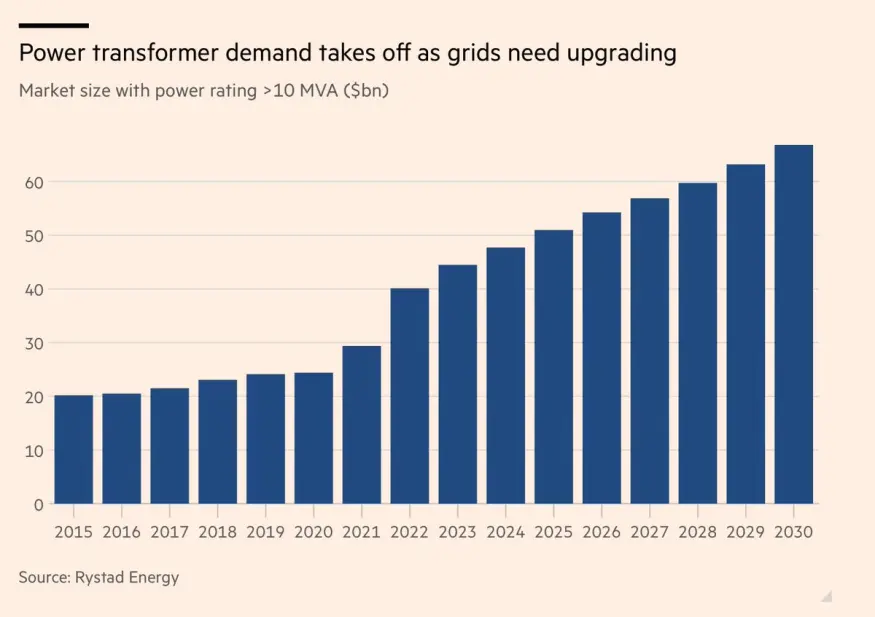
Image: Market growth projection
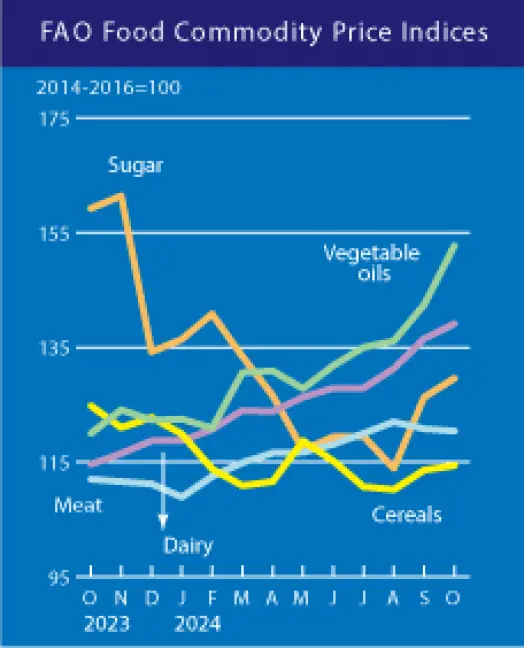
The Global Food Price Index announced by FAO increased by 2% in October to 127.4 points, reaching its highest level in the last 18 months. This increase was particularly affected by the 7.3% increase in vegetable oil prices. Concerns about the production of palm, soy, sunflower and rapeseed oils pushed prices up. In addition, factors such as Russia-Ukraine tensions, adverse weather conditions and the implementation of a floor price in Russia were effective in the increase in grain prices.
Sugar prices also increased due to drought and ethanol production in Brazil, while the depreciation of the Brazilian real against the dollar limited the price increase. The dairy price index increased by 1.9% due to the increase in cheese and butter prices, but the meat price index showed a slight decrease due to low demand. In the FAO's grain supply and demand report, the 2024 global grain production estimate was revised to 2.848 billion tons, which is predicted to be the second highest production in history. Increases in world wheat production in Asia offset declines in Europe, providing a positive outlook.
The information, comments and recommendations contained herein are not within the scope of investment consultancy. Investment consultancy services are provided within the framework of the investment consultancy agreement to be signed between brokerage firms, portfolio management companies, banks that do not accept deposits and customers. The comments in this article are only my personal comments and these comments may not be appropriate for your financial situation and risk return. For this reason, investments should not be made based on the information and comments in my articles.






