
Following the end of Jerome Powell's tenure, the US Federal Reserve is undergoing a radical doctrinal shift. In his final meeting, Powell closed the door on interest rate cuts, stating that core inflation (Core PCE) was hovering around 3.5% due to energy prices and the crisis in the Middle East. He even complained about pressures on the Fed's independence, bidding farewell with what was essentially a bitter pill. However, a completely different game plan lies on the table for Trump administration Treasury Secretary Scott Bessent and the new Fed Chairman Kevin Warsh.
Kevin Warsh made a crucial move during his Senate confirmation hearing that markets overlooked. He described the Core PCE data, which markets have used as a primary compass for years, as noise. Instead, he announced that the Dallas Fed would prefer to use trimmed-mean and median inflation data, which provide a more balanced measure of price fluctuations. The economy and prices are the same, but the signboard is changing.
https://www.clevelandfed.org/indicators-and-data/median-pce-inflation
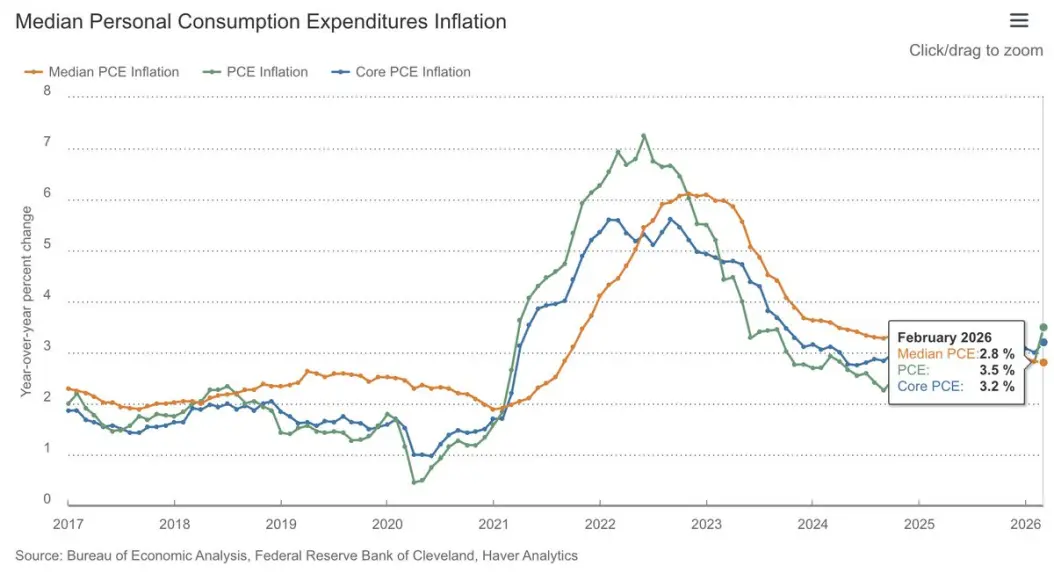
And now, the Dallas Trimmed Mean (CPE) data will enter our lives. https://fred.stlouisfed.org/series/PCETRIM12M159SFRBDAL#
While core inflation is alarming at around 3.5%, the trimmed mean CPE, as indicated by Warsh, is at 2.4%, quite close to the Fed's 2% target rule. This metric change opens a clear path to legitimize interest rate cuts despite the high inflation figures in the headlines. The rules of the game are being rewritten by the actors around the table.
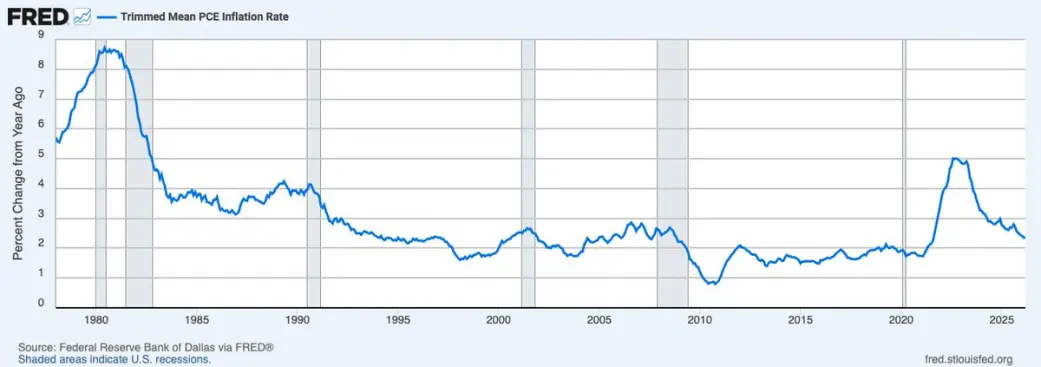
Trimmed-mean PCE inflation is an alternative measure of core inflation calculated by the Dallas Fed. This method is based on the monthly price changes of approximately 177 components within the Personal Consumption Expenditures Price Index (PCE) and aims to achieve a more stable inflation trend by trimming the most extreme (lowest and highest) price movements according to their weights. Unlike the standard “PCE excluding food and energy” (core PCE) measure, it dynamically extracts the most extreme values each month based on the distribution of price changes, rather than excluding components fixedly.
The new administration's strategy is more than just a trick of the trade. This new structure, shaped around Warsh, Treasury Secretary Bessent, and Stanley Druckenmiller, completely abandons the old Keynesian demand management model. Instead, it shifts to a new system based on productivity and supply-side growth. The new system argues that artificial intelligence (AI) will create structural downward pressure on prices. In this scenario, interest rate cuts will not be to stimulate consumer demand, but to facilitate the financing of energy, infrastructure, and technology. Thus, the Fed will be able to continue shrinking its balance sheet while simultaneously lowering interest rates. This situation, which contradicts the rules of the past, forms the basis of the new generation supply and investment vision.
Although Warsh stated he would not take direct instructions from President Trump, we will see much tighter coordination between the Fed and the Treasury in the new period. This will reduce the institution's political isolation, but it may cause markets to question the Fed's credibility in fighting inflation. If the plan on the table is successfully implemented, interest rates will be lowered while structural unemployment and AI integration balance inflation. This is why the real focus should be on 30-year US Treasury yields, not short-term interest rates. If short-term rates are falling in anticipation of a rate cut, while 30-year Treasury yields are being pressured upwards, it means the market is pricing in the cost of this new monetary policy. We are no longer facing just a change of personnel, but a massive regime change that will determine the direction of capital.






