
Uniqlo is in a difficult position. CEO Tadashi Yanai has revealed that the Japanese clothing giant does not use Xinjiang cotton. This did not sit well with Chinese consumers.
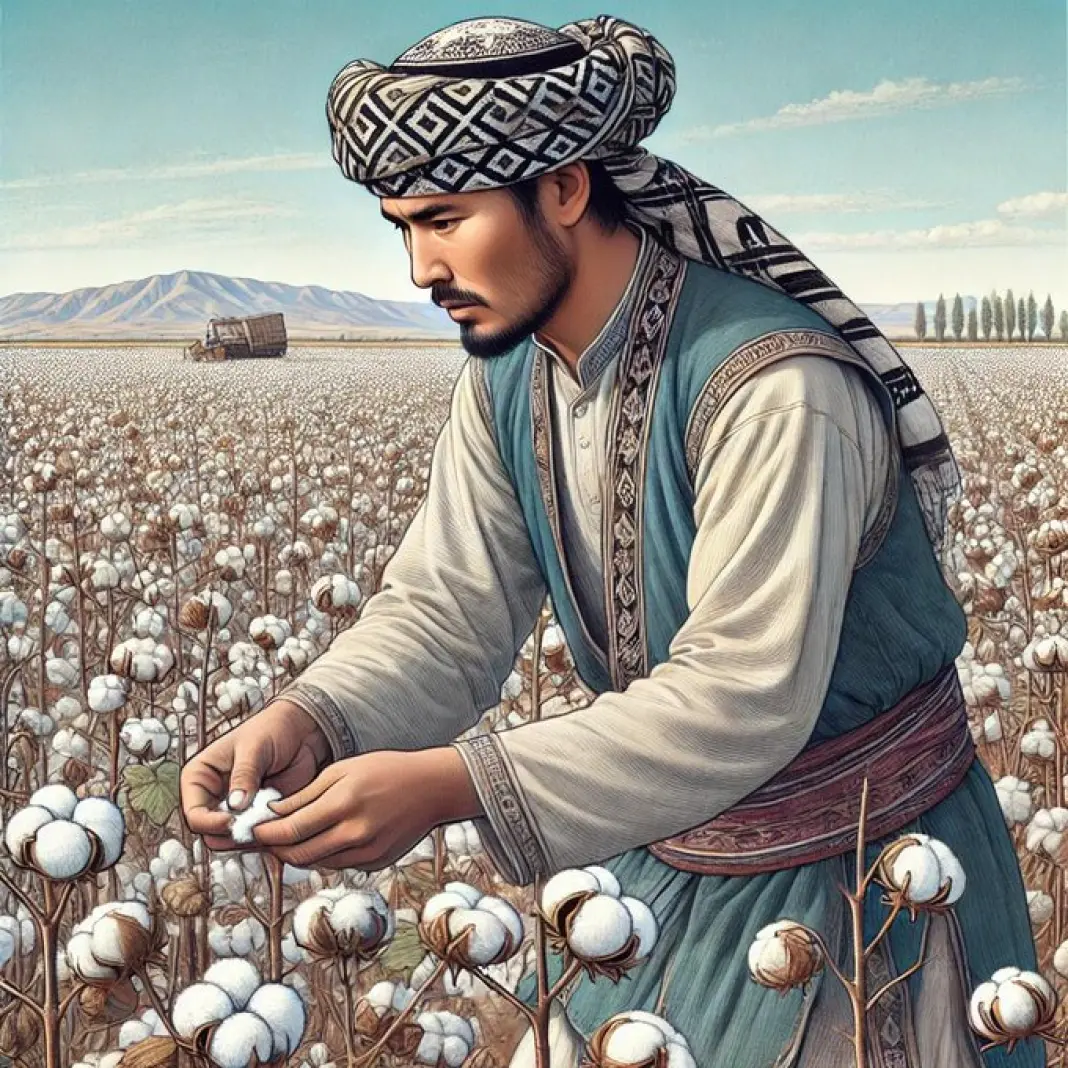
Now, if you’re wondering why this has caused such a stir, Xinjiang, a region in China, is famous for producing some of the world’s finest cotton. By 2021, it accounted for 85% of China’s cotton production and almost a quarter of the global supply.
But there’s a dark side to this. Research that year revealed that much of this cotton was linked to forced labor. Reports alleged that Uyghurs, a predominantly Muslim Turkic ethnic group living in Xinjiang, were being forced to pick cotton under the guise of government “labor transfer programs” as part of poverty alleviation plans.
Suddenly, there was a stigma attached to the world’s finest cotton.
Naturally, the revelations sparked outrage. Western brands such as H&M, Adidas, Nike and Burberry have distanced themselves from Xinjiang cotton, saying they will not source materials that use forced labor. The US, China’s largest final consumer of textiles and apparel, has gone a step further, banning imports of Xinjiang-related goods altogether.
As pressure has mounted, demand for Xinjiang cotton has begun to decline. The China Cotton Association found an 8% drop in Xinjiang cotton production last year and a 5% decrease in planting area.
But the Chinese government has repeatedly denied the allegations of forced labor, dismissing them as Western propaganda aimed at stifling Chinese industries. In response, Chinese consumers have begun boycotting brands that reject Xinjiang cotton.
But in the midst of all this, one brand has managed to remain neutral, escaping both the boycotts and the storm of Chinese anger. And that’s Uniqlo. It has never openly discussed its source or its ties to Xinjiang cotton, thus avoiding much of the consumer anger.
But now that its CEO has made it clear that Uniqlo does not have Xinjiang cotton, a backlash has begun. Chinese consumers are starting to turn their backs on Uniqlo.
But that’s only half the story. Another interesting point is that while brands like Uniqlo have said they are staying away from Xinjiang cotton, that doesn’t seem to be the case.
Recent tests on clothing sold by major retailers in the US and around the world found traces of banned Chinese cotton in about 20% of samples. This suggests that Xinjiang cotton continues to haunt the fashion industry despite efforts to cut ties.
How does this happen, you may ask?
One of the sneaky ways Xinjiang cotton has found its way into the US is by exploiting a loophole called the de minimis rule. Until 2022, this provision allowed shipments worth less than $800 to enter the US without regular customs checks or import duties. It was meant to help facilitate low-value imports.
But some e-commerce companies have found a way around the system. To avoid inspection, they sent tons of small packages, each under the $800 limit. Customs officials had too many packages to check and not enough data to determine their origins. This made it nearly impossible to intercept and stop the forced labor goods.
The US quickly caught on and has since closed the loophole. Under the Uyghur Forced Labor Prevention Act (UFLPA), products linked to forced labor are now blocked regardless of the value of the shipment. With stricter rules in place, it was difficult for manufacturers to get Xinjiang cotton through undetected. So what did they do?
They got creative and found roundabout ways to get into the supply chain. Take Uniqlo for example. The brand sources its clothing from manufacturers around the world, but its largest manufacturing hub is China. Its suppliers include Lu Thai Textile, a company featured in the Sheffield Hallam University case study because its shipment data was publicly available.
Lu Thai is based in Shandong, a province in eastern China. Until 2019, it sourced its cotton exclusively from Xinjiang. But after the forced labor controversy erupted, Lu Thai’s annual reports stopped disclosing where its cotton came from.
But there was a problem. The company’s government subsidies told a different story. Its 2020 annual report revealed that Lu Thai received special grants to ship cotton and cotton yarn from Xinjiang. Given that Xinjiang provides the majority of China’s cotton, it’s likely that Lu Thai never fully cut ties with the region. If so, some of that cotton may have also quietly found its way into Uniqlo’s inventory.
Also, since this cotton would be marked if shipped directly from China to the US, it often took a roundabout route – it was exported to an intermediary country like Bangladesh, Vietnam, Indonesia, Cambodia before reaching the US. There, this cotton was mixed with local cotton from the intermediary country and turned into finished products. When these garments were exported to the US, the labels only showed the final country of production, making it nearly impossible to trace the cotton back to its Xinjiang roots.
But here’s the catch. The company now claims to source its cotton from abroad rather than domestically. This makes sense, since China is increasingly using Xinjiang cotton for its domestic industry, while importing the rest from countries like the US, Vietnam, and Brazil.
Also, Lu Thai’s report makes no mention of subsidies for the transportation of cotton yarn since 2021. So, unless there is some clever rephrasing, it’s more likely that Xinjiang cotton is now entering Uniqlo’s supply chain via Lu Thai.
But we can’t say the same for other Chinese suppliers or other clothing brands. Because tests have found Xinjiang cotton in products still banned for forced labor, it raises the question: How do we know which brands are truly free of forced labor-related clothing?
I’ll leave you with that thought. Until you know the answer to that question, be careful about what you wear!






