
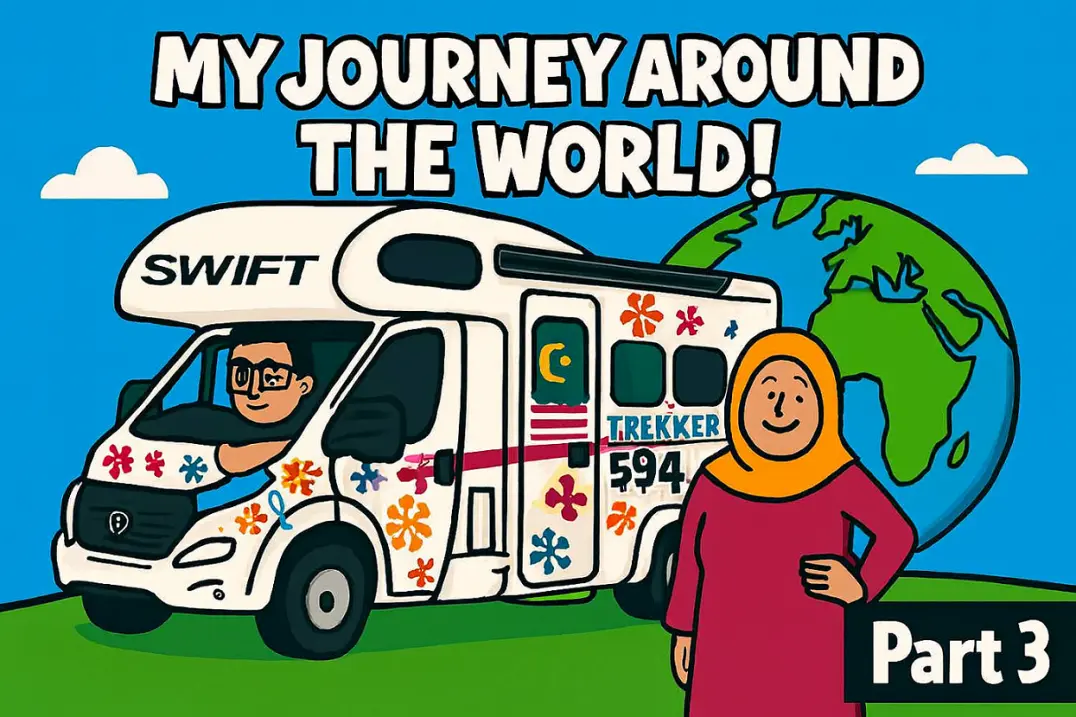
Every great journey needs a vessel. For me, that vessel was never going to be a plane ticket or a train pass — it had to be a motorhome. A home on wheels, a companion that could carry me across borders and landscapes, turning the road itself into my living room. But choosing the right motorhome isn’t just about picking a vehicle; it’s about finding the balance between dream and reality, comfort and cost, freedom and responsibility.
I’ve seen hundreds, if not thousands, of motorhomes over the years — in magazines, on YouTube, parked at campsites, and listed for sale. Each one seemed to whisper a different promise: freedom, comfort, adventure, or practicality. But for those who don’t know much about RVs, let me break down the main types you’ll encounter. Understanding them is the first step in choosing the right rig for a journey around the world.
🚍 Class A Motorhomes
These are the giants of the RV world, built on bus or heavy-duty truck chassis. They’re the kind of rigs you see gliding down highways like rolling mansions. Inside, you’ll find spacious living areas, full kitchens, bathrooms, and often slide-outs that expand the interior even further.
-
Pros: Comfort, storage, luxury features, ideal for long-term living.
-
Cons: Expensive, heavy, harder to maneuver in tight cities, thirsty on fuel.
For someone dreaming of crossing continents, Class A rigs are tempting — but they come with the weight of responsibility, literally and financially.
🚐 Class B Motorhomes (Campervans)
On the opposite end of the spectrum are campervans. Compact, nimble, and easy to drive, they’re often converted from vans like the Mercedes Sprinter or Ford Transit.
-
Pros: Fuel-efficient, easy to park, discreet, perfect for solo travelers or couples.
-
Cons: Limited space, smaller kitchens and bathrooms, less storage.
Campervans are the minimalist’s choice. They’re about simplicity and mobility, but for a journey as ambitious as mine, I wondered if they might feel too cramped over time.
🚙 Class C Motorhomes
Somewhere in between lies the Class C motorhome, recognizable by the over-cab sleeping area. Built on truck or van chassis, they strike a balance between comfort and practicality.
-
Pros: Affordable compared to Class A, good storage, family-friendly layouts.
-
Cons: Larger than campervans, but not as luxurious as Class A.
For many world travelers, Class C rigs are the sweet spot — big enough to live in comfortably, small enough to handle diverse roads.
🛻 Truck Campers
These are camper units mounted onto the bed of a pickup truck. Rugged, flexible, and perfect for off-road adventures.
-
Pros: Detachable, versatile, great for rough terrain.
-
Cons: Limited space, less comfortable for long-term living.
Truck campers appeal to adventurers who want to go where traditional motorhomes can’t. But for me, the idea of living months on end in such a compact space felt challenging.
🚐 Travel Trailers & Fifth Wheels
Towable RVs that hitch to a car or truck. They come in all sizes, from tiny teardrops to massive fifth wheels with multiple rooms.
-
Pros: Variety of options, can unhitch and use your vehicle separately, often cheaper.
-
Cons: Requires a capable tow vehicle, trickier to maneuver, setup time at campsites.
Trailers offer flexibility, but towing across continents adds another layer of complexity.
⚖️ The Balancing Act
Each type of RV has its own personality. Some are built for luxury, others for simplicity, and some for rugged adventures off the beaten path. For me, the challenge was not just learning the differences, but imagining which one could truly become my home on wheels.
I had to weigh questions like:
-
Do I want comfort or mobility?
-
Can I afford the maintenance and fuel costs?
-
Will this rig survive the journey from Europe to Asia?
-
Most importantly: will it feel like home?
🌍 The Search That Shaped the Journey
Dreams and money gave me the foundation, but the motorhome became the heart of the journey. I didn’t just spend weeks browsing listings — I spent more than a year researching, making notes, and figuring out exactly what I wanted. Every model I studied, every feature I compared, brought me closer to understanding what kind of home I needed on the road.
The search itself became part of the adventure. Late nights scrolling through forums, scribbling pros and cons into notebooks, and imagining myself behind the wheel of rigs I’d only seen in photos — all of it shaped not just my decision, but my vision of the journey ahead.
And after months upon months of searching, I finally began to see the rig that felt right. In the next part, I’ll share how I chose the one that will carry me across continents, turning this dream into reality.
To Be Continued…
🔗 Missed the earlier parts? Catch up here:






