Hola, saludos a todos y gracias por seguir visitando los artículos de un servidor, agradezco mucho sus visitas y comentarios, esperando les agrade el artículo que presento a continuación.
Como comentaba en un artículo anterior mi primer buscador web fue Altavista, luego pasé a Yahoo! y ahora uso Google y un poco Bing, pero no son los únicos buscadores web existentes. Sin embargo en la actualidad la privacidad en línea es un tema cada vez más importante para los usuarios de Internet, es un hecho que la mayoría de los buscadores web como Google o Bing rastrean y recopilan información sobre el usuario supuestamente con la finalidad de conocer sus preferencias y "ofrecer resultados más ajustados a sus gustos".
No todos los usuarios están dispuestos a que una empresa recopile datos de su navegación y luego los use con otros fines sin consentimiento del mismo, por ese motivo existen buscadores que "prometen" no recopilar ninguna información sensible del visitante y así tenga la seguridad de que su navegación en el portal es completamente anónima (o lo más privada posible). Estos son cinco buscadores web que se preocupan por la privacidad del usuario.
DuckDuckGo
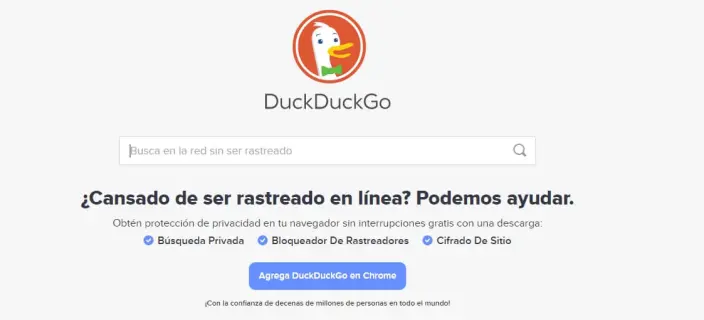
Quizás el más conocido de los buscadores privados es DuckDuckGo, este buscador "promete" respetar la privacidad del usuario, pues no rastrea, no guarda cookies ni información personal y no comparte datos con terceros; además utiliza una conexión cifrada HTTPS para proteger la privacidad del usuario.
Sin embargo no todo ha sido miel sobre hojuelas en DuckDuckGo, pues aunque usa su propio motor de búsqueda también requiere el servicios de terceros para complementar algunos resultados (sin comprometer los datos sensibles del usuario). Pero por ciertas razones Microsoft obtenía "datos" de los visitantes cuando estos usaban DuckDuckGo, lo cual encendió las alarmas entre los usuarios del buscador.
DuckDuckGo decidió tomar cartas en el asunto, por lo que podemos decir que "es seguro" ahora. En definitiva es una excelente opción para aquellos que buscan un buscador web que respete su privacidad, el funcionamiento es prácticamente el mismo que el buscador de Google, sin embargo carece de algunas funciones útiles que si tiene el buscador de Google, por ejemplo si estamos buscando información de empresas o negocios locales en los resultados de Google veremos un mapa con la ubicación de los mismos, teléfonos de contacto, etc; pero eso no está en DuckDuckGo y es algo que me gustaría ver algún día.
StartPage
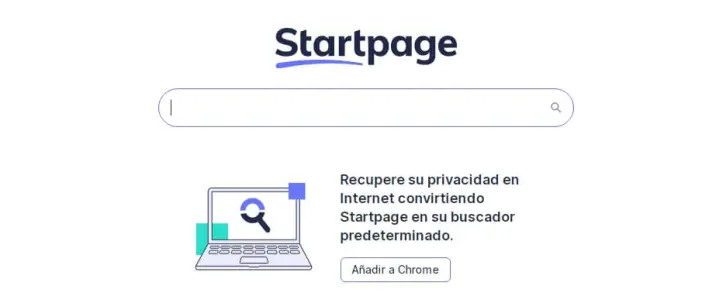
StartPage es otro buscador web que se preocupa por la privacidad del usuario, al igual que DuckDuckGo no rastrea, no guarda cookies ni información personal, y no comparte datos con terceros y también utiliza una conexión cifrada HTTPS para proteger la privacidad del usuario. Pero a diferencia del mismo si utiliza los resultados de búsqueda desde Google pero sin comprometer la privacidad del usuario.
Si regresamos al ejemplo de buscar empresas o negocios locales en StartPage veremos que los primeros resultados son ofrecidos como "anuncios" pero manejados por Google, el resto de resultados ya se manejan dentro del propio buscador (además de búsquedas relacionadas que complementan los resultados); del mismo modo ofrece una extensión de navegador (al igual que DuckDuckGo) para una protección adicional contra el seguimiento y un servicio de correo electrónico propio llamado "Startmail" enfocado en la seguridad.
Qwant
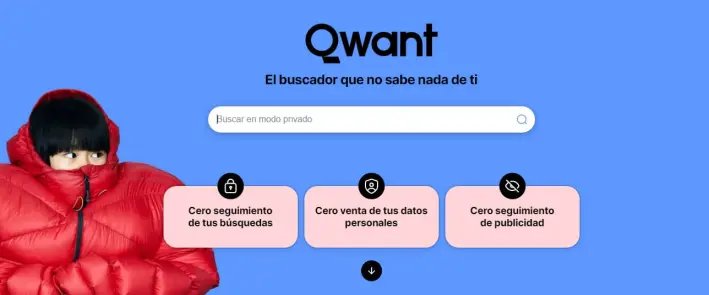
Básicamente todos los buscadores privados de los que hablaremos en este artículo prometen privacidad total y usan HTTPS de manera predeterminada para funcionar, así que omitiremos ya esas características en adelante. La empresa desarrolladora del buscador afirma no emplear el seguimiento de usuarios y no personalizar los resultados de búsqueda, es decir, así como va encontrando los resultados se van presentando, no hay una selección de relevancia o preferencias por parte del usuario (lo que podría llevar a rastreos o sesgos de la información).
El funcionamiento es prácticamente el mismo que el buscador de Google, ofreciendo resultados relacionados con la búsqueda del tema en cuestión, imágenes relacionadas, videos, etc, pero sin los agregados como los mapas o teléfonos de los establecimientos comerciales a la derecha. Personalmente me hubiera gustado ver algo así, pero Google usa su servicio de Google maps para complementar estos resultados, Bing también tiene su servicio de mapas, y hasta donde se ninguno de estos buscadores alternativos tiene dicha funcionalidad.
Swisscows
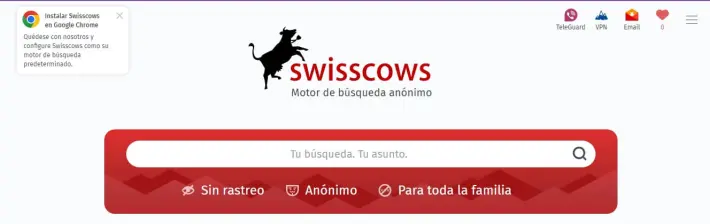
Swisscows al igual que el resto de los buscadores en este artículo también toma muy en serio la privacidad del usuario, además para ofrecer mejores resultados dispone de un enlace "Vista previa" junto al título del resultado, al presionarlo abre en una ventana aparte una captura de pantalla del sitio para que veamos como es sin tener que visitarlo.
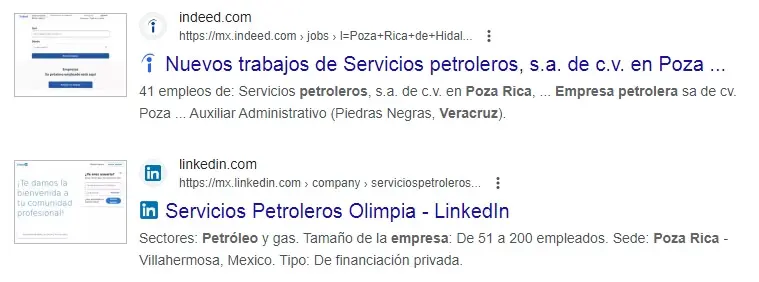
Ofrece del mismo modo servicios de VPN y correo electrónico seguros, lo que puede ayudar a mitigar el rastreo de la actividad del usuario (que ya de por si nos aseguran que es "seguro"). Personalmente me agrada la funcionalidad de la vista previa mediante un enlace en los resultados de la búsqueda, pero hubiera sido bueno implementarla como algo integrado en los resultados en lugar de tener que presionar "algo", hasta el momento no he visto ningún buscador que tenga esa funcionalidad de manera nativa y no hay más remedio que recurrir a algún plugin como "Search Result Previews" para obtener resultados como los siguientes:
Searx

Searx es un buscador web de código abierto que se preocupa por la privacidad del usuario, al igual que el resto de los buscadores web no rastrea ninguna actividad del usuario. Obtiene los resultados desde otros buscadores pero sin entregar a estos los datos esenciales de quien lo está usando y por si fuera poco los resultados se ofrecen haciendo uso del método POST de la conexión al sitio web, de manera que si pusieramos la siguiente consulta en el buscador de Searx "empresas petroleras en poza rica veracruz" veríamos lo siguiente:

Y en DuckDuckGo veríamos algo como lo siguiente:

Los beneficios de esta implementación es que no es posible indexar los resultados desde otros sitios o buscadores manteniendo la privacidad de las búsquedas, pero a cambio no podríamos compartir los resultados con alguien más. Por este motivo Searx habilita de manera opcional la búsqueda tradicional mediante un enlace en los resultados, pero de forma predeterminada los resultados en la barra de direcciones del navegador web se muestran de la primer manera.
Conclusiones:
Hoy en día hay cada vez más personas preocupadas por su privacidad, por lo que la existencia de estos buscadores privados es una buena opción si es nuestra privacidad algo primordial. Personalmente pienso que están muy bien, pero algo cortos en funciones que ofrecen los buscadores convencionales, quizá con el tiempo se implementen algunas de ellas, no lo sabemos.
Si les ha resultado de utilidad este artículo les invito a dejar su comentario, a probarlos por si no los han usado todavía o no los conocían y dejen sus impresiones al respecto. Agradezco de antemano sus palabras.
Hi, greetings to every one and thanks for continuing to visit my articles, I really appreciate your visits and comments, hoping you like the article that I present below.
As I mentioned in a previous article, my first web browser was Altavista, then I went to Yahoo! and now I use Google and a bit of Bing, but they are not the only web search engines out there. However, nowadays online privacy is an increasingly important issue for Internet users, it's a fact that most web finders such as Google or Bing track and collect information about the user supposedly with the purpose of knowing their preferences and "offer results that are more tailored to your tastes".
Not all users are willing for a company to collect their browsing data and then use it for other purposes without their consent, for this reason there are search engines that "promise" don't collect any sensitive information from the visitor and thus be sure that your navigation on the portal is completely anonymous (or as private as possible). These are five web browsers that care about user privacy.
DuckDuckGo
Maybe the best known of the private search engines is DuckDuckGo, this search engine "promises" to respect the privacy of the user, since it does not track, it does not save cookies or personal information and it does not share data with third parties; it also uses an encrypted HTTPS connection to protect user privacy.
However, not everything has been hunky-dory with DuckDuckGo, because although it uses its own search engine, it also requires third-party services to complement some results (without compromising the user's sensitive data). But for certain reasons Microsoft obtained "data" from visitors when they used DuckDuckGo, which set off alarm bells among browser users.
DuckDuckGo decided to take action on the matter, so we can say that it is "safe" now. In short, it is an excellent option for those who are looking for a web browser that respects their privacy, the operation is practically the same as the Google search engine, however it lacks some useful functions that the Google search engine has, for example if we are searching information from local companies or businesses in the Google results we will see a map with their location, contact telephone numbers, etc; but that's not in DuckDuckGo and it's something I'd like to see one day.
StartPage
StartPage is another web browser that cares about user privacy, just like DuckDuckGo does not track, don't save cookies or personal information, and does not share data with third parties and also uses an encrypted HTTPS connection to protect user privacy. But unlike it use the search results from Google but without compromising the privacy of the user.
If we return to the example of searching for local companies or businesses in StartPage, we will see that the first results are offered as "ads" but handled by Google, the rest of the results are already handled within the search engine itself (in addition to related searches that complement the results); it likewise offers a browser extension (just like DuckDuckGo) for additional protection against tracking and its own security-focused email service called "Startmail".
Qwant
Basically all of the private browsers we'll talk about in this article promise full privacy and use HTTPS by default to work, so we'll skip those features in the future. The company that develops the search engine claims not to use user tracking and not ersonalize the search results, that is, as it finds the results they are presented, there is no selection of relevance or preferences by the user (which could lead to to tracking or information bias).
The operation is practically the same as the Google search engine, offering results related to the search for the subject in question, related images, videos, etc., but without the additions such as maps or telephone numbers of commercial establishments on the right. Personally I would have liked to see something like this, but Google uses its Google maps service to complement these results, Bing also has its maps service, and as far as I know none of these alternative search engines have such functionality.
Swisscows
Swisscows, like the rest of the search engines in this article, also takes user privacy very seriously. In addition, to offer better results, it has a "Preview" link next to the title of the result, when clicked it opens a screenshot in a separate window. screen of the site so that we can see how it is without having to visit it.
It also offers secure VPN and email services, which can help mitigate user activity tracking (which already assures us it's "safe"). I personally like the preview functionality via a link in the search results, but it would have been nice to implement it as something built into the results instead of having to hit "something", so far I haven't seen any search engine that has this functionality natively and there is no choice but to resort to a plugin such as "Search Result Previews" to obtain results like the following:
Searx
Searx is an open source web browser that cares about user privacy, like other web browsers it don't track any user activity. It obtains the results from other search engines but without delivering to them the essential data of who is using it and as if that were not enough, the results are offered using the POST method of the connection to the website, so that if we put the following query in the Searx search engine "oil companies in poza rica veracruz" we would see the following:
And in DuckDuckGo we would see something like the following:
The benefits of this implementation is that it is not possible to index the results from other sites or search engines while maintaining the privacy of the searches, but in return we could not share the results with someone else. For this reason Searx optionally enables traditional search via a link in the results, but by default the results in the web browser's address bar are displayed in the first way.
Conclusions:
Today there are more and more people concerned about their privacy, so the existence of these private search engines is a good option if our privacy is paramount. Personally I think they are very good, but somewhat short on functions offered by conventional search engines, perhaps some of them will be implemented over time, we don't know.
If you have found this article useful, I invite you to leave your comment, to try them in case you have not used them yet or did not know them and leave your impressions about it. I thank you in advance for your words.





