Kaito changed the yaps in aura, rebranded as a studio and is now charging the evolution of crypto's attention economy after the Nikita cataclysm!
What started as a place to share alpha, discuss projects, build communities and occasionally argue about which token was going to 100x has evolved into something much bigger.
Attention itself has become an asset, creators compete for mindshare, projects look for ways to measure influence, and reputation is becoming increasingly valuable.
Crypto Twitter has changed dramatically over the last couple of years. One of the names sitting right in the middle of this transformation is Kaito!
Yaps became one of the most recognisable ways to measure attention and reward creators. Kaito Studio moved things towards a more structured relationship between brands and creators.
Now Aura is bringing another layer to the equation by looking beyond social attention and towards reputation and verifiable activity.
So what exactly is Kaito, how did Yaps work, what is Kaito Studio, and what does Aura actually do? Let’s break it down for those that stayed away!
What is Kaito? At its core was/is an AI-powered crypto intelligence and attention platform designed to make sense of the ridiculous amount of crypto information!
Thousands of posts, announcements, research reports, governance discussions, memes, narratives and market opinions are being created constantly.
Trying to separate useful information from noise can feel like searching for a specific grain of rice in a swimming pool. Then came the yaps!
The strong voice in the space got rewarded with yaps as an attention tokens, and was used for leaderboards and rewarding those that pushed the narrative!
Got 585.51 yaps and was 2947th in the attention charts, which must admit was a good rank! The shift came and had to swap them in the new "Aura" thingy!
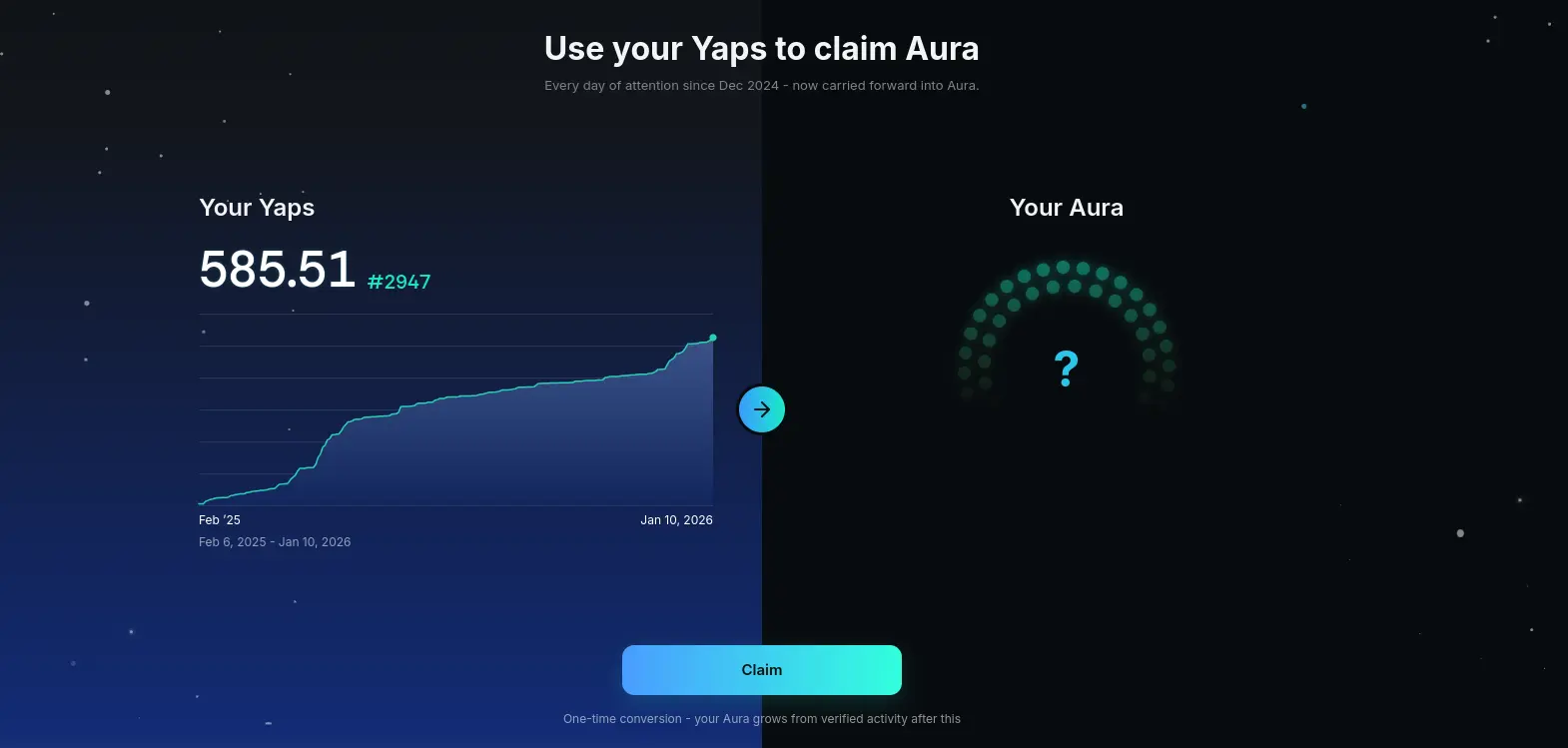
Kaito brings much of this information together and uses AI, data analytics and social signals to help users discover, analyse and measure what is happening across the crypto ecosystem.
In 2026 Kaito has expanded beyond simply being a crypto search and intelligence product. The ecosystem now includes different pieces designed around research, creators, brands and reputation.
Kaito Pro sits closer to the intelligence side, helping users explore crypto information, narratives and market activity.
Kaito Studio is focused on connecting brands with creators and facilitating campaigns. Aura moves into the reputation side, attempting to provide a broader picture of influence and activity.
The basic idea behind InfoFi is pretty simple. If information and attention have economic value, why shouldn't the people creating that value be rewarded for it?
Yaps became one of Kaito's most recognisable products and helped push the concept of Information Finance into the mainstream crypto conversation.
Before Yaps, projects generally had much more traditional ways of working with influencers. Follower counts, engagement numbers, private negotiations and sponsorship deals were common ways!
Kaito introduced a much more data-driven approach. Creators could post about projects and narratives, while Kaito attempted to measure the relevance and impact of that content.
The idea was not simply to reward whoever posted the most. Instead, the system tried to identify meaningful attention around particular topics and rank creators accordingly.
Creators would compete for positions on specific project or narrative leaderboards, with their ranking potentially determining eligibility for rewards distributed by participating projects.
For projects, it offered a way to distribute incentives based on measurable social activity rather than simply handing a marketing budget to whoever had the biggest follower count.
As Yaps grew, so did criticism around repetitive content, farming behaviour and the difficulty of separating genuine influence from people simply trying to maximise their rewards.
That is one of the unavoidable problems with any incentive system. Once participants understand what the algorithm rewards, some will naturally try to optimise for those signals.
And then came another problem that had very little to do with the creators themselves. X changed its API policies and the yaps era ended.
On January 15, 2026, Kaito announced the shutdown of Yaps and its incentivised Yapper Leaderboards following restrictions around X API access for applications rewarding users for posting.
That was a significant moment for the InfoFi sector. It was the death of the "reply guy" and the end of all incentivized campaigns!
Yaps had helped establish the idea that social attention could be measured and monetised, but its model was heavily dependent on access to X data and the ability to operate an incentivised posting system.
With that model no longer sustainable in the same way, Kaito began moving towards a more structured creator economy. Welcome Kaito Studio!
It is important to understand that Aura did not simply replace Yaps as though someone had walked into the office, deleted the Yaps database and renamed the button.
The three concepts are actually quite different. Yaps was primarily an attention and leaderboard system. Kaito Studio is a creator and brand marketplace.
Aura is a newer reputation and influence layer. They are connected, but they are not interchangeable. A new age started and I am relatively well aligned!
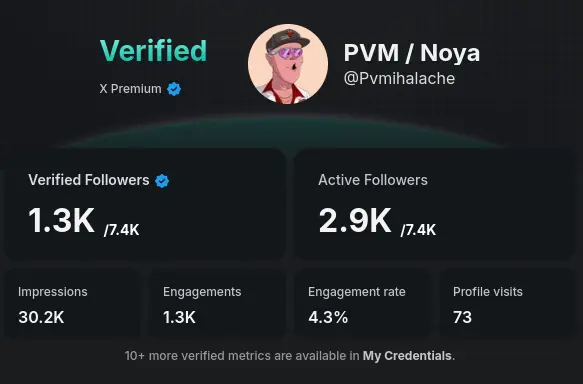
Kaito Studio is essentially Kaito's move towards a more traditional creator marketplace, but with the data and analytics that sit underneath the Kaito ecosystem.
Instead of having thousands of creators competing on an open leaderboard for points, Studio creates a more structured relationship between brands and selected creators.
Creators can apply and go through an eligibility process. Brands can create campaigns with specific requirement while eligible creators can submit quotes.
The creator delivers the agreed content and the compensation comes from the campaign arrangement rather than simply accumulating points.
The old Yaps model was largely about competing for measurable attention. Studio is much more about connecting brands with creators who can actually deliver a campaign.
Kaito Studio has been positioned around platforms including X, YouTube and TikTok, while targeting areas such as crypto, finance and AI.
That potentially gives brands a much wider pool of creators and gives creators another route to monetise their audience without having to spend every waking hour trying to climb an InfoFi leaderboard.
Aura is the net layer of reputation and influence metric, introduced alongside Kaito Pulse in 2026. The idea is fairly straightforward... maybe!
Rather than looking only at how much attention an account generates, Aura attempts to build a broader picture of a user's reputation by incorporating additional signals around activity and behaviour.
Imagine two accounts talking about exactly the same project. Both receive engagement, both have audiences and both publish regularly.
One account might also have verifiable activity across supported crypto platforms. Aura is designed to bring more of that context into the picture.
Supported activity can include public trading and prediction-market activity from platforms such as Hyperliquid and Polymarket.
This means the system can potentially look at what someone says alongside observable activity connected to their public identity.
That is a significant philosophical shift from simply measuring attention. Yaps essentially asked how much attention are you generating?
Aura is moving towards how does your overall onchain and social reputation actually look like? So I burned my yaps and got 215 starting aura!
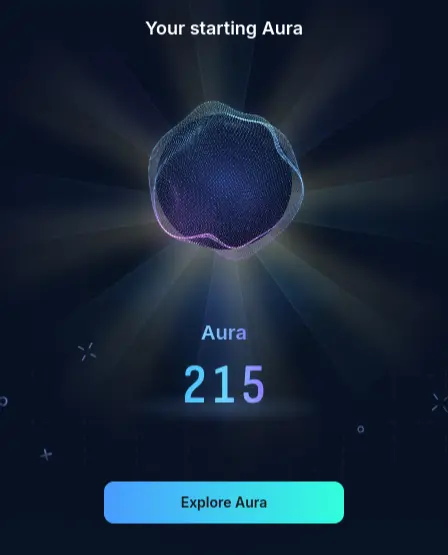
Kaito Pulse is closely connected to this new approach. The browser extension is designed to surface supported social and behavioural information alongside profiles and content on X.
This creates a richer picture of an account. Instead of looking at a profile and seeing only followers you can potentially get additional context around the person's activity.
That fits neatly with the broader direction Kaito appears to be taking. The industry is moving away from simply asking who is talking about something and towards asking who is actually contributing.
Anyone installing a browser extension or connecting accounts should understand exactly what permissions are being requested and how the associated data is handled.
More data can create better analytics, but users should always know what they are giving access to before clicking that install button.
Once you remove the crypto jargon, the Kaito ecosystem becomes much easier to understand. Kaito Pro is primarily about intelligence and discovering information.
Kaito Studio is about connecting brands with creators and running campaigns. Aura is the newer reputation layer, designed to incorporate broader social and behavioural signals.
Kaito Pulse helps surface some of those signals alongside social profiles. What does this mean for creators? The new model appears to be moving towards something broader.
Your social presence still matters, but reputation, audience quality, campaign fit and potentially verifiable activity can all become part of the picture.
That could make the creator economy more sophisticated, but it also makes it harder to reduce everything to one simple leaderboard.
Now the industry is trying to figure out how to measure reputation, credibility and actual contribution without creating another giant farming machine.n
There will always be people trying to game incentives. There will always be creators trying to understand the algorithm. There will always be projects looking for the cheapest way to buy attention.
The days of simply chasing a leaderboard may be fading, but the underlying opportunity has not disappeared. PVM starting again... with 215 aura!
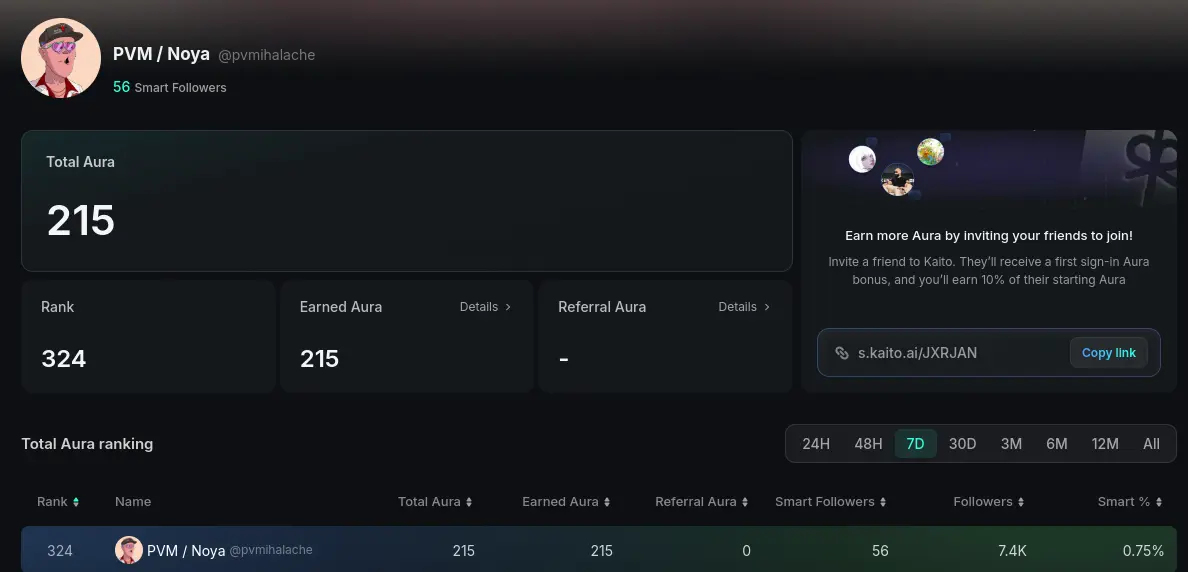
Cool stuff I want to share:
Claim your Zerion XP!
Play2Earn: Splinterlands & Holozing
PVM The Author - My Amazon Books