
In the highly specialized world of extreme-value retail, standard financial models often fall short. External analysts rely on lagging macroeconomic data, frequently missing the real-time operational shifts happening directly on the warehouse floor. To truly understand the future valuation of a unique business like Grocery Outlet, investors must look directly at the people pulling the levers. The volume, timing, and direction of corporate trades offer an unfiltered look into the boardroom's confidence. By strictly analyzing this specific behavioral data, astute investors can identify fundamental turning points long before they are announced to the public.
The Frequency Signal: Decoding the Filings
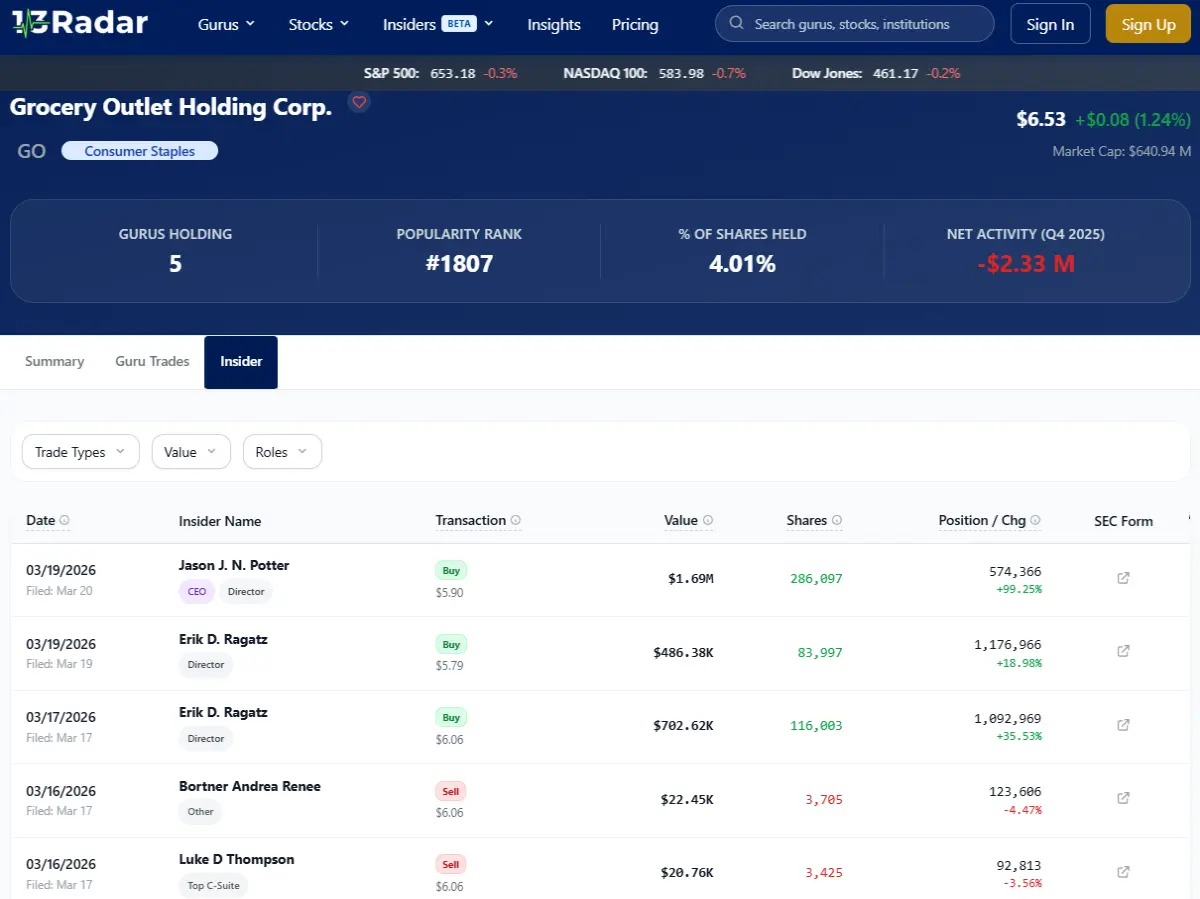
The true edge lies in identifying anomalies in transaction volume. Recent Form 4 filings show a noticeable increase in executive transactions across the discount retail sector, but the specific cadence at this company demands much closer inspection. When multiple directors and top-tier executives execute trades within a condensed timeframe, it creates a powerful data cluster. Monitoring this dense grocery outlet insider activity is critical because it represents a coordinated consensus among leadership. Whether they are accumulating shares ahead of a massive inventory win or adjusting their risk exposure, a sudden spike in this activity is the ultimate leading indicator of impending price movement.
The Proprietary Sourcing Advantage
Why does this specific boardroom activity carry so much weight? The answer lies in the company's opportunistic sourcing model. Unlike traditional grocers with fixed supply contracts, this business thrives on acquiring excess brand-name inventory at steep discounts. The C-suite has exclusive, real-time visibility into these highly volatile procurement margins long before the data is consolidated into a quarterly earnings report. Therefore, when their personal transaction activity accelerates, it directly reflects their proprietary knowledge of current deal flow and store-level profitability. They are effectively trading on the most accurate, ground-level data available in the retail sector.
Transforming Activity into Actionable Strategy
To capitalize on this information asymmetry, investors must transition from passive observation to active strategy. It is essential to filter the noise by distinguishing between routine, pre-scheduled 10b5-1 distributions and high-conviction, open-market actions. When the raw activity points toward aggressive open-market accumulation, it establishes a verifiable floor of corporate confidence. By anchoring your investment thesis to the authentic transaction activity of the company's most informed insiders, you drastically reduce your reliance on speculative estimates and align your portfolio with verified fundamental truth.






