
Conventional wisdom tells you that when the economy slows down, you hide in "Value" stocks—Coca-Cola, Utilities, Big Oil. But 2026 is not a conventional economic cycle. We are facing a unique macroeconomic paradox: technological deflation colliding with monetary inflation.
In this environment, traditional value stocks face a hidden threat: disruption. Cheap stocks are often cheap for a reason—their business models are being eroded by faster, cheaper, AI-driven competitors. The real "safety" in the next decade won't come from dividends; it will come from growth that outpaces currency debasement.
Innovation as the Ultimate Hedge
Why are aggressive growth strategies gaining traction again? Because in a slow-growth world, organic growth becomes scarce and commands a premium. If GDP growth stalls at 1.5%, a company growing at 40% is the only asset that matters. This explains the renewed interest in the catherine wood latest 13F filings, which show a stubborn refusal to pivot into "safe" assets. The bet is that innovation is the only force capable of generating real yield when the fiat system is under pressure.
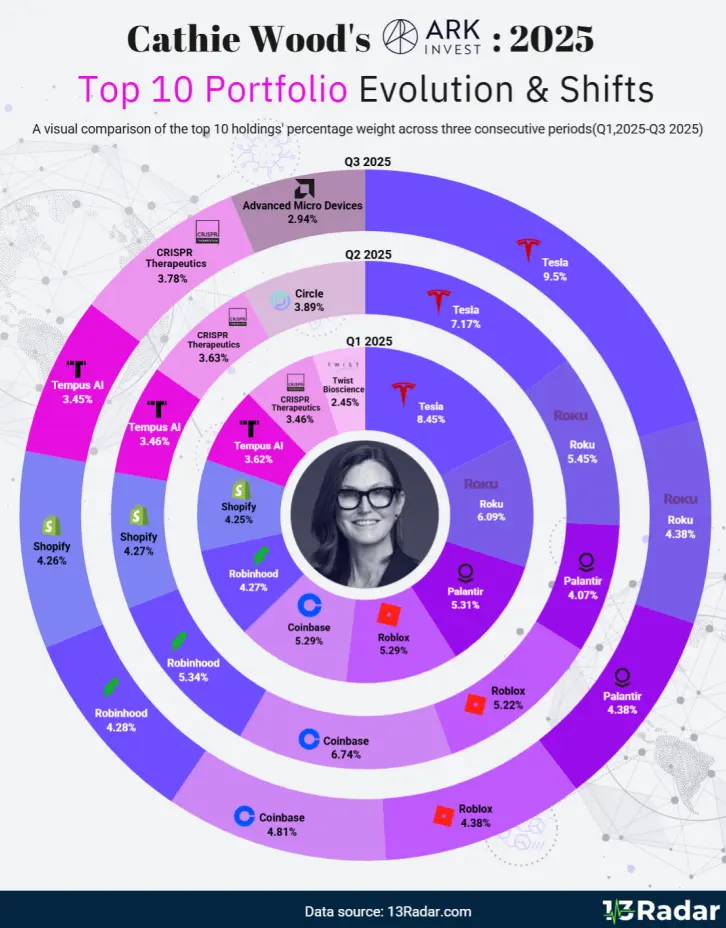
Bitcoin and the "Financial Internet"
A critical component of this macro thesis is the role of Bitcoin and DeFi. We are seeing institutional portfolios increasingly treat crypto assets not just as speculative tools, but as a "risk-off" insurance policy against fiscal irresponsibility. The intersection of Fintech and Blockchain is creating a new financial rail that bypasses the friction of the legacy banking system.
⚠️ The "Value Trap" Warning Signs
Are you holding a "Zombie" company?
Before you buy a stock because it has a low P/E ratio, ask yourself:
- Is their product cheaper to produce today than 5 years ago? (If not, AI will kill them).
- Do they own their own data? (If not, they are just a wrapper).
- Is their primary moat "Regulation"? (Regulation changes; code is permanent).
The risk in 2026 isn't volatility; the risk is remaining invested in the past. Volatility is simply the price of admission for exponential growth. Don't mistake a temporary drawdown for a permanent loss of capital—and don't mistake a stable stock price for a safe business model.






