
While retail markets remain fixated on Taiwan Semiconductor Manufacturing Company's revenue beats tied to AI GPU demand, a critical divergence is quietly unfolding on the balance sheet. The narrative of infinite growth is directly clashing with the harsh reality of capital expenditure (CapEx) burdens. Instead of relying on optimistic forward guidance, quantitative risk managers are tracking exactly how the architects of this technology are positioning their own portfolios.
Systemic Distribution Alert
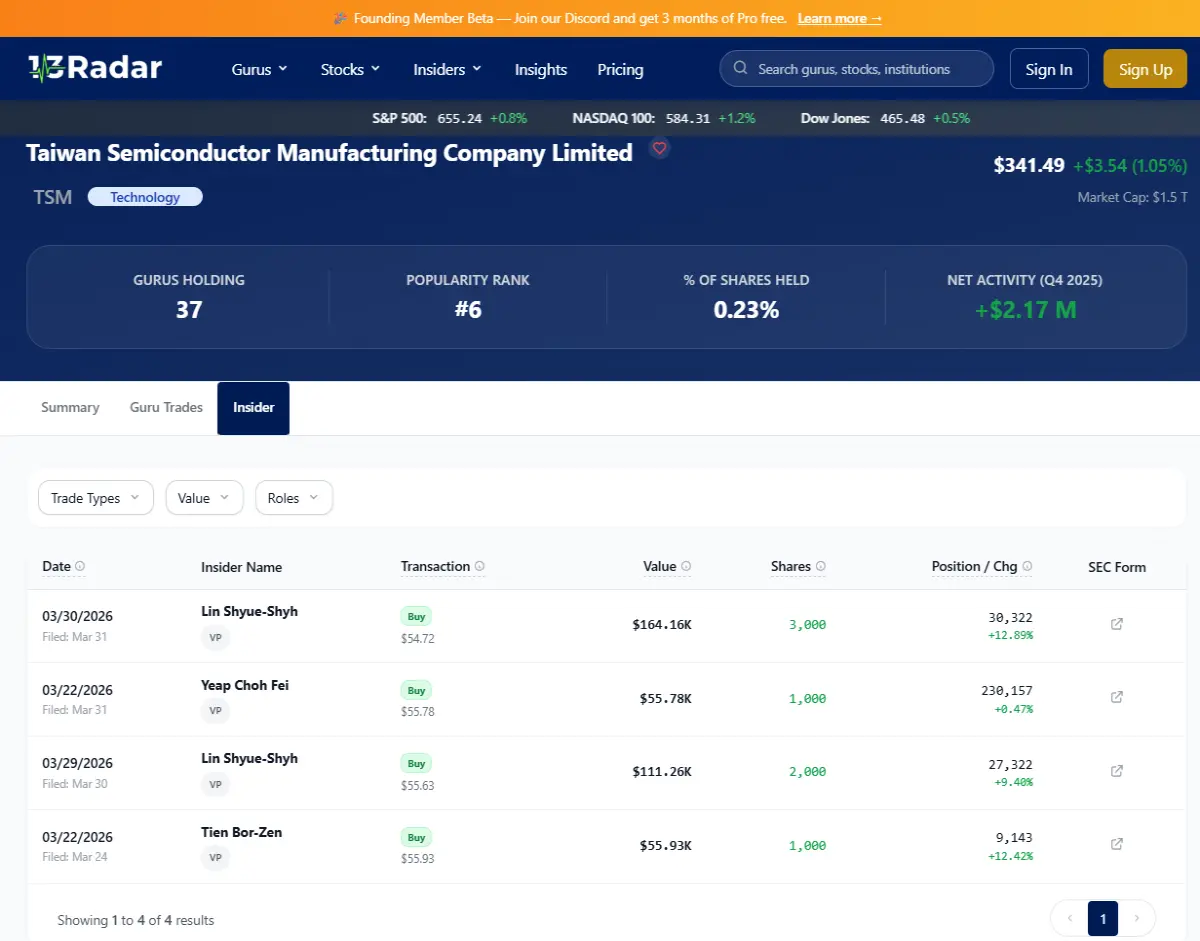
We are currently observing a major liquidity rotation at the highest corporate levels. Recent Form 4 filings show a noticeable increase in executive sales across major tech companies. However, when we cross-reference this macro trend with targeted TSM insider selling data, a much sharper institutional warning emerges. Top-tier executives are offloading significant equity tranches exactly as the stock commands a historic premium. This is not passive diversification; it is an active pricing-in of execution risks that the broader market is currently ignoring.
The 2nm Node CapEx Reality
The core fundamental issue driving this internal distribution is the cost of physics. Pushing silicon boundaries to 2-nanometer and 1.4-nanometer nodes requires unprecedented capital outlays. Operating margins will inevitably face severe pressure over the next few quarters as massive depreciation costs from new Arizona and Japan facilities hit the income statement. Insiders possess real-time, asymmetric visibility into these escalating construction costs, yield challenges, and energy requirements. Their decision to liquidate shares at current levels heavily suggests that the prevailing valuation multiple completely fails to account for this impending margin compression.
Why Institutional Capital Follows the Exits
Sophisticated capital does not wait for a negative earnings call to adjust its downside exposure. If the very engineers and supply chain officers modeling tomorrow's cash flows are actively capping their personal equity risks, holding maximum exposure becomes statistically reckless. By treating these regulatory disclosures as an early-warning system rather than mere background noise, portfolio managers can strategically hedge their semiconductor weightings before the financial realities of global expansion catch up with the current AI exuberance.






