
There is a lot of noise in the markets right now about the United States threatening Venezuela. Headlines talk about drug trafficking accusations, sanctions, and even war rhetoric. On the surface it looks like the same old story. Another country in trouble, another moral justification, another round of pressure.
But when you strip away the headlines, something else starts to appear.
Oil.
Not just oil in general, but a very specific kind of oil that most people never talk about.
The US produces more oil than any country in the world. More than Saudi Arabia. More than Russia. So the obvious question is why would the US care about Venezuela’s oil at all.
The answer is uncomfortable for simple narratives. The problem is not how much oil the US produces. The problem is what kind of oil it produces.
Most American oil production today comes from shale. This oil is light and sweet. Easy to extract, easy to sell, and great for exports. But the US refinery system was not built for this world. It was built decades ago for heavy crude.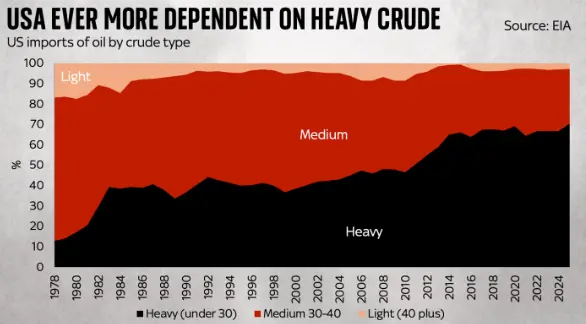
Heavy crude is thicker, dirtier, and harder to process. But when refineries are designed for it, it is cheaper and often more profitable. The US Gulf Coast has some of the most complex refineries on Earth, and many of them were specifically designed to process heavy crude.
You cannot simply replace heavy crude with light shale oil without losing efficiency and margins. That is the part people miss.
For years the US solved this mismatch by importing heavy crude from Venezuela, Canada, Mexico, and indirectly from global markets where Russian oil played a balancing role. When sanctions hit Venezuela and later Russia, that balance broke.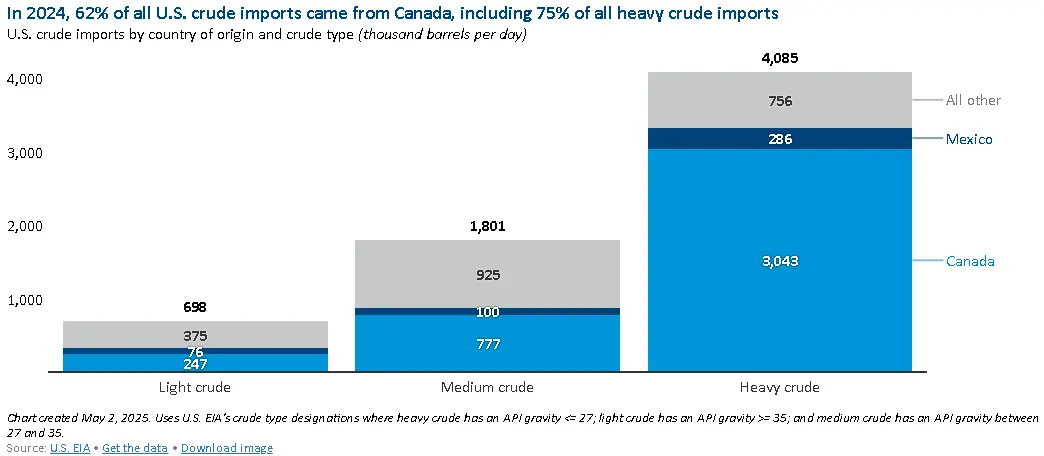
Canada and Mexico still supply heavy crude, but it is not enough. Canadian supply is constrained. Mexican production has been declining. Logistics and pricing are not always favorable. Meanwhile Russian heavy crude is effectively off limits because of the war.
This creates a structural problem, not a political one.
US refineries still need heavy crude to run properly. They need it to stay competitive. They need it to keep fuel prices stable. No amount of domestic production headlines can change that reality.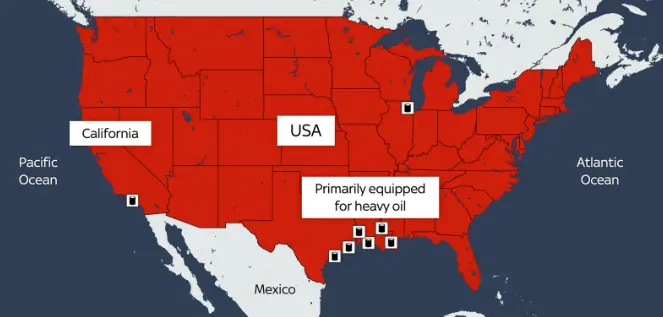
That is where Venezuela quietly comes back into the picture.
Venezuela has the largest proven oil reserves in the world. More than Saudi Arabia. More than Canada. And a massive portion of those reserves are heavy and extra heavy crude. Exactly the type US refineries were designed to process.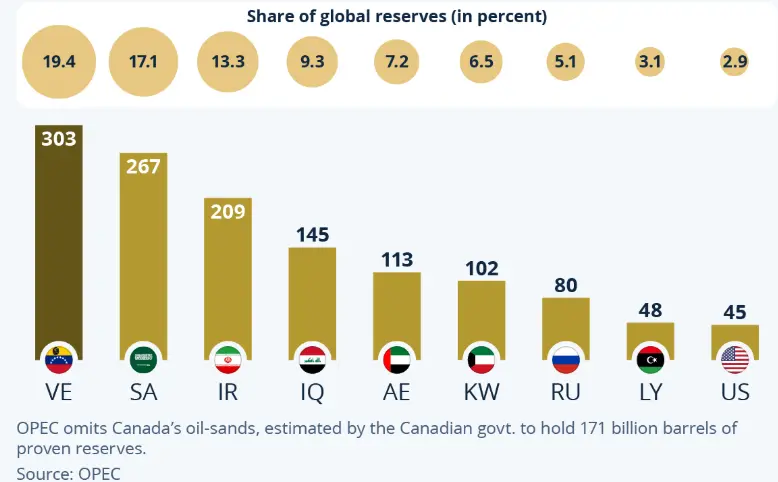
This is why the recent threats and pressure feel strange. The public explanation is drugs and regime behavior. The private reality is energy security.
https://edition.cnn.com/2025/12/02/business/venezuela-oil-trump






