
We can all learn negotiation tactics from our beloved Buckwheat, but just how good of a deal did he score when he convinced Porky to sell his pickle for two cents, leaving that precious nickel safe in his pocket? Could that nickel hibernating on your bedside table pay off huge in the near future? Let's start with some history first.
From the beginning, America and its monetary system was on a Gold Standard. For all of history, precious metals (Gold, Silver, etc...) have been a globally recognized and accepted form of payment. With the establishment of Federal Reserve in December of 1913 that standard was more than halved and on August 15th 1971 the Nixon Administration separated us from that standard entirely. I include this information because it is important for us to understand the fundamental value our world has always found in precious and industrial metals and the impact a divorce from that gold standard has had on their true value.
1792 was the year the United States established its first federal Mint in Philadelphia. Coins with varying dollar denominations from 1/2 a penny to $100 of face value have been designed, created, adjusted, phased out, misprinted and DEVALUED leaving us today with our current line up in 2020. Although we have many coins to use as examples, the simple 4 we know best today I believe will help consider our thesis probable.
Stick with me. Let's call them the fantastic 4. Quarters, dimes, nickels and pennies have been with us since childhood. But how much do we actually know about their story? What are they made of, how have they changed and where are they going? When these 4 coins were first minted, we were on a gold standard. So the sizing and metal contents chosen for these coins were chosen specifically to represent their fundamental value within a gold standard monetary system. As that standard has been stripped and inflation has risen, the value of these coin's composition has tanked. So what do their compositions look like today, and how have they changed?


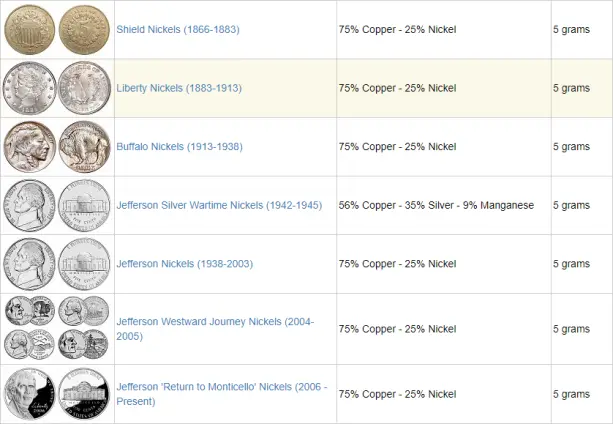
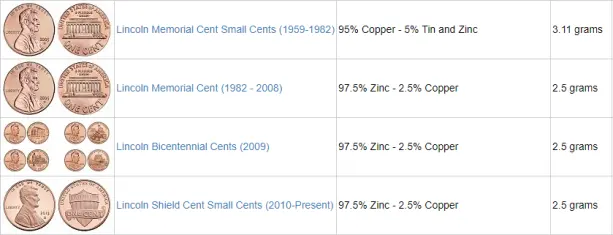
SOURCE: https://www.usacoinbook.com/coin-melt-values/
Anything specific stand out? In the NGBU this would be called an Abnormal Operating Condition. The Quarter, Dime and Penny have seen massive devaluation, but that darn Nickel has barley budged. The nickel is that kid you made fun of in high school! He shows up a millionaire at your ten year reunion with a Porsche, just as you are telling your old classmates how you recently made assistant to the regional manager at Dunder Mifflin. The only adjustment to composition the nickel has seen since 1866 was during WII. 75% Copper and 25% Nickel is an alloy known as Cupronickel. This alloy is useful in marine application due to corrosion resistance to saltwater. During WII there was a shortage of nickel, so from mid 1942 through 1945 the integration of nickel in the United States five cent piece was temporarily suspended.
The abnormal operating condition here is; The nickels temporary adjustment of composition to make accessible scarce resources needed during WII, was an upgrade. When you mix silver into the situation the values are on a whole new level. These war nickels have a melt value of over $1 today. Every quarter and dime minted before 1965 was 90% silver and 10% copper. With today's spot silver and copper prices, a 1965 or newer quarter has a melt value of roughly $0.038 and a 1964 or older has a melt value of roughly $3.354. So.... I would keep that coin jar of yours away from coin star until you have a chance to scout out some oldies.
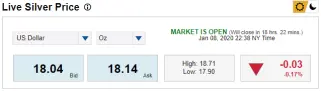
SOURCE:https://www.kitco.com/charts/livesilver.html
So why the nickel? Again, no devaluation. The other three have all have all tanked. Mid 1982 the penny's composition went from 95% copper integration to 2.5%! Today, a 95% copper penny has a melt value of roughly $0.0184, and are being sold by the pound all over the web for double their face value. In January 2011, copper prices hit $4.50 a pound. A 95% copper penny at that price has a melt value of just a sliver under 3 cents! Almost 300%! Many today argue that precious and industrial metal's spot prices are artificially low due to market and fed manipulation. If they are right, then where should these spot prices be?
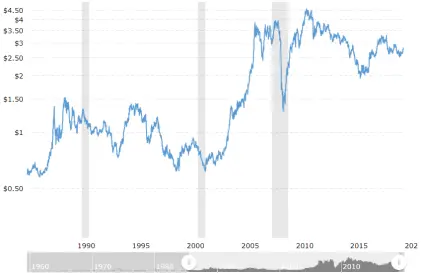
SOURCE: https://www.macrotrends.net/1476/copper-prices-historical-chart-data
Today copper is sitting around $2.79 a pound and nickel around $6.40 a pound. This puts a nickel's melt value at....
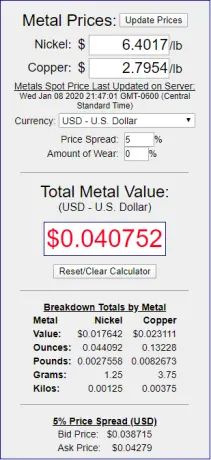
SOURCE: http://coinapps.com/nickel/us/calculator/
We know that copper had a previous high of $4.50 a pound in 2011. It is worth noting that in 2007 nickel spotted high at over $22.00 a pound!
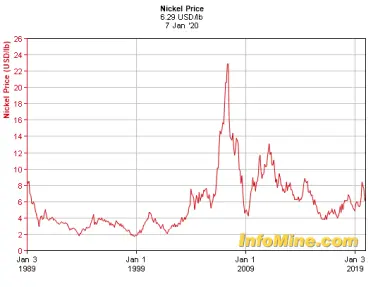
SOURCE: http://www.infomine.com/investment/metal-prices/nickel/all/
If we had these two spot highs together, then what would our nickels melt value look like?
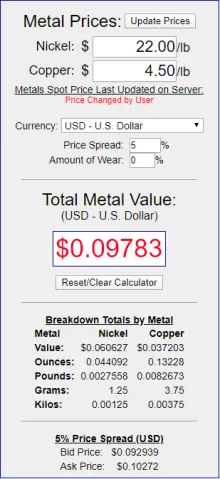
SOURCE: http://coinapps.com/nickel/us/calculator/
Unless history decides to stop repeating itself, then there is a good chance your nickels today are worth at least double their face value or more. The markets just haven't figured it out yet. Note; The dollar today has lost over 96% of its original purchasing power, but 5 grams of cupronickel still remains just as or even more useful. With tensions rising in the Middle East, military spending skyrocketing, and the Fed's balance sheet nearing all time highs, we have already entered phase 1 of the markets acknowledging the true value of the physical. These metal's value go well beyond marine application. Copper and nickel are also huge components in electric car manufacturing. As the world fights harder against carbon emissions, green energy with gain more traction and metals such as these will have a bigger role to play.
I like to see this as a can't lose investment. Now, I am not a financial adviser. Before making investment decisions, do your own research and decide for yourself the best plan of attack. That prefaced, I see more pros than cons.
PROS:
⦁ No premium to acquire. Just make a withdraw at your local bank in the denomination of your choice.
⦁ Guaranteed face value of 5 cents each.
⦁ Holding a physical metal with actual industrial value.
⦁ Will survive a fire. So long as the temp is below 1900 degrees Fahrenheit and most house fires do not burn hotter than 1200.
⦁ You might get lucky and find a 35% silver war nickel in your box.
⦁ It is legal tender.
CONS:
⦁ Heavier and requires more space for storage.
⦁ If and when re-depositing unless your bank has a coin deposit machine, you will need to keep your nickels rolled up or roll them yourself if you decided to hunt for some oldies.
⦁ Small denominations making purchasing/bartering at face value a hassle.
I have kicked myself so many times and uttered the universal phrase, "If only I had done ______, I would now have ______." There is a good chance you have said the same. With the digital world dictating a majority our daily lives, maybe, just maybe, with our full attention on the future of technology a few wealthy investments are hiding right under our own noses in our own homes. If I had to bet, Buckwheat left the "He Man Woman Haters Club" and has been stacking nickels ever since. Smart kid!






