
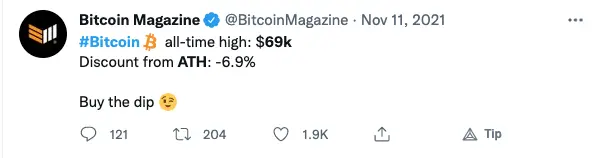
If you thought Bitcoin’s All Time High of $69,000 on November 10 was not the ATH, and kept on buying, I don’t blame you.
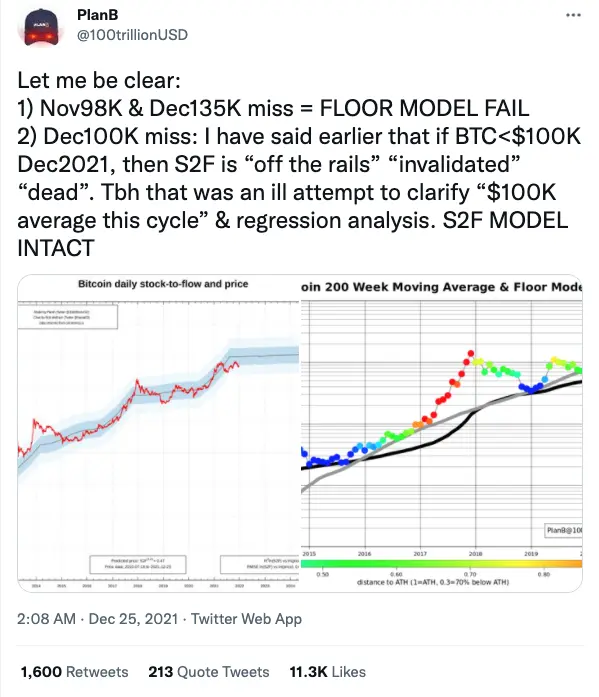
If you thought Plan B’s prediction of Bitcoin to reach $135,000 as per his floor model, or at least $100,000 as per his stock-to-flow model, would come true, I don’t blame you either.
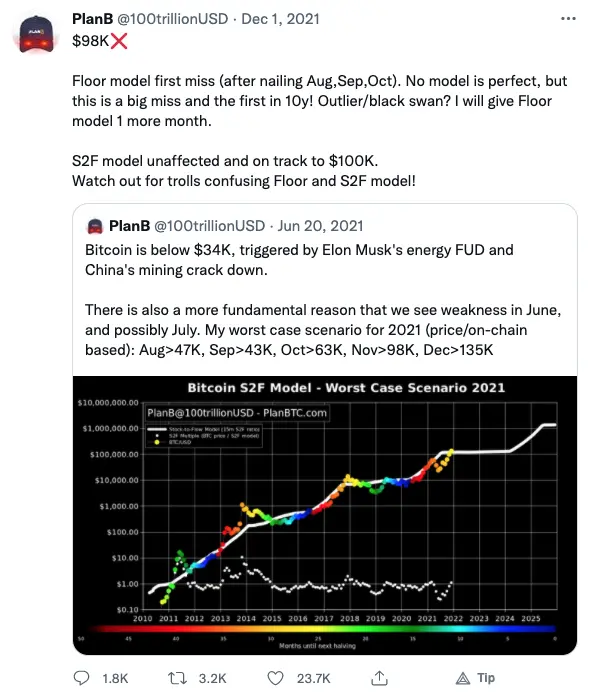
But, at least, you could have stopped following Plan B after his floor model failed and Bitcoin did not reach $98,000 by November 30.
Instead, you kept on buying in the hope that big institutional buyers would enter the market in Q1 2022 as many influencers had said.
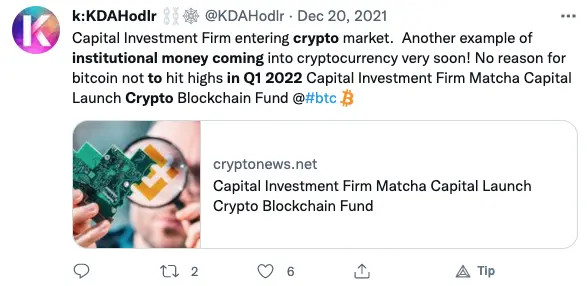
While more institutional money is bound to come into Crypto in 2022 and create a price rally, were you ready for this massive dump so early in 2022?
If you kept on buying when Bitcoin was in the $60K range, your portfolio must be more than 50% down for sure.
Now you must be scratching your head and wondering when this all will end.
What if I say I have the answer for you?
FOMC Meeting.
It may not be the only answer, but it is the most significant one.
What is the FOMC meeting?
FOMC stands for Federal Open Market Committee. It is the monetary policy committee of the Federal Reserve.
The FOMC comprises 12 members.
- 1: The President of the Federal Reserve Bank of New York (Jerome Powell)
- 7: members of the Board of Governors of the Federal Reserve System
- 4: Reserve Bank Presidents
The FOMC holds 8 meetings every financial year. The meetings take place every six weeks.
These meetings are extremely important because this is where the 12 members discuss monetary policy changes, review economic and financial conditions and assess price stability and employment output.
Through these meetings, the FOMC members direct open market operations to guide monetary policy and decide on whether to increase or decrease money supply in the U.S. economy.
If you may have noticed, these FOMC meetings normally mark volatility in the financial market.
Every time there is a change in the federal fund rates, several economic variables are impacted such as short-term interest rates, foreign exchange rates, long-term interest rates, employment output and prices of goods and services.
Subsequently, the stock market and now, even the crypto market, tend to react to the FOMC meetings.
If you haven’t heard of FOMC meetings before, you must have heard of Fed meetings.
They’re the same.
Who is the Fed?
The Fed is an abbreviated term for the Federal Reserve, which is the central banking system of the United States.
The Fed is responsible for guiding U.S. monetary policy by buying and selling U.S. government securities in the financial markets and setting interest rates and reserve requirements.
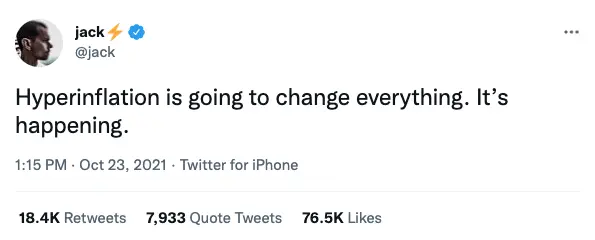
Currently, the Fed is trending all over social media due to inflation, or in Twitter founder Jack Dorsey’s words, ‘Hyperinflation.’
Inflation
Inflation is the most notorious term in economics.
It refers to an increase in the prices of goods and services.
This is caused by the loss in value of currency.
Consequently, it decreases purchasing power, which means you can’t buy as much with $20 as you could before inflation.
When people have to spend more money to buy goods and services, they will start spending less. Decrease in consumer spending inevitably leads to deceleration in economic growth.
Thus, inflation plunges countries into prolonged periods of instability.
There are several factors that drive inflation. Among them, the current inflation appears to be caused by the demand-pull effect.
This is caused when there is an increase in the supply of money and credit that stimulates overall demand for goods and services to increase more rapidly than the economy’s production capacity.
COVID and money printing
Ever since COVID-19 was declared a global pandemic on March 11, 2020, countries all over the world were forced to go into lock-down.
Despite implementing strict measures to prevent the outbreak of COVID, 352,130,548 people have been affected by COVID.
Out of the total confirmed COVID cases, 5,614,795 deaths have been reported.
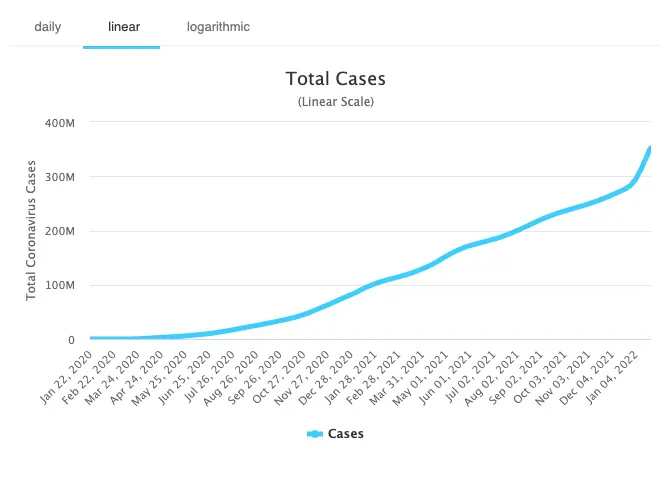
You can see from this graph that COVID cases have progressively increased since first reported.
To prevent more deaths, countries were forced to extend their lockdowns and close their borders.
That means businesses were closed and active workers were not participating in production activities, thus affecting economic growth.
To prevent the economy from spiraling down, the Fed decided to print money.
Till now, the Fed has printed around $13 trillion US dollars:
- $5.2 trillion for COVID
- $4.5 trillion for quantitative easing
- $3 trillion for infrastructure
Ask any economist and they will tell you that sustained inflation occurs when a nation’s money supply growth outpaces economic growth.
January 10 Dump
Ever since we started 2022, fear of high inflation has dominated the crypto market.
January 1 marked a positive start with a green daily candle and a daily high of $47,954.
However, in 10 days, Bitcoin’s price dropped as low as $39,650. This was the first time Bitcoin dropped below the $40K mark since last September.
This panic was caused by rumours around the release of Consumer Price Index (CPI) for last December.
Analysts had made it clear that inflation above 7.1% would kill the financial markets.
Before the inflation data could even get released on January 12, the crypto market reacted to the FUD.
It was a classic ‘buy the rumour, sell the news’ example, as the market rallied to around $44,000 on January 12 because inflation was ‘within expectations’.
Although inflation was 7%, the highest since 1982, the market rallied for some time only to tumble down below $40,000 again.
Where are we now?
Since the release of January 12’s CPI inflation data, Bitcoin went as low as $34,008 on January 22.
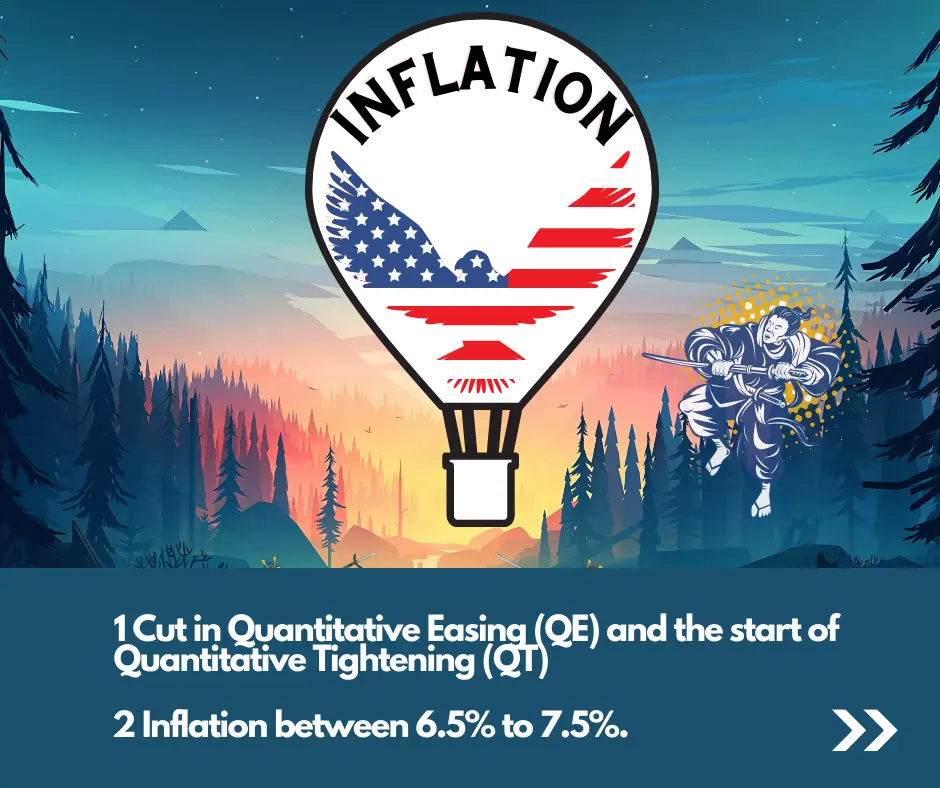
Although inflation has been reported, people still fear the Fed may not just stop quantitative easing, but also start quantitative tightening.
I posted this on Instagram on January 11, just 1 day before the CPI inflation data was released:
Quantitative Easing
Quantitative Easing is a monetary policy where a central bank increases the money supply into the economy by purchasing government bonds and long-term securities from the open market.
We have seen it implemented ever since the Fed started printing money after COVID caused businesses to close, and the economy was hit hard.
Quantitative Tightening
Quantitative Tightening in contrast, is a monetary policy where a central bank decreases the money supply in the economy by selling government bonds and long-term securities in the open market.
Possible Scenarios
The worst case scenario is that the Fed decides to start quantitative tightening early on and to raise interest rates 4 times a year.
If this happens, the Bitcoin Death Cross narrative may come true and Bitcoin’s price may go down to $28,800
However, the Fed doesn’t want to destroy the market.
All the politicians’ money sits in the stock market, and even in the crypto market.
The Fed can’t afford that risk.
And most importantly, the Fed has been buying up corporate bonds since the crisis.
If they raise rates and destroy the value of the underlying assets in the balance sheet, they won’t be able to unwind their $9 trillion balance sheet at the same time.
So, the Fed may try to slow down the money printing for some time.
If they raise interest rates, it may be maximum two times this year. Any more than that can seriously harm the economy.
Their focus will be to bring short term inflation down although long term inflation will stay high for some time.
The Fed will also try to talk people down to spend less. Once people start to spend less in fears of inflation, the inflation rate will slowly go down.
Action to take
If you think the Fed won’t increase interest rates after reading my article, you can start dollar cost averaging (DCA).
But, if you think that something bad will happen, and the market will tank, you can wait till then and then enter the market.
But, one thing is for sure.
The upcoming FOMC meeting holds the key to this puzzle.
Are we almost near the bottom for Crypto or is there more downward to go?
Remember, the crypto market is the most volatile market. But, it is also the most rewarding one.
All you need is patience.
Keep on researching and take calculated risks.
(Disclaimer: I am not a financial advisor. Please use my articles to educate yourself on cryptocurrencies, but not as a sole factor to influence you to blindly jump into cryptocurrencies.)






