
Introduction
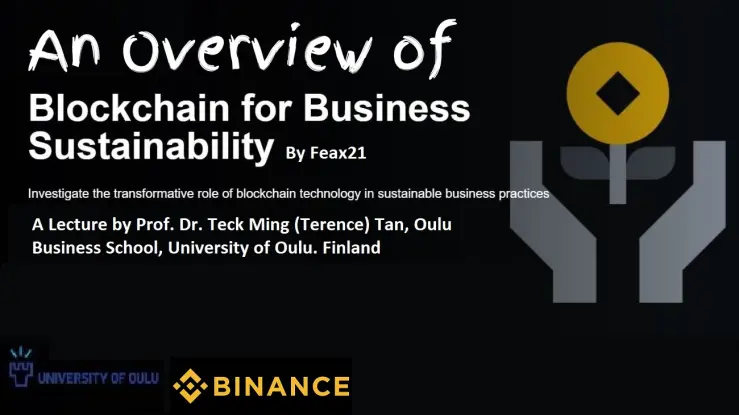
For the past 15 years the terms "Blockchain" and "Bitcoin" spin firmly into my head. Not for becoming just another super-Rich in FIAT money after exchanging my crypto-assets or reach the so-called "Financial Freedom" but for gaining a deeper insight into that intriguing technology. In my endeavour over the years, I attended several seminars and meetings either in person or online. Unfortunately, after moving from UK and returning back to Greece, the opportunities for onsite seminars and meetings minimized and I turned myself mostly into webinars and online courses. The latest of them is the "Blockchain for Business Sustainability" lectured by Prof. Dr. Teck Ming Tan of Oulu Business School and provided for free by Binance Academy. The information came into my notice after a tweet at the X from my good friend and companion on this journey of crypto-wisdom katerinaramm.
No, I am not interested in trading knowledge, in bullish and bearish trading candles or how to trade in Derivatives etc. and each time I attempted to do so without any previous trading skills, I Failed. And, I am not that interested to take any class in trading either it involves Forex or Crypto-assets. I am not a trader and you will hardly see my writing about cryptotrading in my articles. I am a HODLER and as a Technology expert I am mostly interested in the mechanics of the Blockchain Technology.
Overview of the Course
As it is described at the Binance Academy cover, the course is for Beginners who are mainly interested in the Business Administration and Marketing Perspective of the Blockchain Technology rather than taking a more Programming and IT point of view. The course is comprised by 3 hours of lectures by Prof. Teck Ming Tan an Associate Professor of Marketing at Oulu Business School and an Adjunct Professor in the marketing field at the University of Helsinki and and it is consisted on 3 main parts and sub-modules but also short quizzes that require from the attendant to demonstrate his understanding on the lectures:
- Part 1: Blockchain’s Role in Sustainable Business Practices
- Module 1: Supply Chain Transparency and Traceability
- Module 2: Renewable Energy and Carbon Trading
- Module 3: Incentivizing Sustainable Behavior
- Module 4: What Blockchain Can't Do
- Part 2: Potential Blockchain Use Cases to All Firms
- Module 1: Use Case: ESG/Sustainability Reporting
- Module 2: Use Case: Carbon Credits
- Module 3: Renewable Energy
- Part 3: Blockchain and Stakeholder Capitalism: A Pathway to Sustainable Business Practices
- Module 1: Stakeholder Capitalism
- Module 2: Blockchain Meets Stakeholder Capitalism
- Module 3: Shift in Logic for Ethical Marketing in the Blockchain-Based shared economy (Part A)
- Module 4: Shift in Logic for Ethical Marketing in the Blockchain-Based shared economy (Part B)
According to Prof. Teck Ming Tan, the Blockchain for Business Sustainability course
investigates the transformative role of blockchain technology in sustainable business practices. The opaque nature of conventional supply chains poses significant challenges to businesses and consumers alike, often hindering informed decision-making and sustainable production. By enhancing transparency, traceability, and accountability, blockchain emerges as a powerful tool in supply chain management, circular economy, renewable energy, ESG reporting, and incentivization.
The Learn and Earn Campaign
For those who follow my articles for a long time, you will remember the "Learn and Earn Investigations" blog to provide the answers to the respective CoinMarketCap Learn and Earn campaigns including a short summary about the advertising tokens. However, due to the increasingly huge numbers of the participants it become harder and harder to receive the subsequent rewards so the whole concept appears to be abandoned. Yet, with this article, I have decided to provide a more academic outline of the Blockchain for Business Sustainability course rather than just providing the correct answers. Nevertheless, for someone who would provide a basic attention to the lectures, and a bit of good guessing using his logic and understanding of the blockchain technology, he won't find great difficulty to answer them.
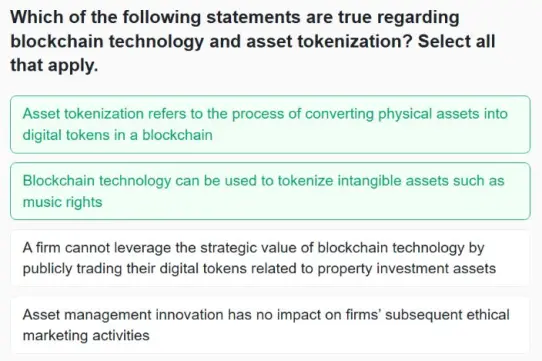
Nevertheless, the the participants of the course should be mindful that the "profit" of the campaign isn't just an airdrop of tokens as it used to be in the CoinMarketCap Learn and Earn campaigns. The greatest profit acquired from the course is the wisdom that derives by achieving its learning objectives as described below:
- Blockchain for Sustainable Business: Explore the transformative role of blockchain in sustainable business practices.
- Supply Chain Transparency: Examine how blockchain enhances transparency, traceability, and accountability in traditionally opaque supply chains.
- Sustainable Applications: Investigate blockchain’s role in supply chain management, circular economies, renewable energy initiatives, ESG reporting, and incentivizing sustainable behaviors.
- Stakeholder Capitalism: Develop a deep understanding of stakeholder capitalism and its implications for sustainable business.
- Ethical Marketing in Web3: Analyze the shifts in logic required for ethical marketing in the blockchain-based sharing economy.
Without doubt, the course includes several amounts of knowledge about how the Blockchain Technology may contribute to the sustainability of the business. I attended carefully all the lectures presented in the various modules of the course as mentioned above. An interesting one was the module 1.4 about "What Blockchain Can't Do" because the Blockchain Technology isn't a panacea for all business needs.
Also very interesting is the Part 2 of the course that consists of real case studies of the application of the Blockchain Technology 3 separate case studies.
To avoid any misunderstandings and taking a more academic approach, Prof. Teck Ming Tan sturdy mentions that any case studies mentioned in the course are for STRICTLY educational reasons and NOT a financial advice avoiding any kind of a specific token endorsement.
The first case study in module 2.1 talks about the application of the Blockchain Technology in ESG (Environmental, Social, Governance)/Sustainability Reporting and presents the results of his own research on that. For those who are interested, I have found a similar report on Linkedin from EY Global with title "Enhancing Stakeholder Trust with Blockchain-Enabled ESG Reporting: A Path to Long-Term Success".
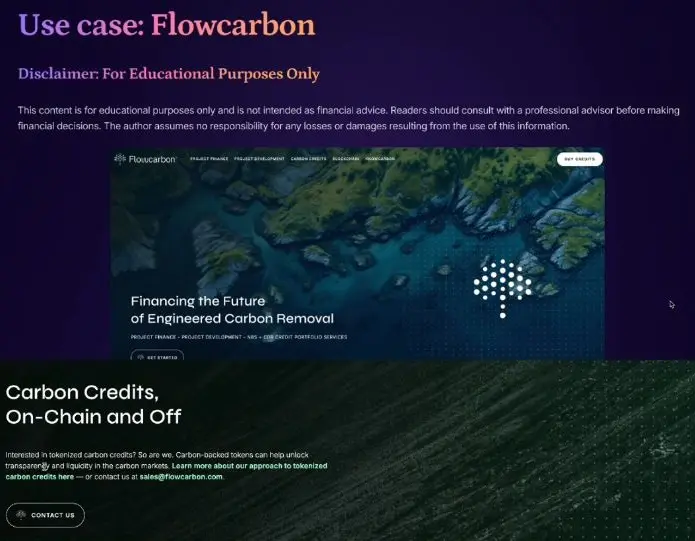
For the case study of the Carbon Credits on a strict educational basis, the lecturer talks about the case study of FlowCarbon, a startup that tokenizes Carbon credits and sells them to companies interested to minimize their corporate carbon footprint.
And the 3rd case study exploring the application of the Blockchain Technology, again on strict education purpose, the lecturer is using the case study of the collaboration between Powerledger (POWR token) and MetLen Energy and Metals (Former known as Mytilineos as the founder's surname), a Greek Corporation that has been specialised in Renewable Energy and Mining of metals and it is widely rumoured to have significant political ties with the current conservative goverment in Greece.
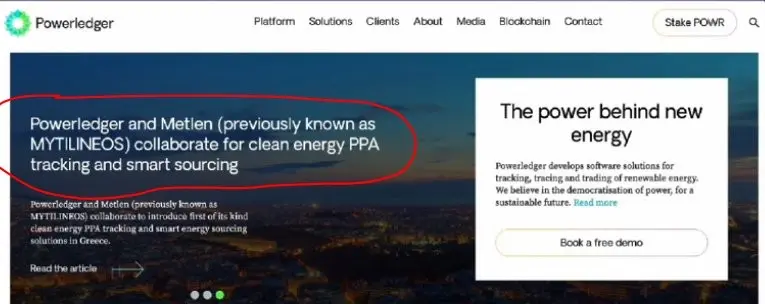
Specifically, Powerledger’s blockchain-backed energy platform provides real-time visibility into METLEN’s industrial customers, offering insights into what percentage of the meter energy consumption has been matched with carbon-free energy generation.
Blockchain Meets Stakeholder Capitalism
Yet, from all the above mentioned learning objectives and modules, the one that made me the greatest impression from all, it was the first 2 modules of Part 3 talking about a mysterious term called "Stakeholder Capitalism" that I have never heard before even during my academic years and how "Blockchain meets Stakeholder Capitalism". Specifically the term "Stakeholder Capitalism" is part of the "Stakeholder Theory" of Dr. Edward Freeman, an American philosopher and professor of Business Administration at the University of Virginia, who published in 1984 a relevant book with title "Strategic Management: A Stakeholder Approach".
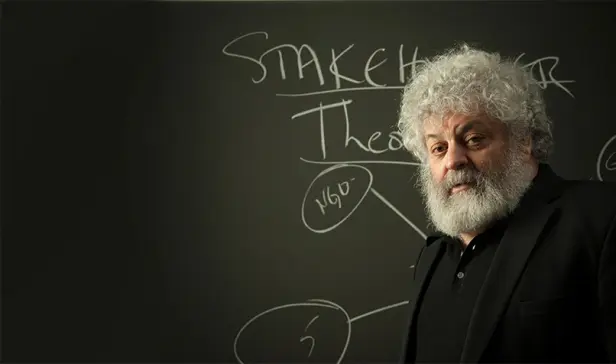
According to Wikipedia, The Stakeholder theory is a theory of organizational management and business ethics that addresses morals and values in managing an organization. As mentioned above, It was originally detailed by Freeman in the book Strategic Management: a Stakeholder Approach, and identifies the society groups that are stakeholders of a corporation. In the traditional view of a corporation, the shareholders or stockholders are the owners of the company, and the corporation has an obligation to put their needs first, i.e. to increase value for them. However, Freeman's stakeholder theory argues that there are also other parties involved as stakeholders of a corporation, including governmental bodies, political groups, trade associations, trade unions, communities, financiers, suppliers, employees, and customers. Therefore, any corporation has a firm interest and obligation to serve their needs as well integrating the Corporate Social Responsibility (CSR) in its Business Model.
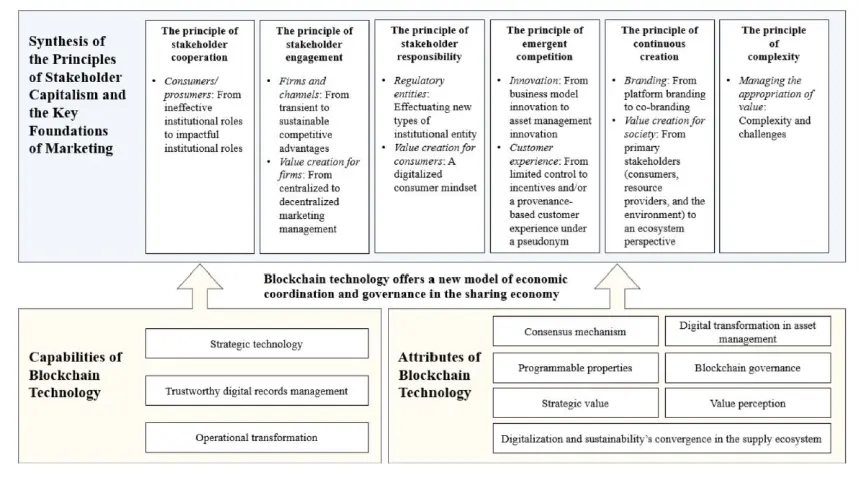
In his paper "Stakeholder Capitalism", Prof. Edward Freeman together with his co-authors Kirsten Martin and Bidhan Parmar, explains the main Principles of Stakeholder Capitalism which are the following:
- The principle of Stakeholder Cooperation
- The principle of Stakeholder Engagement
- The principle of Stakeholder Responsibility
- The principle of emergent competition
- The principle of Continuous creation
- The principle of complexity
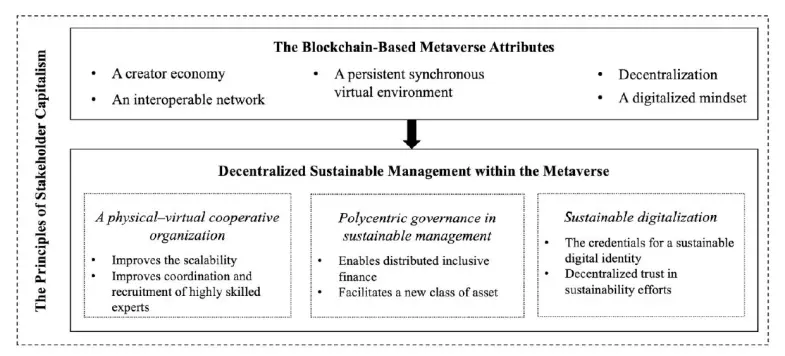
And what Prof. Teck Ming Tan does in his article with title "Ethical Marketing in the Blockhain-Based Sharing Economy: Theoretical Investigation and Guiding Insights", is to apply the Stakeholder Capitalism and its principles on the Blockchain-Based Economy as it is summarized on the following table!
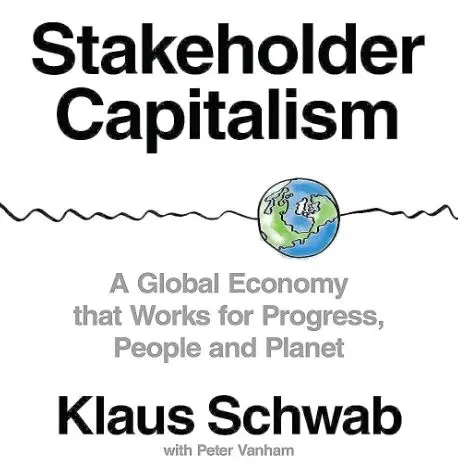
Further interesting information about the Stakeholder Capitalism can be found on the book by Claus Swab, "Stakeholder Capitalism: A Global Economy that works for Progress, People and Planet".
Finally, in his lectures, Prof. Teck Ming Tan also mentions several other academic papers that he published and they deal with "Blockchain in Business Sustainability" and "Blockhain-Based Ethical Marketing" that deserves to be mentioned for further reading such as the "Sustainable innovation in the metaverse: blockchain's role in new business models" and the "Trust in blockchain‑enabled exchanges: Future directions in blockchain marketing"
Final Thoughts
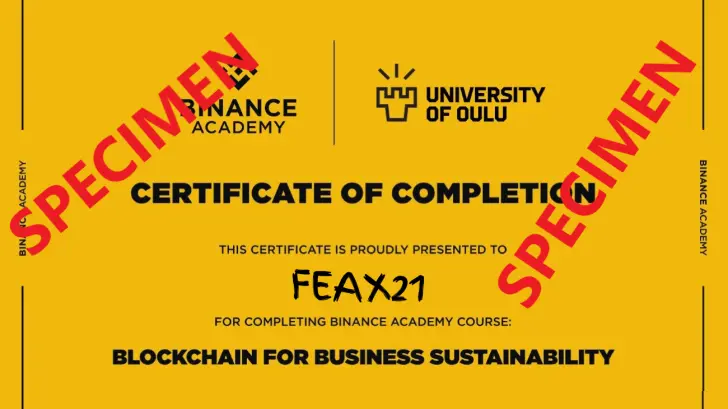
As i mentioned in the introduction, for the past 15 years i am looking for as much knowledge is available about the Blockchain Technology and Bitcoin. And the certificate that I acquired from Oulu University and Binance Academy is my very first certification of a course about this intriguing technology although it is relevant with Business Administration and Marketing Perspective instead of Programming and IT which are my main fields of specialism. And I am very proud for adding it into my Professional CV.
And as the Blockchain Technology becomes a commodity and it is embedded into our everyday life, it is inevitable that more and more Universities are including a blockchain course on their program. And for those who would like to dive deep into the mechanics of Blockchain and obtain an academic degree in Blockchain Technology, I highly recommend the online M.Sc. program "Blockchain and Digital Currency" of the University of Nicosia, world's first degree in Blockchain and Crypto.
Disclaimer: All information found on this article is for informational purposes only. I do not provide any personal investment advice so please make your own research before proceeding to any investment/trading actions
Publish0x Blockchain stories on [Crypto-monkey] (https://www.publish0x.com/crypto-monkey)
My Censored Blockchain stories on [Read.Cash](https://read.cash/@feax21)
Follow me on [Telegram](https://t.me/feax21_cryptomonkey)
Follow me on [Medium](https://medium.com/@feax21)
My Cryptoarticles on [LeoFinance](https://leofinance.io/@feax21) and (https://leofinance.io/@feax31)
Follow me on [X](https://x.com/feax31)
Follow me on [Arena](https://arena.social/feax31)
Follow me on [Facebook](https://www.facebook.com/jpollemis/) ***CENSORED***
Follow my [cryptoblog](https://cryptomonkey.weebly.com/)
Follow my [Cryptomonkey App powered by JotForms](https://eu.jotform.com/app/cryptomonkey) ***UNDER CONSTRUCTION***
Follow my [blogspot](https://monkey2crypto.blogspot.com/)
NFT & $WAX donations at [n4gay.wam]






