
The Bitcoin community continues to debate issues related to arbitrary data spam on the network. Jon Atack, a Bitcoin Core developer, is advising investors to avoid making BTC transactions following the activation of BIP-110. The upgrade, which is supported by a small portion of the network, is expected to take place next month.
Atack believes that the activation of BIP-110 could result in blockchain reorganizations. In a series of tweets, the developer also addressed questions about Lightning Network channel closures and other solutions.
“Avoid making transactions during the second week of August until the dust settles and the reorg risk decreases (unless I'm missing something). I will run both my Core version and Knots 110 to observe, keeping the sats separate and out of circulation.”
In another comment, Atack mentioned “slow blocks, depth and frequency of reorgs and orphan blocks, hashrate signaling, fees and mempool clearing, PoW divergences at the chaintip, and exchange and custodian announcements.”
What is BIP-110?
In summary, BIP-110 is presented as a temporary solution to limit the size of arbitrary data that can be inserted into Bitcoin. The proposal gained traction after Bitcoin Core v30 increased the -datacarriersize limit from 83 to 100,000 bytes, as well as allowing multiple OP_RETURN outputs.
Among the changes proposed by BIP-110 are the invalidation of transactions exceeding 34 bytes (except for OP_RETURN, which would have a limit of 83 bytes), the invalidation of overly large data within scripts or witnesses, and similar restrictions for Taproot scripts that use conditionals like OP_IF or OP_NOTIF, among others.
The changes would last for one year (52,416 blocks), meaning that any potentially locked bitcoins would be released after that period. While some addresses will be prevented from transacting, the text also notes an exception to these rules: all UTXOs created before the BIP activation can still be spent normally.
“The new rules apply only to UTXOs created at or after the activation height. When the soft fork expires, UTXOs from all heights will return to being unrestricted.”
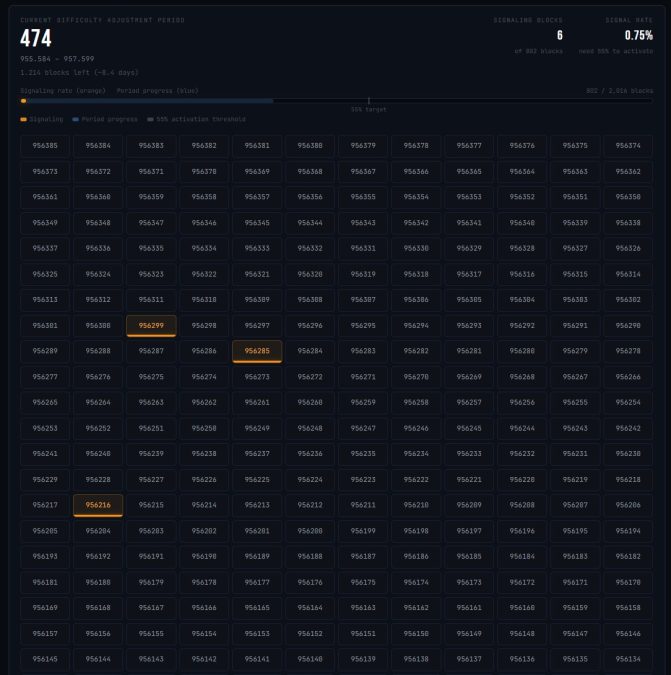
On social media, users of Bitcoin Knots have shown strong support for the proposal. However, monitoring data indicates only minimal signaling from miners. Luke Dashjr, another Bitcoin developer, pointed out that “miners trying to block BIP-110 would be committing suicide for their own businesses.”
“They would leave the community no choice but to switch to another proof-of-work algorithm. And to what end? To allow bad actors to force CSAM on all bitcoiners? I don't see that happening. It's just FUD.”
For those following the ongoing friction between Core and Knots, the core arguments remain the same.
Critics Argue BIP-110 Could Bring More Problems Than Solutions
Although BIP-110 presents itself as a solution against arbitrary data spam on Bitcoin, critics of the proposal argue that it will not solve the problem but will instead create new ones. One of the most comprehensive articles on the subject was published by Farside Investors last Monday.
“Because BIP-110 changes Bitcoin's protocol rules, there is a risk of a temporary or permanent chain split and the emergence of a new coin. Unlike most of Bitcoin's successful soft forks in the past, BIP-110 is controversial and heavily contested, raising the risk of a chainsplit.”
The article also points out that BIP-110 could “break wallets” that support miniscripts. Even if users can receive funds at addresses using tapscript with OP_IF, for example, they would not be able to spend them later. Another issue would be the prohibition of sending bitcoins to P2PK addresses. However, since the public keys of these addresses are always exposed, their usage is nearly zero today.
“In Bitcoin's history, such a ban has never happened before, which makes BIP-110 highly unprecedented.”
Citing other concerns, the Farside analysts conclude that the most effective way to combat spam would be “through economic means” and that BIP-110 supporters should “fight spam by making Bitcoin a better money.” As a comparison, they recall what happened during the “Block Size War” that gave rise to Bitcoin Cash (BCH) and other Bitcoin clones after 2017.
Further discussions on the matter, featuring perspectives from both sides, can be found across social media platforms.





