There is a need!
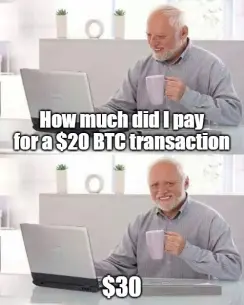
Have you ever tried to do a transaction with BTC or ETH and found out that the fee of your transaction is ridiculously bigger than the transaction itself? Well, if you've been in crypto for just two days, the answer would probably be yes! This is basically because both BTC and ETH were invented way back in 2009 and 2014 respectively. An era when 90% of the Earth's population had not yet heard of the term "crypto" at all.
According to recent stats, the ratio is now reversed as data from a July 2021 survey shows that 89% of American adults have heard of BTC. Among those, 27% would consider investing in crypto, and 13% already had.
This meteoric rise in crypto adoption, especially with Bitcoin and Ethereum, is much way faster than the ongoing development on both networks. That is why there have been many and many so called "Ethereum killers" out there. The likes of Solana, Polkadot, Avaulanch, Cardano... whose main claim to fame is to be “faster and cheaper” than ETH and so they’re trying to "kill it".
On the other hand, there are also so many "layers twos", "lighting networks" such as Polygon, Optimism, and other scaling solutions that are trying hard to rehabilitate (rather than kill) the two old Dads (BTC and ETH) to fit the new reality.
Some of these scaling solutions are doing well, but to be blunt, they are still way behind in keeping up with the skyrocketing crypto adoption. Let's take Bitcoin's lightning network as an example.
The Lightning Network allows users to send or receive Bitcoin "quickly and cheaply" by moving transactions off of the main blockchain. Those transactions are being done through off-chain channels, and because only the opening and closing of payment channels are recorded on the core blockchain, the entire Bitcoin network can theoretically go faster.
When launched in 2018, expectations of lowering BTC fees among its proponents were high but as the graph below shows, average Bitcoin transaction fees didn't go down but rather went up!

There could be many reasons for this, one of those (as mentioned earlier) the relentless rise in users and businesses conducting Bitcoin transactions but another reason could be that the lightning network itself requires fees for opening and closing channels on the network!
The same goes for most Ethereum scaling solutions. They come with their own limitations too. Some of them are too complex for the average user to understand let alone use. Others trade off elements (like decentralization and security) for speed, which doesn't do them any favor in my book.
This begs the question Why is the development of original blockchains is so slow?
Well, this is a good one and the short answer to it is the "Blockchain Trilemma"
What on earth is this fuzzy “blockchain Trilemma "?
In short, it is a situation in which a crypto project must sacrifice one crucial aspect of it to get two ones in exchange.
There are three main aspects:
1- Scalability: A blockchain’s ability to handle more transactions per second (TPS), lowering the time and fees involved.
2- Security: A blockchain’s resistance to security breaches of various types.
3- Decentralization: A blockchain’s distribution level of its native coin or token, which ensures that there is no central entity controlling the entire network.
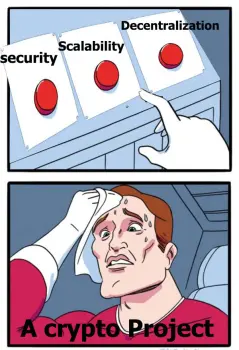
As is always the case in real life, you can't get everything you want at once, and this applies to crypto as well. For any crypto project, there are three scenarios:
1- Introducing a secure and scalable blockchain at the cost of a poor lever of decentralization.
2- Creating a decentralized and scalable network at the expense of security.
3- Prioritizing proper decentralization and decent security at the cost of reduced scalability.
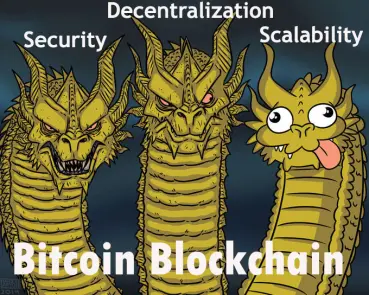
Both Satoshi Nakamoto and Vitalik Buterin went for the third option, as they had the same mindset of prioritizing long-term sustainability over short-term growth. While their choice played a major role in the high-profile positions held by the two assets currently, this does not stop the crypto community from being well aware of the dire need for scalability going forward.
This is exactly where the need for a new project comes into play. A project that is not only able to accommodate large numbers of transactions in a true secure, cheap, and fast manner, but also helps the ancestors do the same. I'm here talking about Tectum and its SoftNote payment solution...
What Is Tectum?
Tectum is the world's fastest blockchain that breaks the bar of one million transactions per second for the first time in crypto history.
Just to appreciate how revolutionary this is, grandpa Bitcoin is capable of processing an average of approximately 7 transactions per second (tps) while its cousin ETH can handle something like 45 TPS
Tectum utilizes the proprietary record change signature management algorithm and provides instant event status delivery and ownership updates across the blockchain network along with distributed levels of access to functional system modules.
Instead of storing data directly in the blockchain, Tectum employs a unique approach that involves Storing hashes that correspond back to the original data stored at a lower level, which isolates heavy transaction-related data from the main pipeline.
It is an approach specially designed to allow Tectum to extremely faster without sacrificing security and decentralization

Strengths of the Tectum protocol:
Before I get into it, let me clarify that I’m not a technical expert in this field, but having spent some time reading Tectum's white paper, I was able to wrap my head around one or two nice pieces of information that I’d like to share. If I slipped up about any of them I hope some of you guys would wake my eyes :)
The first strength point of the Tectum blockchain lies in its unique block formation protocol which is a far cry from the way traditional blockchains function.
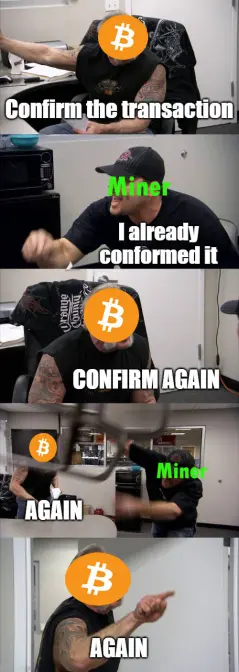
Bitcoin, for example, requires ten-minute periods for every block to be released. During this time, transactions build up in a queue before being released in one go after the block time has elapsed. This creates one hell of a bottleneck in chain performance. Bitcoin Mining would mean that transactions cannot be validated until a miner has won its next block, therefore slowing the network down drastically.
On the other hand, Tectum adopts a completely different approach. From day one, the team decided that there would be no mining required in the blockchain to avoid transaction ‘clustering’.
The solution implemented by Tectum was to make the blockchain accommodate only one transaction per block, which means transaction flow will be even and without clustering into blocks waiting for a given block time to elapse. Network speed therefore has become easier to calculate and measure than under traditional blockchain design.
The second core strength point of the Tectum protocol is network mapping. Bitcoin network requires 6 confirmations for a transaction to be final. The team decided that this was kind of a bureaucratic process, with all Bitcoin network participants doing unnecessary work. While this might add extra levels of security for the Bitcoin network, Tectum is intended to be an extremely rapid overlay network and thus must take a different approach to finalization. When a Bitcoin node releases a transaction, it broadcasts to all the nodes connected to the broadcasting node propagating outwards and transaction confirmations keep accruing for multiple days after a transaction is made!
It doesn't take a rocket scientist to realize that there is a lot of redundancy and unnecessary work going on there...
In the Tectum network, a solid network map is created by an Elect Node each network cycle (200 milliseconds), giving every node a clear instruction as to which other node is its closest peer, eliminating redundancy. By implementing this method Tectum radically reduced its network load and improved the entire system performance.
Last but not least, there is the NoSQL search engine integrated into the chain architecture which enables it to process and store vast amounts of data in a distributed manner while allowing for faster querying and retrieval compared to traditional relational databases.
What is Tectum’s SoftNote?
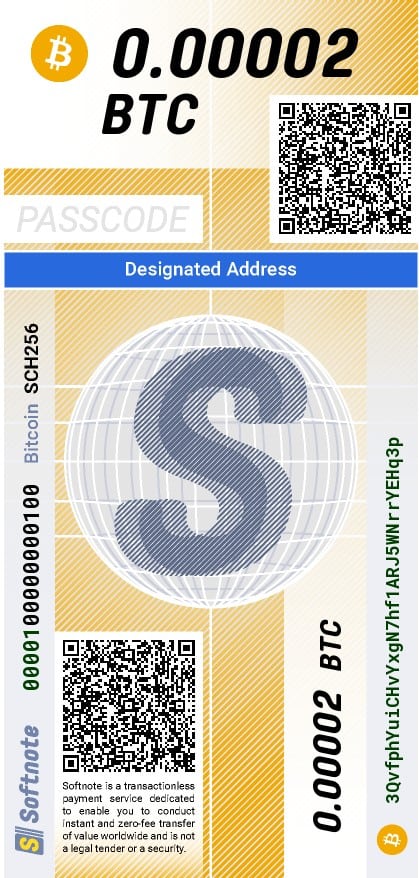
In essence, it is the "next-generation” payment system with instant payments and zero fees in a transactionless environment. This means there is no actual transaction taking place on the Tectum blockchain – only “handover” signatures via passcode and serial numbers.
Tectum realized that attempts to speed up transactions on legacy networks such as Bitcoin and Ethereum would not be of much use. It's akin to trying to update a Nokia 3310's software to play Pubg or install Tiktok. No matter how hard to try, you will never get the result you hope for.
Ethereum’s scaling solution and Bitcoin's lighting network had thought out of the box trying to raise their throughput which is good though not sufficient. However, Tectum is thinking literally as if there is NO box.
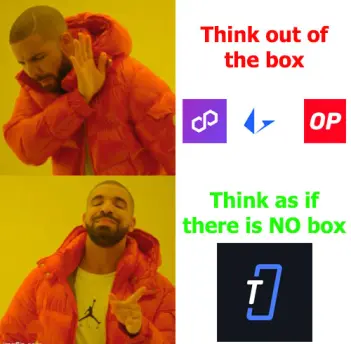
You can say that SoftNote replaces "transactions" with "handovers of ownership".
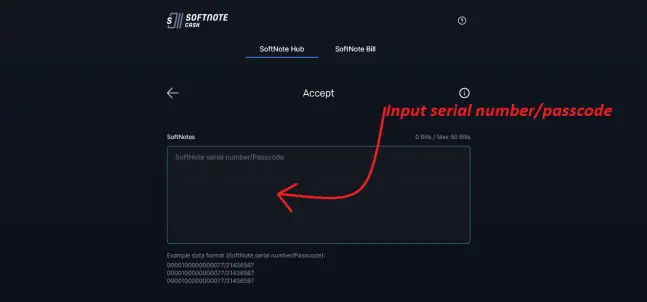
The passcode is changed to represent ownership of the SoftNote and stored on the Tectum blockchain which can handle 1.3 million passcode changes per second. This means you can send your SoftNote over any messenger like WhatsApp, Telegram, or even print it out like cash using the soft node in it. It feels like a crypto cheque, doesn't it?
When the recipient gets your SoftNote, they just go to "softnote.cash", input the passcode, and record the new one which means they have just received ownership of that SoftNote.

Tectum Token (TET):
Tectum Emission Token (TET) – T12 token built on Tectum’s native blockchain that operates at 1.3 million transactions. TET is meant to be the underlying support of the entire Tectum environment with several use cases. For the sake of time, let me mention just 4 of them which were interesting to me:
- SoftNote Minting: As mentioned earlier SoftNote is the flagship product of the Tectum project, and in order to mint SoftNote, you'll have to use TET. Currently, 1 TET can mint 100 Softnotes, but the team is planning to adjust this to represent just 1% of the Softnote face value, paid in TET
- Tectum Layer 1 Gas Fees: The utility of TET covers all Layer 1 gas fees within the Tectum ecosystem. Whether it's transferring $TET or any crypto launched on our blockchain.
- T12 Token Standard Fees: The team is working on a bridge bridge for erc20 and bep20 tokens, the most active smart contract networks out there. When it is complete, transaction fees for bridged tokens will be paid in $TET
- Access to Pre-Seed Incubated Projects: By holding TET, you'll have the privilege of getting exclusive access to pre-seed project sales by Tectum Labs.
As part of the transparency policy, the Tectum team displays on their official website the distribution of the TET token.
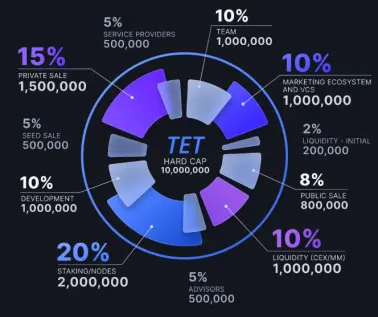
As you can see, there is pretty good decentralized distribution. No single entity controls the network! The Tectum team seems serious about the TET token and its long-term future
As we continue to push the boundaries of innovation, TET will remain at the heart of the journey!
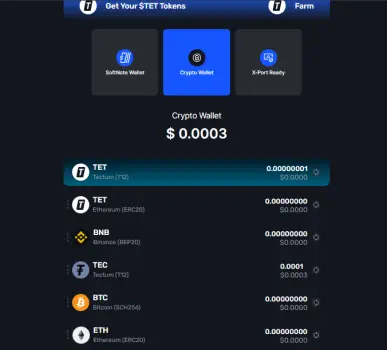
The Tectum Wallet
This Wallet is yet another product from Tectum that gives you complete peace of mind to deal with the ecosystem.
With it, you're allowed to convert BTC and other crypto integrations at minuscule fees. All you need to use is an email address. No KYC boring stuff here!
What I'm impressed about this wallet is not only its wide support for Bitcoin and other multiple cryptocurrencies, but also its simple and straightforward UI that makes even a crypto dummy able to get the hang of it quickly.
According to their website
This next-generation technology is positioned to disrupt the digital currency environment by lowering costs & improving transaction speed for people & businesses worldwide.

Quantum-Proof Authentication (3FA)
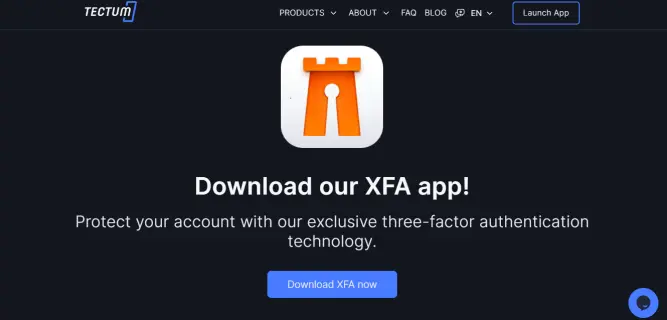
All right, I don't want to make this publication longer than it already is, but there is another aspect of Tectum that I really can't help but talk about. It is the three-factor authentication, which takes the security of the Tectum environment to a whole different level.
So, not only does Tectum enhance scalability without compromising security, but it also boosts security too.
Impressive, right?
Does it mean 2FA is not enough?
Well, today's cybercriminals are not as they were yesterday. They utilize more sophisticated schemes to trick people. The fact that phones can be hacked and SIM cards can be duplicated makes 2FA increasingly risky. This is why we need a third layer of security. You know how the saying goes "the third time is the charm".
According to the official website:
3FA works by intermingling human & machine logic to create quantum-proof login encryption, and protects against SMS & QR-code hacking while offering Dual Tone Multi-frequency (DTMF) fallback protection for lost or legacy devices.
Final thought:
If you've been in crypto for a while, you'll know that the goal of "one million transactions per second" is something that has been much talked about by many projects. To my knowledge though, Tectum is the only one that achieved it creatively and innovatively. After all, talking the talk is one thing but walking the walk is a whole different thing.
Not only has it reached a near-limitless scalability but it also helps the ancestors get there.
It also has a star-studded team that seems serious about implementing practical solutions to many existing problems both in and outside the crypto world, with a fairly clear pathway for peer-to-peer and peer-to-retail mass adoption.
Are there risks involved? Of course, there are.
Tectum is still in its infancy and it remains to be seen whether or not it will be able to attract a broad range of businesses and individuals to adopt it. Maybe it has the tech needed but I would argue that it lacks the necessary coverage. I must also admit the first time I heard of Tectum was during my research to participate in this nice contest.
What I'm trying to say here is that marketing is no less important than technology, in some cases, it is most prioritized.
I hope more and more marketing campaigns take place if Tectum is to thrive in the next bull run. Until then, it’s undoubtedly a project worth keeping your eyes glued to. Let's also not forget that Tectum being less covered by media is what makes it a 100x-gem for early investors in the first place...
Thanks for reading :)