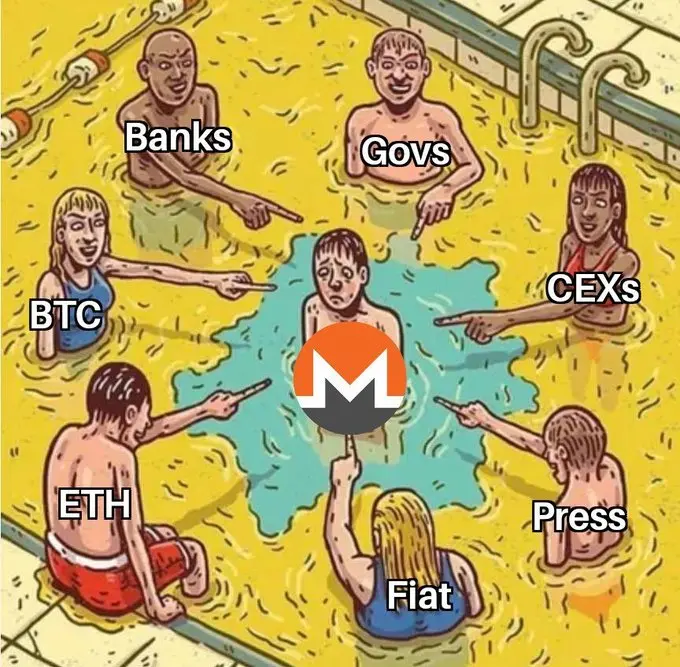
The Cypherpunks are a movement and a group of activists advocating for the widespread use of strong cryptography and privacy-enhancing technologies as a route to social and political change. The term “Cypherpunk” a combination of cipher referring to the art of writing or solving codes and punk reflecting their anti-establishment ethos. This movement believes in the power of privacy as a fundamental right and see cryptography as the key to protecting individual freedom against surveillance and control by the states and corporations. This is the group of individuals that Satoshi claimed to be apart of and I honestly believe that in the beginning he was a Cypherpunk. Others took up his mantle and dedicated themselves to this philosophy, Keonne Rodriguez and William Lonergan Hill founded Samourai Wallet in 2015 and offered privacy-enhancing features designed to obfuscate the source of funds. They provided their code fully open sourced and explained every public service they ran. Samaourai Wallet’s code allowed users to make transactions as they saw fit. They were arrested April 24, 2024 and charged with conspiracy to commit money laundering. Another trailblazer was Roman Semenov co-founder of Tornado Cash a fully decentralized protocol for private transactions on various layer 1 blockchains. August 12, 2022 he is arrested in Amsterdam by the Dutch authorities for suspected involvement in the development of Tornado Cash, a crypto mixer service. The US Department of the Treasury had sanctioned Tornado Cash earlier that month, citing its use in money laundering by groups including North Korean hackers.
As a wayfarer just starting your journey you will hear buzz words like decentralization, self-sovereignty, blockchain, proof of work, proof of stake and various other linguistics meant to indoctrinate you. Let’s start the flowchart: Do you believe in POW or POS? POS is the Nakamoto Coefficient relevant to your blockchain of choice? YES go back to the start you have failed this Turing test, the state of Decentralization has nothing to do with a system that allows a participant to have more control of the network by buying more coins than another. POW is your coin fungible? NO you are wasting your time with a cryptocurrency that can’t act like a currency. YES now we can be friends. STFU you privacy zealot I’m just a normal guy and cryptocurrencies can be whatever I ascribe to them including your ethos. My friend will you at least spend some of your cryptocurrency for my goods and services? Why yes do you use Wallet of Satoshi? I’m going to need you to go back and re-read the whitepaper, the cypherpunk manifesto, run your own node, use a mixing service then I can give you my Pay Nym address. (He just walked away...)

What if we committed Hate Crimes together?
Let me tell you a secret, true decentralization is hard work for the user it is not more convenient. Eg.) In order to not Trust but Verify, you must run your own node that way you can be sure that your transactions are verified on the Bitcoin blockchain. Running your own node makes you a System Administrator. Too much, can you configure your home Router? NO you have all your crypto on your phone? JEEEZZZZZZ it’s cool come on we can do this together. Let’s get rid of the word decentralization and replace it with the words Self-hosted, open-sourced and redundancy. Every one has something to protect, we all deserve Privacy but it is not a given. If you don’t fight for it then you will taste none of it.
1.) Use an OPEN SOURCED Operating system for you computer.
Traditional OSs like Windows and MacOS are proprietary software, which is distinct from free software. Proprietary software is not available for users to study, observe, or change. As the user, you are given no rights. FOSS (Free & Open Source Software) – Free software means software that respects users’ freedom and community. Roughly it means that users have the freedom to run, copy, distribute, study, change and improve the software. I’m not going to lie you there is a steep learning curve to deviate from what you know, I’ve spent hours wasting my life away trying to figure out CUPS (connecting linux OSes to printers). But your on your way to Self-sovereignty assuming you want it. If your coming from Windows download RUFUS and head over to DistroWatch pick for yourself a piece of freedom. If Mac then download Balena Etcher, I would recommend POP OS for beginners which is a cross Distro between Ubuntu (needed for your software to integrate with hardware) and Debian (grand-daddy Linux distro) easy to install programs with .deb extensions just like .exe extensions. If you willing to put in the work PASS GO and directly to Arch and become a developer not a user.
2.) Use Open-source software on your phone.
Android and iOS-based phones connect back to their parent companies every 5 minutes instead of feeding the beast of centralization your data, free yourself with an alternative. If your happy in your walled garden come all the more and detached from your love of a company that has none for you. In regard to crypto wallets all the unsanctioned and cool ones are not on any store but can be downloaded with F-droid. Graphene OS has so many user privacy options for instance a code you type into your phone that causes the OS to completely wipe your phone. At first you will miss the convenience of your gated system’s application but you will soon realize their is an alternative for each one. DivestOS and LibreMobile OS are options but your probably going to have to look up an online guide for installation, I was interested in DivestOS but after looking through guides I needed to roll back the OS to android 12 and then flash the phone. Much easier setup to follow the Web guide for Graphene and follow the directions to a tea. Also if your phone is new enough you can expect 5 years of support from the devs.
3.) Own your data
Emails are meant to be tracked and even if you don’t have the technical knowledge to self-host there are VPS options that will allow you to control your own email with secured email clients like Thunderbird and K-9 Mail. Use Kleopatra as a certificate manager and Graphic User Interface for GnuPG (allows you to encrypt and sign your data and communications; it features a versatile key management system, along with access modules for all kinds of public key directories). If you are truly for decentralization you will actively boycott any service that transgresses on your privacy. Instead of LinkedIn host a website with your own stuff dude. Any service that requires a Captcha is fingerprinting you to verify who you are, some CEXes require this don’t use CEXs use DEXs. True DEXs are Bisq, Haveno, Basic Swap, Exch, and Infinity [kycnot.me]. Instead of Netflix or Prime the PirateBay or any torrent client available. Copy your favorite website with HTTrack a free and open-source Web crawler and offline browser.
4.) Support the alternatives.
Twitter -> Nostr (Boo Nostr sucks)
Discord -> Matrix/IRC
Telegram -> Session
Whats App -> SimpleX (Tell your friends this is the most secure messaging protocol)
Google doc -> Cryptpad
Dropbox -> NextCloud
SMS -> VoIP (if you have to, pretty much have to be KYC’d)
DocuSign -> Detached PGP on Arweave
Github -> protocol.land
Word Press -> Hugo
Cash -> Monero
Password Manager
KeepasssXC: Offline password manager
VPNs
Mullvad
IVPN
Browsers
Thorium: Chromium fork for Linux, Windows, MacOS, Android and Raspberry Pi
TOR Browser: to experience real private browing without tracking, surveillance, or censorship
Librewolf: a custom and independent version of Firefox, with the primary goals of privacy, security and user freedom.
Search Engine
YaCy: a free software for your own search engine with the benefits of censorship resistance, privacy, increased control, and end-users can decide the truth. YaCy's search is powered by the open source engine Solr. Solr is what Duckduckgo uses, and many other big websites. If it's run on your local PC, then it's more private and your in control.
Communication
AnyDesk: Remote desktop/support software
Jitsi: Free video conferencing
Jami: Free and open-source peer-to-peer video conferencing
Social Media
PeerTube: Decentralized video broadcasting
Invidious: Alternative YouTube front end
FreeTube: User-friendly YouTube client application that allows private viewing without algorithm, ads and download any video or audio from YouTube.
Owncast: Self-hosted live video and web chat server
Graphics
Inkscape: Professional vector-based graphic editor
GIMP: One of the oldest and best known image editors
Blender: End to end 3D creation suite
Krita: Free and open source digital illustration program
Video Editors
Kdenlive: The KDE project’s video editor
Davinci Resolve: High-end professional video editor (2.4 GB download totally worth it)
OpenShot: Easy to use powerful video editor
Video Utilities
OBS Studio: Video recording and live streaming
Kazam: Record videos of your screen
Peek: Record videos and gifs of your screen
Spectacle: KDE’s screenshot tool
5. Cryptocurrency Wallets you should be Using
Desktop Wallets
Monero GUI Wallet: Open-source graphical user interface wallet developed by the Monero community (one a side note your wallet should allow you to choose the transaction fee, host a node of your blockchain which still do-able at roughly 180GB and have an included miner if your so inclined.)
Sparrow Wallet: Modern desktop Bitcoin wallet application for those who value financial self sovereignty. Sparrow’s emphasis is on security, privacy and usability. Your bitcoin wallet should allow you to view your UTXOs, have multiple addresses for one use wallets and be able to connect to any Bitcoin hardware wallet worth it’s salt.
Mobile Wallets
Cake Wallet: securely store, send and exchange your crypto with ease. All a rounder wallet with support for: BTC, ETH, LTC, BCH, MATIC, SOL, TRX, XNO, WOW and XHV. Cake Pay make it easy to buy gift card with cryptocurrencies for use worldwide.
Ashigaru: A self custodial, open source secure Bitcoin wallet that is private by design. Ashigaru takes up the mantle from Samourai wallet was chosen to represent individuals of humble origin whom, borne out of necessity, would equip themselves with their own tools and rise to the occasion during a period of great change. Can be very useful if you can a run a instance of Dojo Node running to implement it’s privacy features otherwise you just have a cool looking Bitcoin wallet.
If you walk down this path with me you will become a criminal and/or domestic terrorist sometime down the line if not already. But cryptocurrencies were borne from this ethos: which believes in the power of privacy as a fundamental right and see cryptography as the key to protecting individual freedom against surveillance and control by the states and corporations. You don’t even have to take a stance just try an alternative you won’t know freedom until you’ve tasted it. Privacy is for all of us. Cryptocurrencies are the alternative to the current system: the state exists only to forbid things and perpetuate the current debt system, you can’t fix it by any means just stop supporting it. I believe in you. You can do it.