
The stablecoin supply on Solana exceeded $10B – a major milestone and a strong sign of Solana’s growing strength as a DeFi and settlement layer. Here's a breakdown of what this means and why it's important:
Stablecoin Supply on Solana: Context & Growth
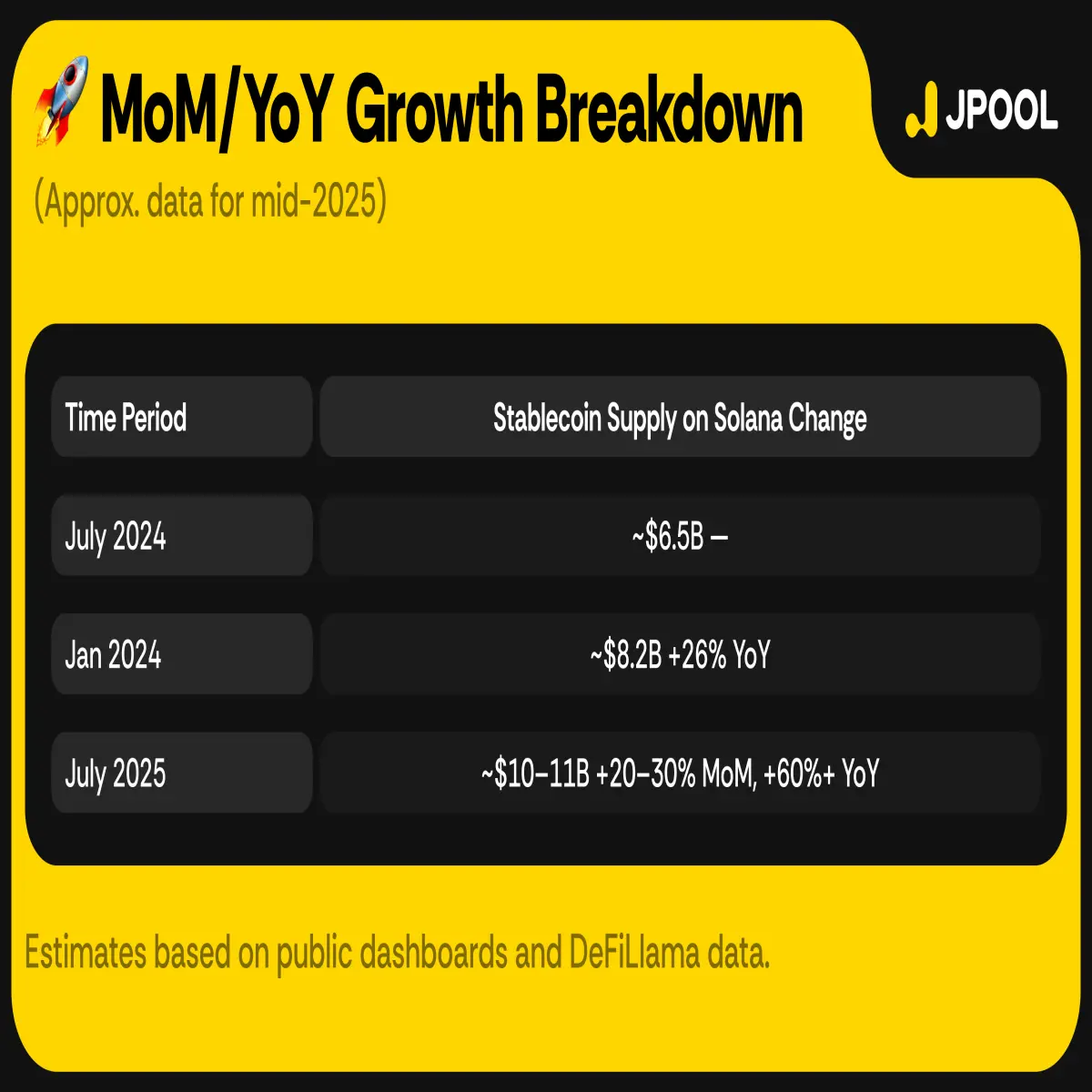
As of mid-2025, Solana hosts approximately $10–11B in circulating stablecoins, including:
- USDC (via native mint from Circle)
- USDT (Tether’s native Solana issuance)
- UXD, piUSD, and other decentralized stablecoins
This number is up significantly both month-over-month (MoM) and year-over-year (YoY) — meaning Solana is seeing rapid growth in demand for dollar-denominated assets.
1. Stablecoins = Liquidity
A high stablecoin supply means more dry powder for trading, lending, staking, and participating in DeFi protocols. It’s also the preferred unit of account in crypto.
More stablecoins → more volume → more protocol usage.
2. Solana as a DeFi Layer
This level of stablecoin supply makes Solana:
- One of the top chains by TVL and liquidity
- A serious competitor to Ethereum and L2s
- A fast, cheap, and increasingly trusted platform for DeFi activity
3. Institutional On-Ramps
With Circle’s native USDC mint on Solana and high throughput + low fees, Solana becomes a natural hub for several major use cases:
- CEX to DeFi bridging
- Cross-border payments
- RWA (real-world asset) protocols using stablecoins as rails
4. Builder & Dev Magnet
Protocols and apps are attracted to chains where the money is already flowing. This influx of stablecoin liquidity drives growth in liquid staking, DEXs, and lending protocols, as well as new integrations with cross-chain bridges, wallets, and payment rails.
🚀 MoM/YoY Growth Breakdown (Approx. data for mid-2025)
TL;DR:
Solana is becoming a top stablecoin chain, with over $10B in supply.
Stablecoins are the lifeblood of DeFi, and this growth equals more opportunities for protocols like JPool. The trend signifies deepening user trust, more institutional capital, and a maturing ecosystem.





