
2026 was a record year for precious metals: gold surpassed $5,000 per ounce, while metals like silver also recorded strong gains. This was shaped by a combination of global uncertainty, a low real interest rate environment, central bank purchases, and geopolitical risks. This rally led to institutional and individual investors, particularly those seeking safe havens, directing their capital towards traditional precious metals. As a result, capital flowing into digital asset markets was temporarily pressured, and the performance of crypto assets, including Bitcoin, remained relatively weak.
1 - Risk Appetite Rebalancing with Safe-Have Demand
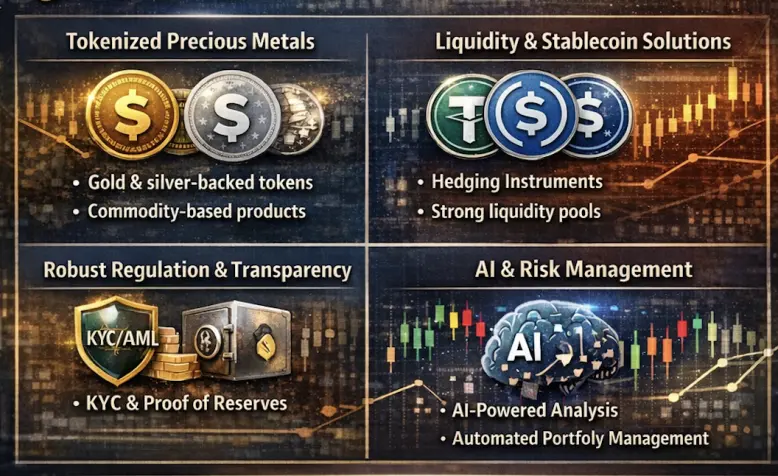
The increased appeal of precious metals has caused a surge in demand for the risky asset class in crypto markets. This has led crypto exchanges to focus on:
- Improving liquidity and volatility management
- Increasing their stablecoin and tokenized asset pools.
These strategies necessitate exchanges offering broader product sets to attract investors seeking hedging products.
2 - Tokenized Precious Metals and New Products
The trend of tokenizing assets based on precious metals is gaining momentum in the crypto world. Thanks to gold or silver-based tokens:
- Users can hold positions both in cryptocurrencies and in precious metals.
- Exchanges are integrating commodity derivatives and asset products beyond spot and futures trading for their users.
This contributes to the evolution of next-generation exchanges towards hybrid finance models that increase product diversity.
3 - Risk Management and Regulatory Compliance
The influx of capital into precious metals has made risk management essential for exchanges. In an environment of increasing macroeconomic uncertainty, next-generation exchanges are:
- Strengthening advanced KYC/AML and compliance infrastructures
- Standardizing transparency tools such as Proof of Reserves
- Offering options such as portfolio insurance and volatility protection
This creates a more secure trading environment to attract both institutional and individual investors.
4 - The Role of AI and Automation
Volatile price movements in metals and uncertainty in the crypto market have accelerated the integration of AI-powered risk models into exchanges. These systems:
- Analyze price fluctuations in real time
- Automatically optimize user portfolios
- Provide early warning systems against potential market shocks
As a result, next-generation platforms are beginning to offer not only trading but also intelligent portfolio management services.
My final Words; The evolution in crypto exchanges, strong performance in the precious metals market, will reshape investor behavior. It will also transform crypto exchanges into more sophisticated, integrated, and market-diverse platforms. This evolution is not limited to spot trading but is moving towards a “next-generation financial super-app” model with features such as:
Tokenized precious metals, diversified derivatives, AI-powered risk and liquidity management, and stronger regulatory compliance.
These developments could make the crypto market a central hub not only for digital asset trading but also for the expanding digital investment ecosystem.
"As I always say, “Listen to everyone, decide for yourself…” Good luck!






