
Link to James Hambin’s new book, published June 2020. This is part I of my summary of this book. Part II is coming soon.
If you like this book review, please check out my blog here for more reviews.
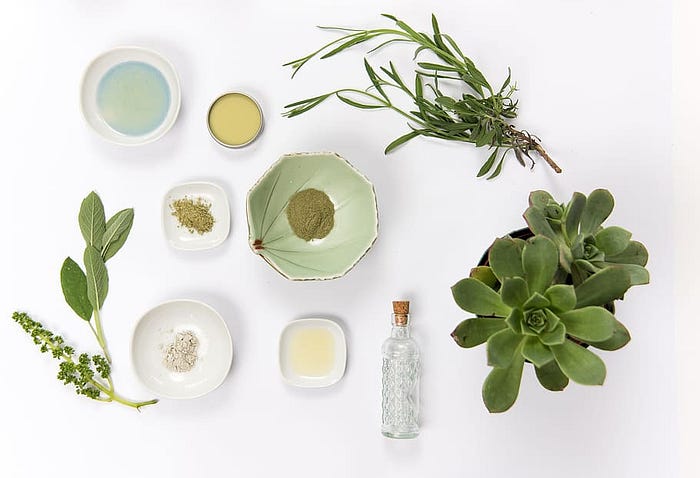
Skin care industry advertised as “natural” yet, is it really essential for your skin?
I was not looking for any particular topic within the Health section, I only picked up this book because of its minimalistic cover and title “Clean.” I have never heard of Dr. James Hamblin before, but after reading the brief book summary, I decided to give it a try. To my satisfaction, this book lives up to its cover and more, it offers clear and at times challenging insights about the inner workings of our largest organ — the skin. Hamblin’s entertaining, yet factual style of writing fully engages the readers to think about the notion of cleanliness, and hygiene practices in terms of biology, history, and economics.
In the prologue, Dr. Hamblin professed that he stopped showering five years ago, a concept that immediately pique my interest to keep reading. He admitted that it was unconventional and terrible in many ways, and yet have changed his life. He had recently moved to New York, gave up medicine to pursue a career a s journalist. He stopped showering after evaluating the amount of time that went into applying soap and shampoo. (The calculation comes out 18,250 hours washing or 2 years of your life if you spend 30 minutes per day lathering and rinsing products).
Over the course of months, and then years, as I gradually used less and less, I started to need less and less — or, at least, I believe I did. My skin slowly became less oily, and I got fewer patches of eczema. I didn’t smell like pine trees or lavender, but I also didn’t smell like the oniony body odor that I used to get when my armpits, used to being plastered with deodorant, suddenly went a day without it. As my girlfriend put it, I smelled “like a person.” Initial skepticism turned to enthusiasm.
Admittedly a healthy white male with a degree in public health and a career in preventive medicine, Dr. Hamblin acknowledges that it was not hard for him to be perceived as clean. But that is precisely what he wants to ask and challenge in this book, “the basic conception of what it means to be clean”. He invites readers to embrace the complex world of their own skin, with a fuller understanding of the trillion dollar skin care market and the importance of the skin microbiome.
IMMACULATE and PURIFY: modern notions of “Clean”
The book starts with James Hamblin getting a special facial message from the founder of Peach & Lily, Alicia Yoon, who popularized K-beauty and the application of snail secretions to the skin. Lying on the crisp linens at Peach & Lily, Hamblin, who had not washed his face for three years, began to ponder Yoon’s recommended products and the blurred definitions of cosmetics as enhancement versus nutrients or protection.
Desire for control and certainty leaves people wanting preventive approaches, of the sort that the medical system has not traditionally taken seriously. Yoon (of Peach & Lily) is seeing growing demand for products that promise to “nourish” or “protect” the skin… Cosmetics are not food, legally. They are also distinct, in a regulatory sense, from drugs in that they can’t claim to treat or prevent specific disease. But sellers can market these products with claims about improving and maintaining health — without all the bureaucratic burden of getting a drug approved to be sold on the market.
Back to the busy streets of NYC post-facial, Hamblin experienced a softer skin, without dead skin or oil, as well as a newly boosted confidence, a side effect of feeling more attractive. He began to understand how something (i.e.: facial) he considered as frivolous and extravagant prior, can become a routine, even necessity for many people. Can this be applied to many of our modern cleaning habits, which started relatively recently?
Over the course of just a few centuries, social and personal standards for hygiene and cleanliness in much of the world have expanded from an occasional jump in the river to an essential daily shower of bath… Many of us are taught that it is healthy and even necessary to wash ourselves elaborately, daily, sometimes multiple times… We are expected to carry no visible dirt or mud or dust lest we be considered derelict, lazy, unattractive, unsophisticated, impolite and unprofessional. In a word: unclean.
Yet, the skin is our largest organ, and it is extremely resilient to environmental forces, including of our constant needs to apply topicals. The skin has three layers (epidermis, dermis, and connective tissues) and three types of glands (sweat glands, sebaceous gland and apocrine sweat glands) that secrete oils and other compounds. More importantly, skin contains microbial population which scientists knew very little about until recently. A study led by University of California, San Diego dermatologist Richard Gallo, showed that Staphylococcus epidermis, a natural occurring bacterium on human skin, can reduce tumor formation in mice when subjected to suntans.
Disgust is a useful mechanism. We guard ourselves from other people’s diseases by being disgusted by their behavior or appearance. It’s also why we can be disgusted by ourselves, or why we might feel shame and embarrassment over how we look… We evolved to care about appearances…Life is a constant tension between the need to be close to other people and the need to protect ourselves from other people.
In other words, disease-avoidance behavior is universal in nature across species, and thus has been synonomous with “hygiene” in academic sense. However, Hamblin argued that hygiene practices, in wealthy countries, has gone beyond disease avoidance to match the ever-changing societal and cultural standards of beauty.
For most of human history, cleaning practices were preserved for spirituality or socializing, with examples of Aztecs rites of purification, or Roman public baths. While Indian and Chinese cultures had practiced hand washing and daily baths, much of the Western world, influenced by Christianity, discouraged bathing and other hygienic practices.
By the 1800s, with the rise of industrial revolution came the population explosions in cities such as Paris, London, and New York. Epidemics such as cholera swept through Europe’s industrial slums, which led John Snow, a London physician to question the link between contaminated drinking water and infectious diseases. In 1883, Robert Koch confirmed Snow’s findings with “germ theory”, which stressed the importance of clean water supply.
Public health arose as a newly necessary field to promote basic sanitation and hygiene in Europe and the United States… Priorities included pathogen-free drinking water, sewage systems, and getting people to wash their hands after defecating… Ideas about personal hygiene also rocketed to the center of consciousness. A person’s cleanliness could be taken as a marker of who was or was not dangerous.
Cleanliness, synonymous with personal hygiene, required resources (money and time). Thus, hygiene became the indicator of status or upward mobility. The working class was known as the Great Unwashed. This connection of hygiene and status propelled the soap industry to great heights within capitalistic society.
By early 1900s, even lower class might fill their basin once a week to bathe their children. At the same time, hygiene was deployed as a tool of social engineering, which was used to contain sexually transmitted diseases or to fuel a language of ethnic cleansing, a movement that would become Hitler’s eugenics cleansing of Jews.
LATHER and GLOW: The evolution of soap to skin care
James Hamblin takes the readers behind-the-scene of Dr. Bronner’s headquarter. David Bronner, Dr. Bronner’s grandson and current CEO of the company, takes pride in the company’s environmental advocacy, as well as its single focus on minimalism, as indicated the famous label on the soap “18 in 1.” Dr. Bronner’s multi-purpose soap was created by Emmanuel Bronner to fund his mission to spread the message of peace and unity.
Nowadays, the company distinguished itself by its usage of only organic plant oils. David Bronner insisted on importing fair-trade palm oils and investing in sustainable agricultural practices (in Ghana specifically). In between the description of the modern computerized manufacturing process at Dr. Bronner’s factory, Hamblin weaves in the history of soapmaking, through the eyes eighty-three-year-old Luis Spitz, nicknamed the “Godfather of soap.”
Though no one knows exactly how or when soap was first discovered, Spitz says, apocryphal tales abound. According to a Roman legend, soap was discovered at a place called “Mount Sapo,” where they sacrificed animals to the gods. The ritual left behind both ashes and fat from animal, and when rain came and mixed them together and swept them down the mountain and into the river, the people washing their togas realized it was going away better than before. They reverse engineered the process and started making soap.
In the late 19th century, store-bought soap was a luxury good. Famous soapers of the time include Lever brothers, William Procter and James Gamble. Hamblin chronicles the history of soap advertising from health-advice book Sunlight Year Book for Lever’s Sunlight, to Ivory Baby for Procter and Gamble’s Ivory, or “Keep That Schoolgirl Complexion” campaign for Palmolive.
The advertisements were often loaded with explicit racial illustrations (in the case of Fairbank’s soap “Let the Gold Dust Twins Do Your Work”) or questionable health claims (“YOU Can Have A Lovelier Complexion in 14 Days with Palmolive Soap, Doctors Prove!”). By 1930s, soap companies started producing radio shows, later morphed into “soap opera” for television (Guiding Light, started as a radio show by Duz soap company, was the longest running soap opera until its cancellation in 2009). However, in the digital age, mass media dominance no longer correlates to strong sales.
Not only are people no longer watching soaps, they are cutting Tv cables together…Their (GenX and millennials) environmentally conscious minimalism has led to a rejection of many products…Mass-market bar soap sales are in decline, while “indie” soap brands and skin care companies are infused with venture capital funding and selling as fast as they can fill everyone’s feeds on Instagram.
One of the frontrunners for the new trend is Glossier, the world’s fastest-growing skin care companies. Glossier was started in 2014 by Emily Weiss, an intern at Teen Vogue and the author of the skin, beauty and wellness Into the Gloss blog. With the popularity of Glossier among millions of young women and teenagers, Weiss has been dubbed the millennial Estée Lauder.
Accompanied by his friend Leah Finnegan, a fellow writer, Hamblin’s wandered inside the hugely popular Glossier store on Canal Street, New York. What he found was products that “are beautifully packaged but surprisingly standard in content.” The “Invisible Shield” is SPF35 a sunscreen that cost $25 for one ounce. Glossier’s acne treatment contains topical benzoyl peroxide for $14 for one tenth of one ounce, compared to Walmart’s product of the same ingredient at $5 for 1.5 ounces (nearly 15 times less expensive).
Leah sees this (Weiss’s) empowerment pitch as an illusion. “Of course I’m all for female CEOs, but do we really need to be told to do more skin care? Is that the best way to use your power and influence?” She counters Weiss’s claims of being a champion of women by pointing out that she is also selling them extreme, unattainable standards of beauty.
Like Hamblin, I find Leah’s argument thought-provoking and well-said. Not only do the new popular skin care brands advertise on unattainable standards of beauty, they encourage “clean beauty”, a term that has come to replace “natural” in cosmetic label. Yet, few consumers will consider whether the ingredients in these new skin care products are “clean”, “pure” in a regulation standpoint.
The relationship of the skin care industry to science is complex… It is okay to say that products and ingredients are “scientifically proven,” and that studies have shown your product is good. But it is not okay to ask where the study was published, or how many people were in it. Unlike “mainstream” science (which many people here and elsewhere distrust or believe has failed them), indie science is less concerned with methodology or statistics… It’s the kind of science where a “study” might turn out to mean that everyone at the company tried the product and absolutely loved it.
Thank you for reading my post about Clean: The New Science of Skin. Stay tune for part II of the summary of this book.






