
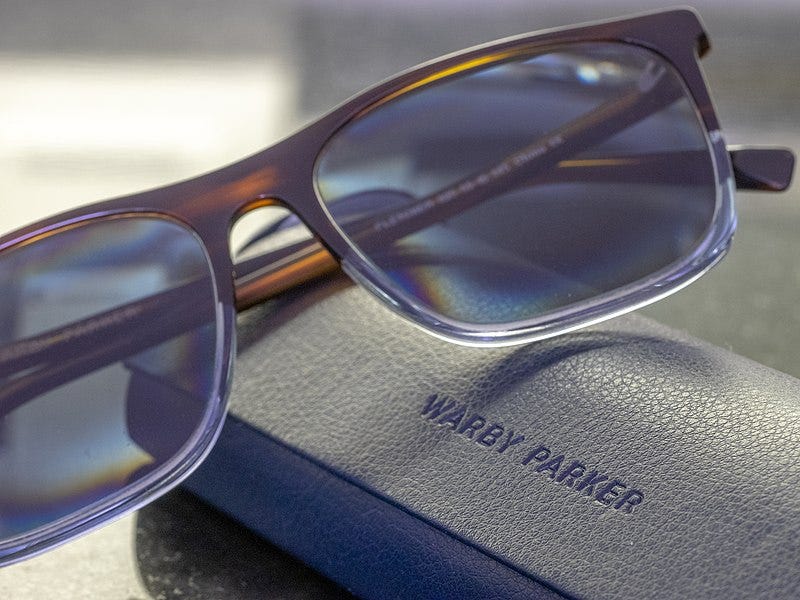
Warby Parker, founded in 2010, is one of the most iconic disruptor brands of the 21st century
I picked up this book as a recommendation from my library’s new arrivals, and I was pleasantly surprised by how entertaining and thought-provoking it is. The book is written for an audience that craves business-building stories, who binge-listen to real-world stories from business podcasts such as “How I Built This”, “Brought to you By” or “Planet Money.”
It is a detailed, fast-paced series of stories of digital startups in the last 10 years, many of which have become the new iconic brands used by Millenials and thus achieved ‘unicorn’ status as billion-dollar companies. In the first chapter, the author, Lawrence Ingrassia, takes the audiences behind the scenes into the story of Michael Dubin, founder of Dollar Shave Club.
Michael Dubin is not an inventor; he has no patents to his name. But like King Gillette, he seized on a transformational idea: technology has the potential to change the world of physical goods and the way brands are created. Dubin recognized that technology and globalization were leveling the playing field in every imaginable way.
The book engages the reader with stories of clever advertising such as Dubin’s viral one minute, 33-second video; Warby Parker’s Home Try On program; or ThirdLove’s Try Before Buying program. The author does a great job at keeping the founders’ stories personable while provoking the audiences to think critically about how successful brands are created in the digital age.
Brands that convey a sense of authenticity, rather than simply selling a product, can create a devoted community and take business away from bigger mass-market brands that by their very nature have a hard time identifying with consumers… Emily Weiss (Glossier’s founder) had an “ understanding what the customer wants three days before they understand themselves.”

Facebook advertising has become the most dominant marketing strategy for direct-to-consumer startups
The book confirms the trend that many direct-to-consumer brands have successfully used social media platforms, mainly Facebook advertising, to target their audiences, younger generations such as Millenials and Generation Z. Companies such as Dollar Shave Club, ThirdLove, Away luggage, Glossier cosmetics took advantage of Facebook’s “look-alike” targeting feature to direct the ads to people most likely to be their customers.
By January 2016, ThirdLove increased its Facebook ad budget to about $100,000, and sales rose to 3,000 bras per month. By the next January, monthly bra sales had risen to 38,000 as the company increased its Facebook spending to $2 million.
The rise of social media marketing goes hand in hand with the challenge of data mining, which is to keep the cost of attracting customers down and retain them as repeated customers. With more companies advertising for Facebook’s captive audience, ThirdLove has to bid higher to place ads as well as switching to videos from photos. By late 2018, ThirdLove, like other start-ups, started to advertise on podcast, billboards and even television advertising.
Predictive analytics, used by Netflix in 2006 to analyze their consumer behavior had been a huge success. Following that result, Stitch Fix was one of the earliest e-commerce start-ups to harness the power of data analytics. After completing a questionnaire, Stitch Fix’s customers are mailed a selection of five items, and charged a $20 styling fee. They can mail back what they don’t want at no charge, and purchase what they keep at a discount of the styling fee.
Stitch Fix uses predictive analysis based not only on the customer’s initial answers but on what she keeps and doesn’t keep and what other customers who fit her profile keep and don’t keep…Stitch Fix probably is the only consumer product company ever to post on its website an “Algorithm Tour”. An elaborate and lengthy online graphic, it explains how Stitch Fix uses data to act as clothing matchmaker.
The author argues that the power of data goes beyond helping companies with customer acquisition, and retention. Data can help create a futuristic store that showcases all direct-to-consumer brands while tracking customers’ facial expression, movements and time spent at each display (Neighborhood Goods store). Furthermore, data software such as AIMEE (Artifical Intelligence Mohawk E-Commerce Engine) is being used to create best-selling products on Amazon, the world’s biggest marketplace.
The direct-to-consumer brand revolution began with a handful of start-ups, then grew to dozens, then hundreds, and now thousands, counting the brands filling the endless digital aisles and shelves of Amazon Marketplace. But it will take time before it is clear how many truly enduring brands will emerge from this revolution. Can Dollar Shave Club and Bonobos survive a century or longer, like Gillette and Levi Strauss? Will Casper be around as long as Sealy and Serta, and can Glossier become the Estée Lauder of the 21st century?
It is fascinating that within a span of ten years, many ‘unicorn’ start-ups have sprung up to take significant sales from the dominant players of the 20th century. Dollar Shave Club and Harrys together grabbed 14 percent of U.S razor blade sales from Gillette in 2018; Warby Parker took nearly 5 percent of market share as the new eyewear brand.
The book’s insightful chronicle of the digital retailing revolution ends on an inspiring note: “The Brand is Dead, Long Live the Brand.” The revolution, as many start-up founders sees it, has just begun. “It’s never been cheaper to start a business, although I think it’s never been harder to scale a business” says Neil Blumenthal of Warby Parker.






