
The digital age thrives on data, and data needs storage. But traditional cloud storage providers raise concerns about privacy and control. Decentralized Physical Infrastructure Networks (DePINs), is a revolutionary concept that allows individuals to share and utilize storage space through an open marketplace, bypassing centralized control. But this DePIN is a recent concept whereas Projects such as StorX, Filecoin, StorJ, Akash Network, provide decentralized storage for a few years now.
A Booming Market of DePIN
The DePIN market is projected to reach a staggering $3.5 trillion by 2028, according to Messari. Yet, DePINs remain a niche sector within the cryptocurrency market, overshadowed by areas like DeFi and NFTs.
StorX Network: Security and User Control
StorX empowers users to lease their unused storage capacity, creating a permissionless marketplace. The SRX token fuels this ecosystem, enabling payments, rewarding users, and driving network decisions. StorX utilizes robust encryption and data-sharding techniques, ensuring user data remains private and secure. Users maintain full control over their data through features like end-to-end encryption, mitigating the risks associated with centralized storage.
The biggest advantage of SRX over other DePIN projects is its near-zero gas fees, thanks to the XDC Network. This allows farm node owners to easily claim or transfer their SRX rewards without worrying about high transaction costs. In contrast, other DePIN projects often face high gas fees, making node owners hesitant to move their rewards.
Market Performance and the Inflation Question
While StorX boasts these features, a potential hurdle emerges is inflation of SRX. The current market cap of SRX sits at $24 million, with a supply exceeding 596,286,699 SRX tokens. Since the mainnet is at the edge of launch the price will shoot high and is expected to cross the previous ATH.
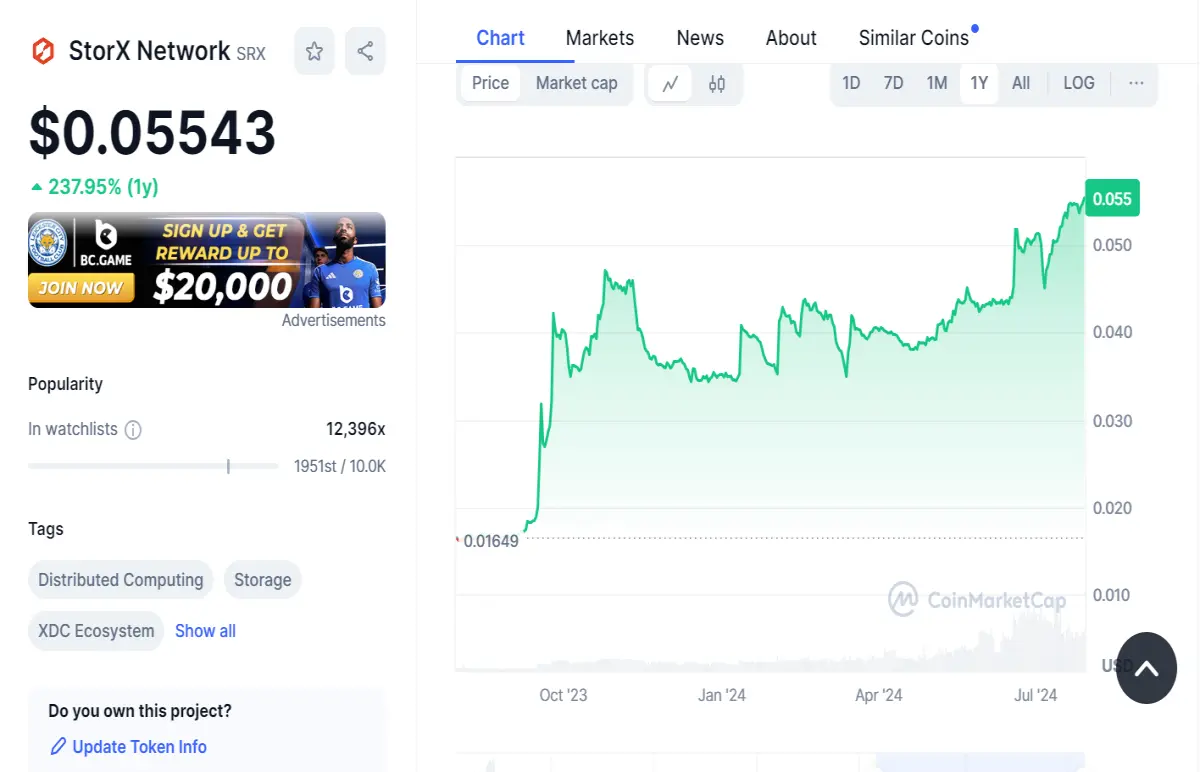
Early StorX community members have voiced concerns about inflation in the project's early days and suggested reducing the reward by half, as it will still fuel the requirements to run a farm node. One potential solution is to offer the option to re-stake the tokens. Unlike other projects, StorX rewards are unique in that they are directly collected on a connected wallet. However, some DePIN project nodes, due to their high gas fees, can be a financial burden for the community, effectively acting as a trap. In contrast, the StorX Farm node has a low and straightforward setup process, with no KYC requirement.
These indicate a potential for inflation to dilute the value of SRX tokens. While I acknowledge potential pushback, I suggest revising the reward structure for farm nodes. This would incentivize the early community, increase SRX demand, and ultimately reduce inflation.
My Suggestions To Gain More Retail Customers.
As secured storage is a need of the internet 1.0, 2.0, 3.0 the scope for SRX is great. With such great scope for SRX if we add a halving mechanism to the Farm node, reducing the reward to half every 2 years or 5 years will increase the value of SRX.
Increasing the value of SRX and creating scarcity will benefit the early community members, as well as new members joining the SRX community in the long term perspective. Being a part of the SRX community, I would urge the StorX team and other community members to consider this long term onboarding strategy for retail members. Let’s discuss, add suggestions and support the project for long term benefit as DePIN is here to fuel web3.






