
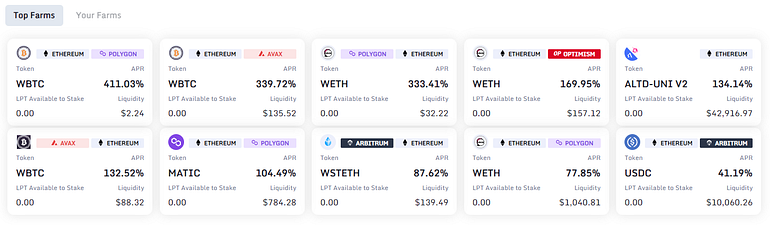
Keeping in line with other articles I’ve written earlier this month about crypto bridges, today I’m going to be doing a deep dive into Altitude, one of Crypto’s newest cross-chain bridges, and how/why they have so many single-sided staking pools with no impermanent loss involving bluechip assets with triple-digit APRs:
First, How Cross-Chain Bridges Normally Work
Let’s say you’re moving some $HACK token from Ethereum Mainnet to Avalanche:
- First your $HACK would get locked on Ethereum Mainnet.
- The bridge then confirms that your $HACK is locked.
- $HACK on the Avalanche Network, would be unlocked or minted, usually as a wrapped product as opposed to a native one.

It’s the last step using wrapped/mintable assets that have caused many bridges to get exploited, including the Polynetwork Bridge exploit (2021) which saw more than $600 million dollars worth of diverted tokens, or where 120,000 $ETH that was taken from the Wormhole attack in 2022. Without proper synchronicity, the locking/bridging/unlocking system is a complicated, multi-approval series of transactions that can have several points of failure.
Altitude uses different features to ensure security:
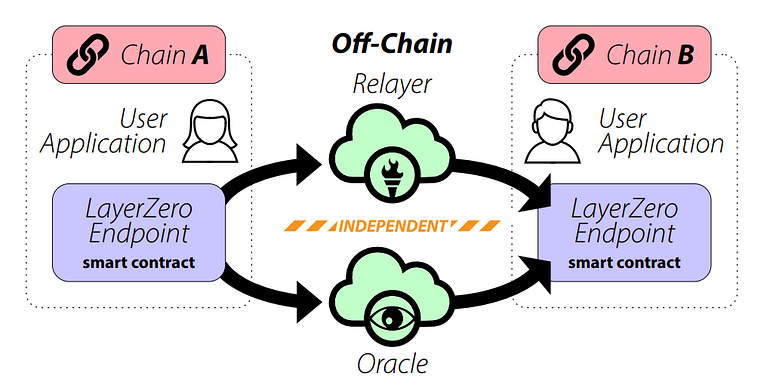
LayerZero: Using a LayerZero Endpoint on each respective chain, each LayerZero Endpoint can message one another directly, with each message/transaction validated and secured independently via Chainlink Oracle and an off-chain relayer:
 https://layerzero.network/pdf/LayerZero_Whitepaper_Release.pdf
On Altitude, consistent of two different transactions, the sending chain will communicate directly with the receiving chain to ensure that there is enough liquidity on the opposite side to complete the transfer. If there is not enough liquidity on the receiving side, the transfer will not be performed.
Apples-to-apples: On Altitude, native-to-native assets are transferred from each chain, or in other words, you can’t transfer $ETH on mainnet and receive $WBTC on Binance — you could only do $ETH to $ETH or $WBTC to $WBTC with whatever respective chain. Because each transfer involves apples-to-apples exchanges, this is why we see single-side-staking liquidity pools — the only difference among them being their respective chains.
Isolated Chain paths: Each chain-to-chain route has its own set of specific liquidity pools supplying all the transactions between those two designated chains. For this reason we see a separate LP for $USDC going from Arbtirum to Optimism and a second LP for $USDC going back from Optimism to Arbitrum:
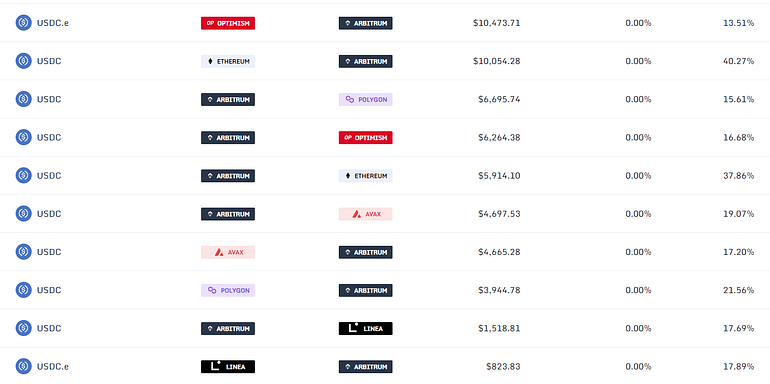
By siloing each LP, risk is mitigated as liquidity is isolated across several different pools rather than one single one.
In addition, because Altitude has so many different LPs, they’ve instituted a couple key features to help maintain liquidity in all of these pools.

Rebalancing Fees: Because sufficient liquidity is required on both sides in order to complete transactions, Altitude incentivizes the use of each liquidity pool with varying fees/rewards, where transferring from a chain with low liquidity to a chain with high liquidity will levy a fee but conversely a transfer going from high liquidity to low liquidity will be awarded.
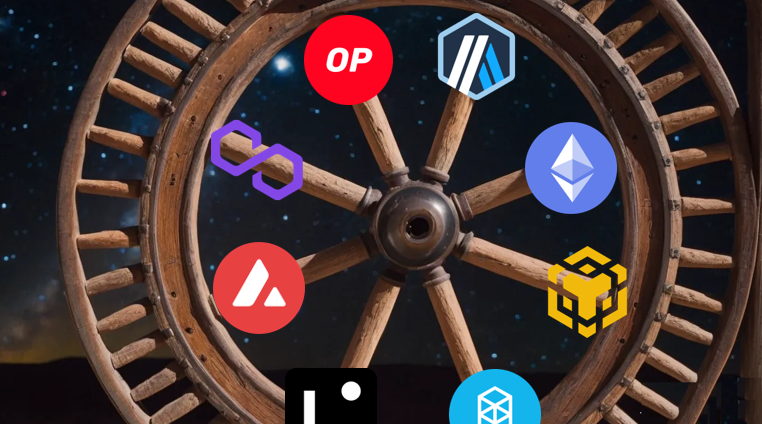
The HUB: Just like it sounds, 11
Other Considerations
A couple of other takes to consider before going into Altitude
Low liquidity = High Volatility — Some of these APRs won’t last, as you can already see by some of the disparities between yields across several pools
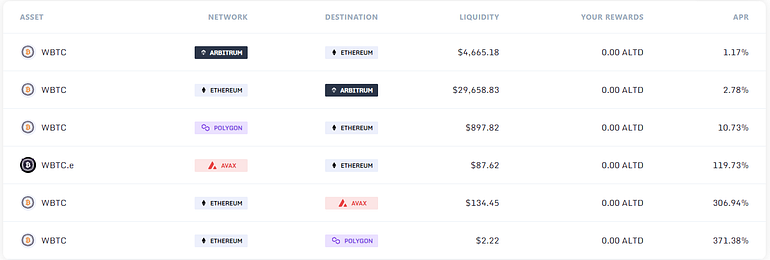
The pools with higher liquidity have significantly lower yields, and by comparison the ones with lower liquidity have significantly higher yields. Therefore it’s more advantageous to be early.
$ALTD token price — Although there’s a finite supply, the $ALTD token shares the common fate of other tokens whose only utility is a governance token:
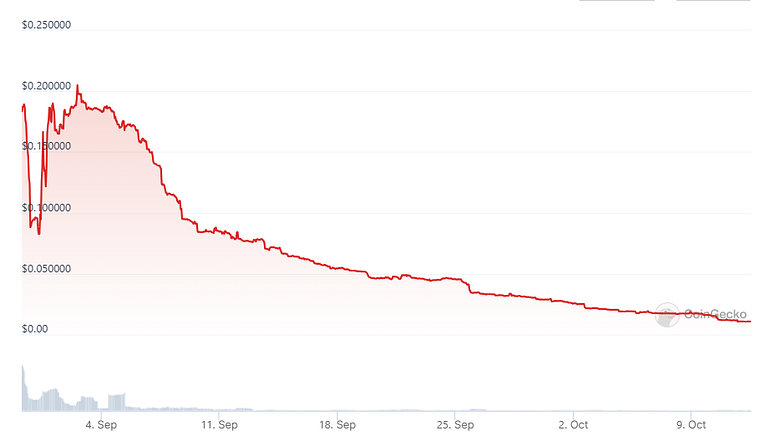
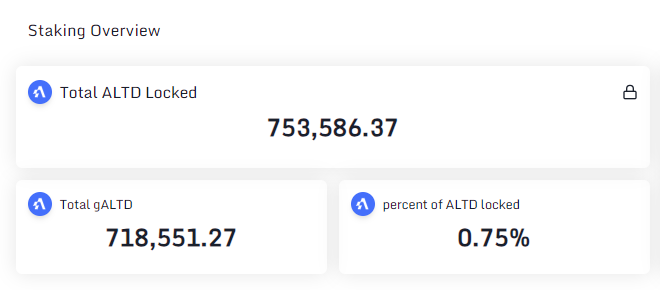
As an $ALTD holder, you are able to earn a share of revenue fees and additional $ALTD at a current APR of 24.22%, but it’s no wonder why currently only 0.75% of supply is staked:
And as a final reminder, please weigh your risk appetite before entering any high-yielding vault — if you need a better explanation as to why, check out my PSA.
Conclusion
It’s exciting to see bridges like Altitude come out with better infrastructure to secure crypto-bridging — a much needed advancement in the crypto space. As one of the first bridges to institute LayerZero technology, I imagine that bridges like Altitude will gain more traction especially as the next bull market inevitably comes.
And as always, thanks for taking the time to read this and be sure to follow me on twitter (https://twitter.com/CryptosWith) to get all my latest updates. If you want to get access to all my draft links or get an idea about what’s next on my docket before I publish, find me on Friend.tech, where I share all that information in my chatroom. Also, looking for a gift for your Crypto-loving/hating friend? Give them a REKT journal to cheer them up!
Disclaimer: And as a final reminder, this is not financial advice and this is for educational and entertainment purposes only. Please as always, do your own research and find what investments are best for you. Cheers everyone!





