
Monero Hardfork
Let’s start with some key points.
- Block on which Monero will be forked – #1978433
- When the fork is due – approximately on November 30, 2019
- Main feature of the update – the new RandomX algorithm
- Goal – free the network from FPGAs and ASICs
We still have to wait three weeks for the hardfork, so let’s concentrate on the algorithm itself.
What Is RandomX
RandomX is a Proof-Of-Work algorithm optimized for general-purpose GPUs and CPUs. Its main feature is random code execution (hence the name) together with several memory-hard techniques. This combo will be fully appreciated by developers, but the benefit is pretty clear to everyone. It will minimize the efficiency advantage of specialized hardware. In other words, it will bring ASICs down to earth.

Technical note. RandomX uses a virtual machine that executes programs in a special instruction set. These programs can be translated into the CPU’s native machine code on the fly. As a result the outputs of the executed programs are consolidated into a 256-bit result using a cryptographic hashing function Blake2b.
RandomX can operate in two main modes that differ in memory requirements.
- Fast mode – requires 2,181 MB
- Light mode – requires only 268 MB of shared memory, but runs much slower
Both modes are interchangeable as they provide the same results in the end. The fast mode is suitable for mining.
RandomX Audits
In the period from May to August 2019 the algorithm was audited by four independent security research teams. Below are the companies and audit costs.
- Trail of Bits – 28,000 USD
- X41 D-SEC – 42,000 EUR
- Kudelski Security – 18,250 CHF
- QuarksLab – 52,800 USD
The first audit was sponsored by Arweave, one of the first RandomX supporters. The other three were financed by the Monero community.
CPU Performance On RandomX
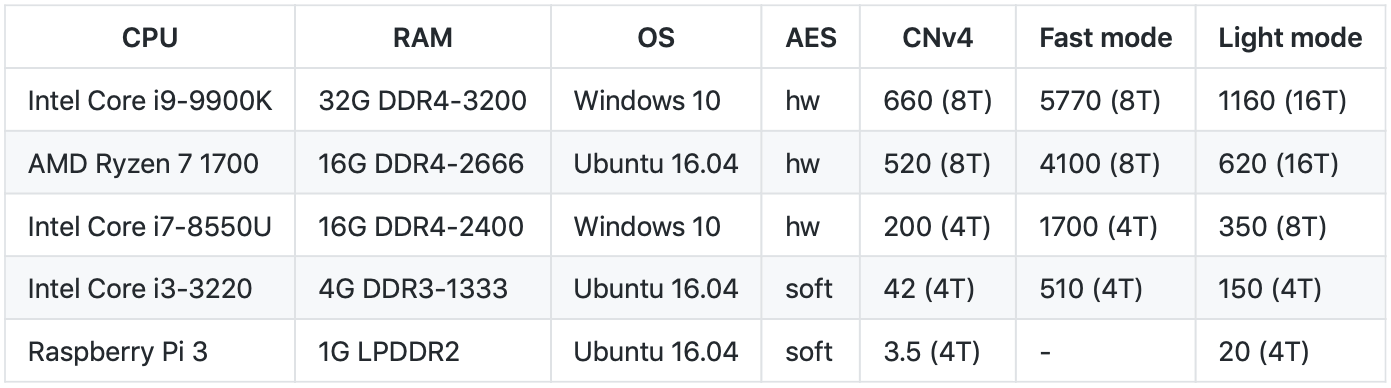
The developers shared the performance of selected CPUs that use the optimal number of threads (T) and show results in hashes per second (H/s). “CNv4” refers to the CryptoNight variant 4 (CN/R) hashrate.
GPU Performance On RandomX
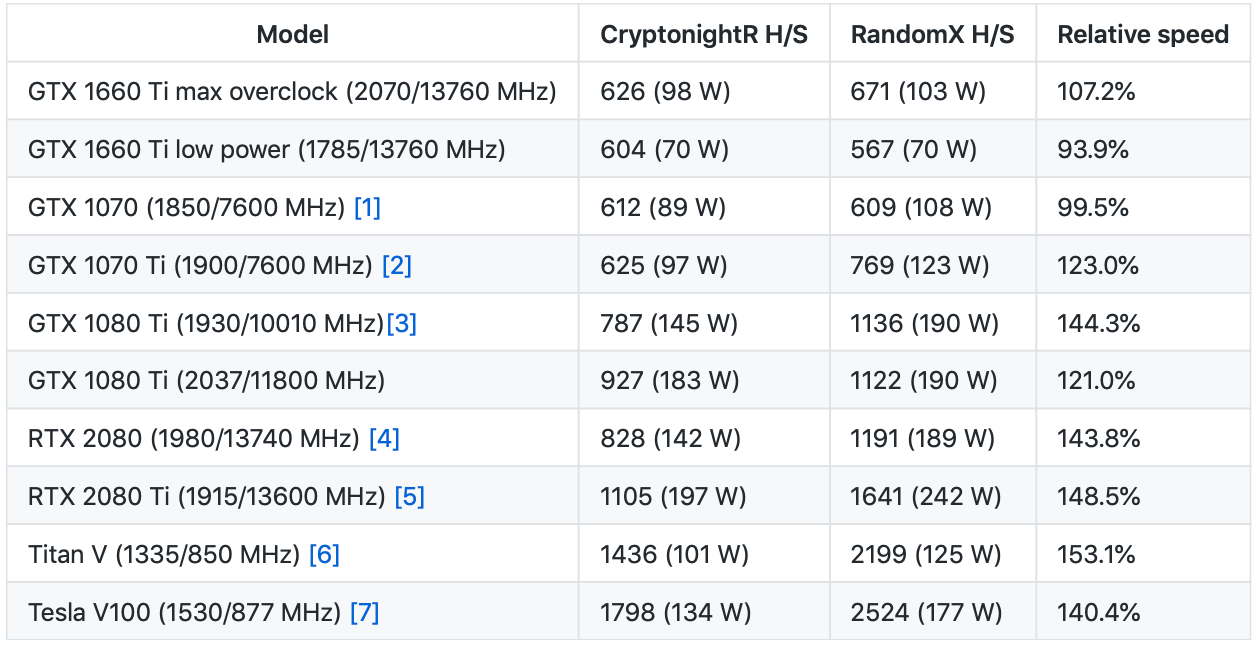
The developer known as SChernykh is working on GPU mining code for RandomX. Here is an intermediate performance of Nvidia GPUs.
Source: github.com/SChernykh
Here is AMD performance.
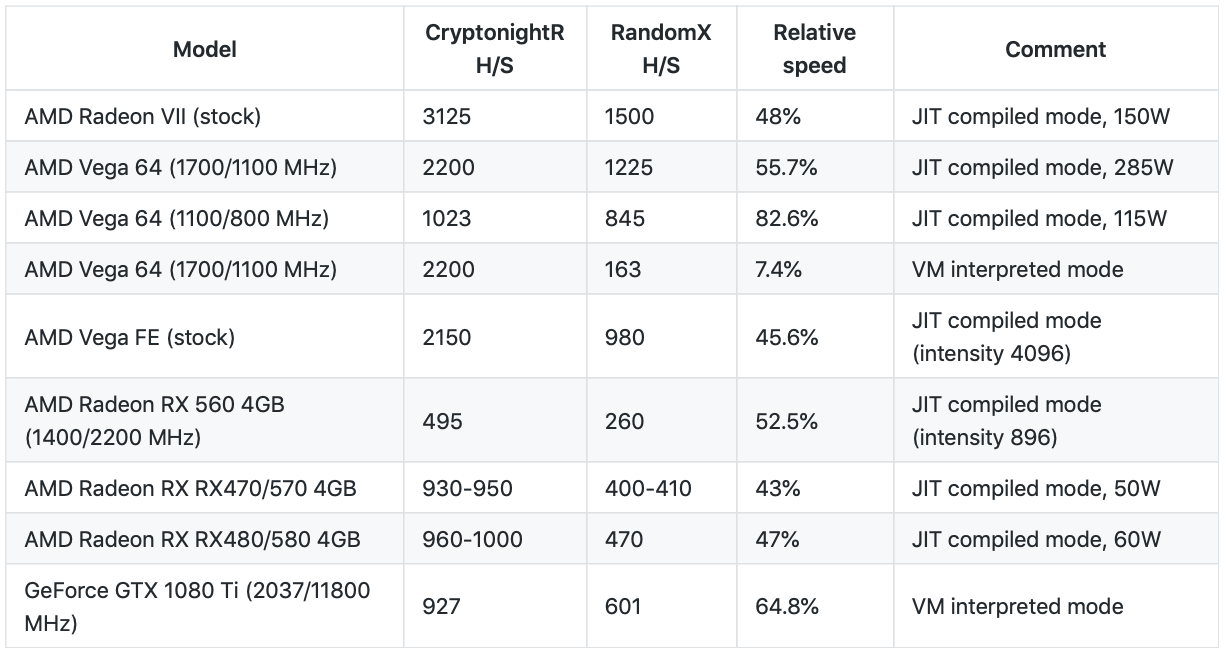
AMD GPU Performance on RandomX. Source: github.com/SChernykh
On this page, you can download the latest RandomX benchmark version and run your own tests.
How to setup Monero mining?
Download the latest XMR-Stak-RX release on github. The simple way – download our Quick Start archive (archive password: 2miners). Edit the pools.txt file, all you need to change is your wallet address.
"pool_list" :
[
{"pool_address" : "xmr.2miners.com:2222", "wallet_address" : "84Y46k2jdxfAWyD7CQufKoYagDn81HcC9EeQfyFm2v1CCbnouhXggr2egsnUFcmQRBFQzC5u4iq73R2aaV8QCmUyGMRGqWh", "rig_id" : "RIG_ID", "pool_password" : "x", "use_nicehash" : false, "use_tls" : false, "tls_fingerprint" : "", "pool_weight" : 1 },
],
You could use a local wallet or a wallet address generated on a crypto exchange. Please note that the address with Payment ID is no longer supported.
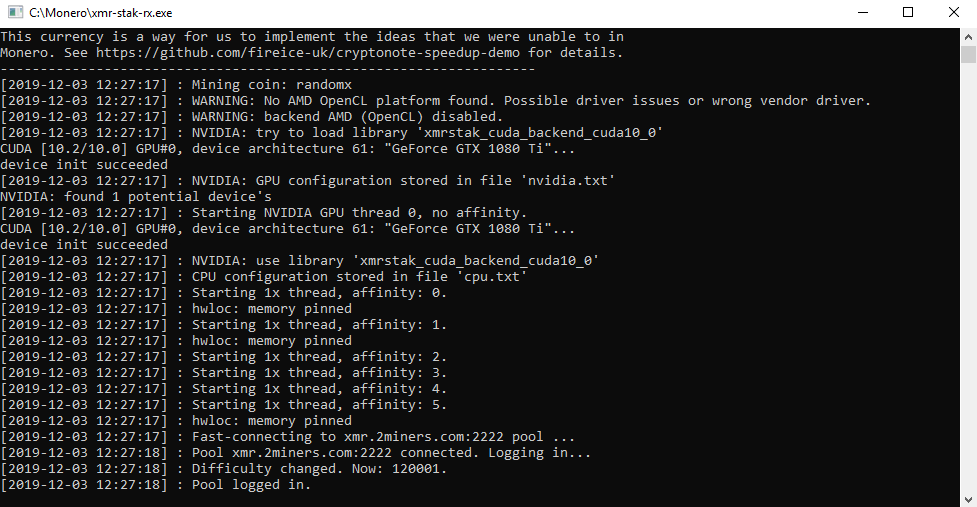
Start the mining software and press “Y” on your keyboard to setup the miner.
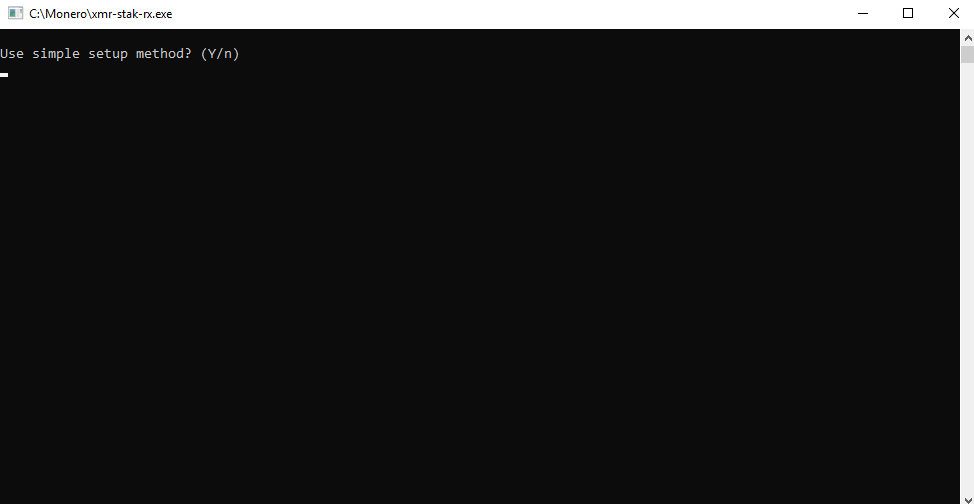
XMR-STAK will automatically define which mining hardware do you have: NVIDIA GPU, AMD GPU, CPU. Now the mining is running.
Which CPU Is Best For Mining On RandomX?
The majority of post-2011 Intel and AMD CPUs operate well on RandomX, as well as GPUs with over 2GB of memory. Here are specific requirements for efficient CPU mining.
- 64-bit architecture
- IEEE 754 compliant floating point unit (FPU)
- Hardware AES support
- Support for large memory pages
- At least 2.14 GB of free RAM per NUMA node
Can FPGA Mine On RandomX?
Basic FPGAs can’t operate on RandomX, simply because it takes them too long to dynamically reconfigure their circuitry. In theory more efficient models can mine on this algorithm by emulating a CPU. But in this case, an FPGA will be much less efficient than a CPU.
Conclusion. Thanks to RandomX, Monero (XMR) network will be more decentralized. The algorithm will make the network FPGA and ASIC resistant, while making CPU and Nvidia GPU mining more efficient. Both miners and the community will benefit from the new algorithm.






