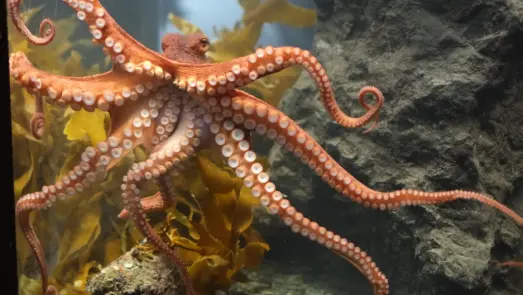
As a biologist, I’m very much familiar with the word “Symbiosis” (AKA long-term biological interaction between two different biological organisms) so it got me curious to go ahead and research the new project. I also understand why they used an octopus as a logo, considering the very symbiotic animal has plenty legs. I might not be very skilled in the cryptocurrency universe, but I imagine that is actually the point, and it is important to make crypto so understandable that even crypto-dummies like me find it easy to digest it, and before we know it, the whole community come forward and wants to know more and participate.
What Is Symbiosis Finance?
Symbiosis brings together decentralized exchange liquidity across any EVM (Ethereum Virtual Machine) and non-EVM networks and swaps any token.
Symbiosis is a decentralized multi-chain liquidity protocol, which allows users to exchange assets between all blockchains while remaining the sole owner of the funds. In easy words, Symbiosis is decentralized, collaborative, and non-custodial (which means no one has access to your funds except you).
I purposefully decided not to make this article very complicated, though the fascinating feature of cross-chain is tempting…
Cross-Chain Liquidity Engine
The cross-chain liquidity engine is a set of smart contracts placed on every blockchain supported by the Symbiosis protocol. It operates concentrated cross-chain liquidity pools and off-chain routing mechanisms, allowing to tap into AMM (Automated Market Maker) liquidity across all blockchains.
web interface or mobile application is what connects users to the project. information about assets on the blockchains supported by the Symbiosis protocol is collected and based on them, for every order, the optimal routes for swapping get created, helping users to sign and send transactions to the blockchains.
Let’s Try The Cross-Chain Engine Ourselves
When the famous Uniswap and Pancakeswap came into the picture, I felt a new horizon has been explored, but now with Symbiosis, you can move liquidity across different chains.
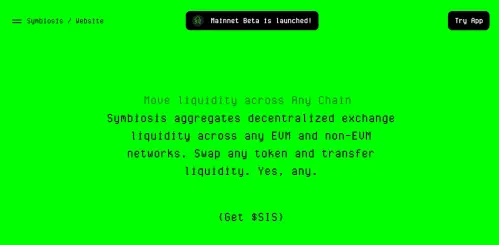
When I first opened the page, it was shocking watching just a glossy green color screen with Consolas font and a wired octopus, The simplicity of it brings back memories! While Uniswap and Pancakeswap pages are bright and bubbly (well it fits their names). Anyways, I decided to connect my wallet and go exploring new territories myself.
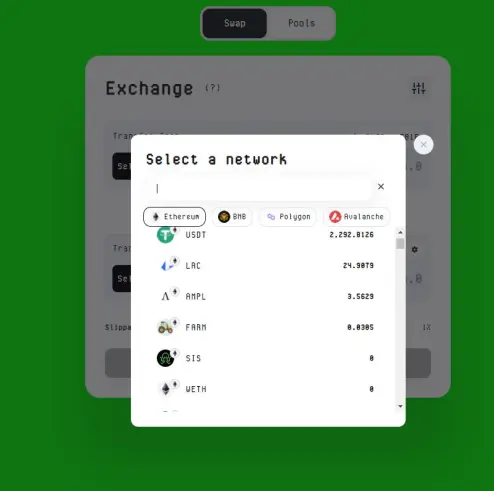
First I connected my Mask wallet and got into the Ethereum network, it showed all my tokens! Even some tokens I didn’t know I had, probably achieved them by participating in random airdrops!!! Anyway, I choose to transfer Ethereum to Farm.
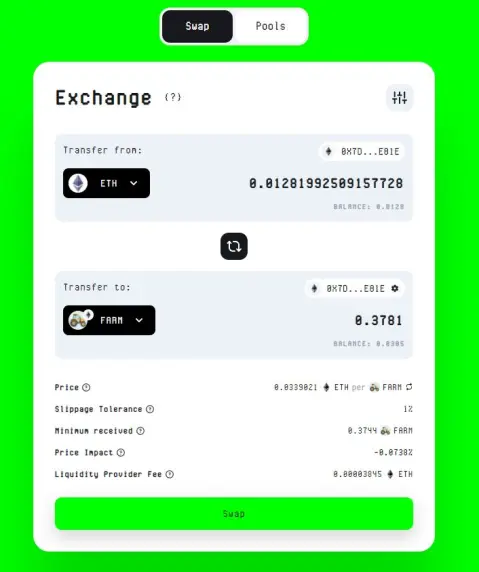
So, you can see the result. To finish the process you can click swap and after that confirm the transaction. I think it was more convenient if the fee could be seen as $, of course, further on, final approval clearly shows the exact amount of dollars spent on the fee.
The process has been completely explained in the link below:
https://docs.symbiosis.finance/user-guide-webapp/swaps
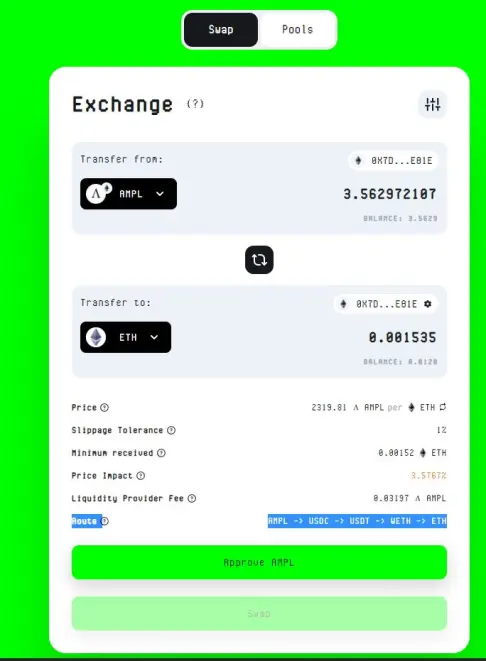
It is interesting that when you swap between AMPL and ETH, the Route (AMPL -> USDC -> USDT -> WETH -> ETH) is being displayed and an extra fee approval is needed. I've seen this in PancakeSwap but
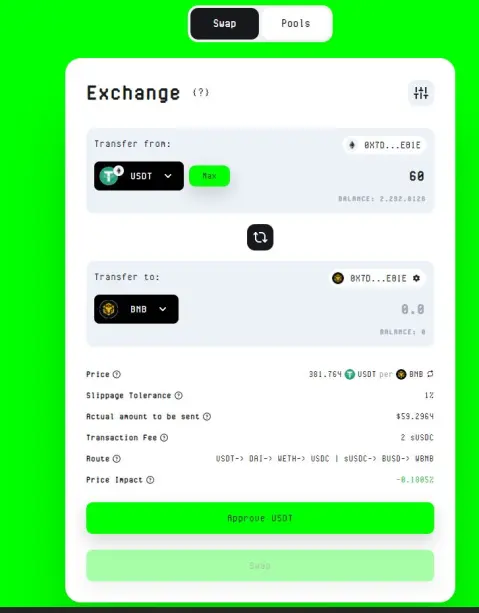
I want to see what happens if I transfer USDT from the Ethereum (network) to BNB (network), wow! That is quite a long route.
USDT-> DAI-> WETH-> USDC | sUSDC-> BUSD-> WBNB
While doing transactions in PancakeSwap, you can see the route too, but yet again, PancakeSwap is more simple and is not multi-chain.
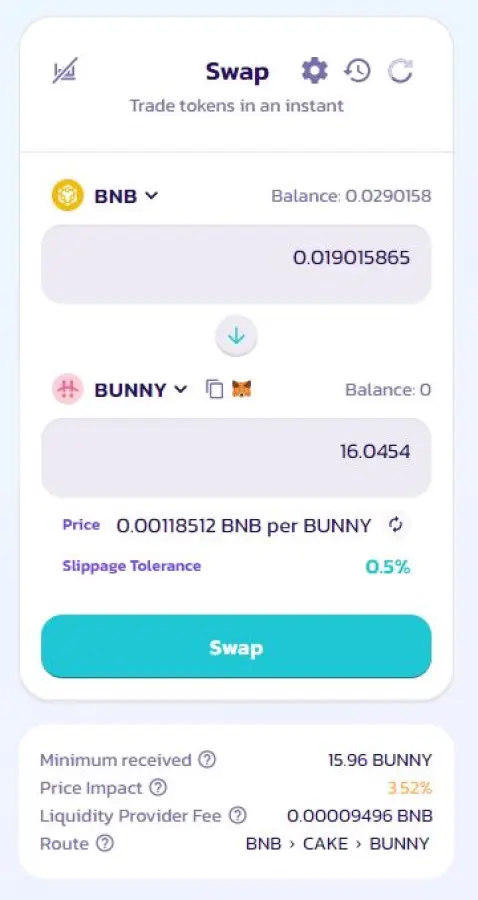
I wanted to go ahead and do the test on the BNB network but unfortunately the amount of token there was too low to experience any further.
At last, I think Symbiosis is a promising project and has the potential to succeed in the future. It all depends on how they can turn promises into reality, So, I decided to participate in the SymbiosisDeFined contest as well.