
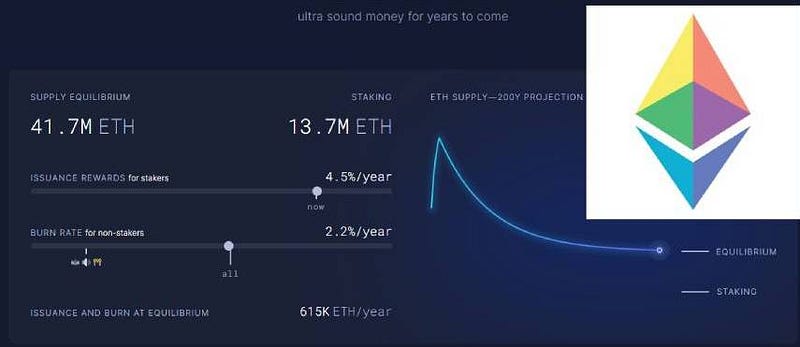
 From ultrasoundmoney
Ethereum’s Merge season Special with stories related to Ethereum’s Beacon Chain
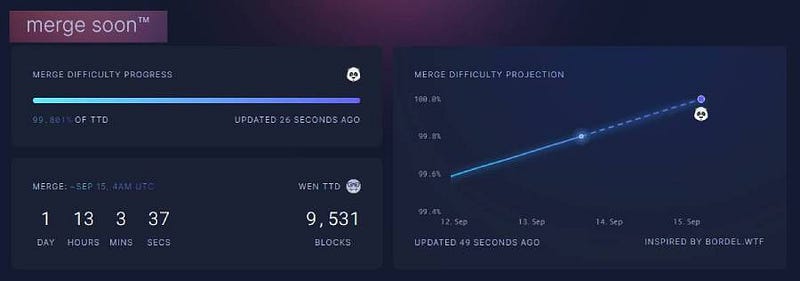 From ultrasoundmoney. Celebrating the coundown to Ethereum’s Merge Baby!!
So, the Merge date is just a day ahead, Ethereum soon ceases to be the Proof of Work chain it has been since its inception very soon. This is a very special occasion, which is why since last week I have been celebrating the countdown to the Merge by writing Ethereum Beacon Chain related articles.
Today will be my 4th and last article celebrating the Merge, as after this article Ethereum Merge should have in reality taken place.
You can read my series of article celebrating the Ethereum Merge here -
- Analysing Ethereum Beacon Chain’s level of decentralisation in its current form
- Grand event this Month for Ethereum with the Merge happening soon transitioning it into a POS chain!!
- Celebrating the Ethereum Merge with a stETH story as this asset made headlines this year !!
ETH inflation rate lowers considerably with the Merge!!
Here, my focus will be on Ethereum now on the road to become a deflationary crypto currency. Till now, ETH’s inflation rate was 4.62%.
Currently, ETH’s issuance happens in two ways causing this inflation with issuance of ETH in Ethereum’s Execution layer (that’s Ethereum current POW state chain) contributing to 4.13% inflation and ETH’s issuance at Ethereum Consensus layer( Ethereum’s Beacon Chain ) being 0.49%, totally amounting to an inflation of 4.62%.
The Merge will of course combine these two chains and Ethereum transitions to a Proof Of Stake Chain with validation and Block creation all going to happen on the Beacon Chain.
So, post Merge Ethereum’s execution layer will not issue any new ETH, all activities that happen in the execution layer will be included in Beacon chain blocks.
ETH issuance will happen on Ethereum’s Consensus layer at the same rate of 0.49%, completely eliminating Ethereum’s inflation rate of 4.62% .
ETH issuance at Execution Layer with Ethereum Network in its POW state
Ethereum as a POW chain had to reward miners amply as mining is an energy intensive activity with miners spending a lot on mining equipment and electricity. Ethereum as a POS chain has no huge energy cost overheads for validators, so they get less rewards.
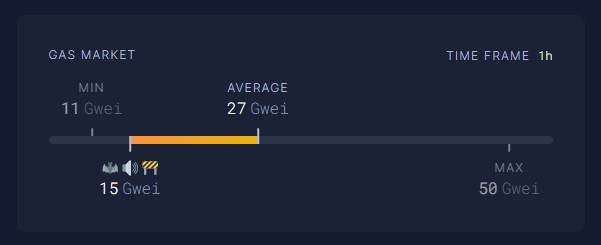 From ultrasoundmoney. Ohh, costly memories of Ethereum Network with its high gas fees in Proof of Work State!!
In Ethereum’s POW state chain, a miner who successfully mines a Canonical Block wins 2 ETH as Block reward. In addition miners also get 0.08 ETH for mining of a ommer Block, so issuance of ETH amounted to 2.08 ETH per 13.3 sec.
Per day issuance of ETH = 13,000 ETH
ETH issuance at Consensus Layer with Ethereum Network in its POW state
Since 2020 December Ethereum’s Consensus layer has been issuing ETH rewards to validators who are attesting to the state of the Beacon chain, which comprises stakes of various validator staking pools.
Staking rewards on validator deposits has been accumulating.
Per day ETH issued as staking rewards on the Consensus layer has been 1600 ETH.
Issuance of ETH gets reduced by 90% post Merge bringing down ETH’s inflation rate
After the Merge, ETH issuance will take place only on Ethereum Consensus layer with validators earning rewards for attesting to the State of the Chain and proposing Blocks. They stand to get penalized as well with slashing for downtime or malicious acts aimed to steal funds or undermine security of the Chain.
These rewards and penalties based on performance will be distributed at each epoch taking 6.4 minutes.
The per day issuance of ETH in Beacon Chain will remain 1600 ETH amounting to an inflation of 0.49% .
So, post merge ETH issuance rate drops by 90% which eliminates the 4.13% inflation Ethereum’s POW State Chain produced.
ETH’s inflation cut to zero with burn mechanics removing ETH’s supply
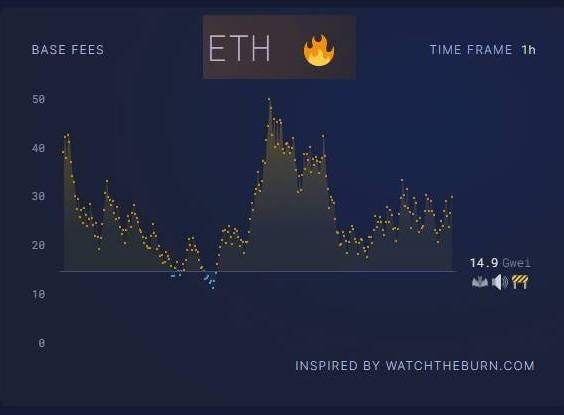 From ultrasoundmoney
Now, even this 0.49% inflation gets eliminated post Merge because of Ethereum’s burn mechanism at play. Whenever an ETH transaction takes place, a part of it that goes as fees is burned and removed from circulation.
So, 1600 ETH gets issued per day but the same amount of ETH gets burned per day as well.
This amounts to ETH having 0% inflation, with the issuance rate negated by burn mechanism. Eventually, ETH’s issuance rate will get negative and with less ETH supply in circulation but demand for ETH continuing, ETH should turn deflationary.
You can visualize all these scenarios in https://ultrasound.money/, that shows all these dynamics at play affecting ETH’s supply and post Merge Ethereum is set to become a deflationary crypto currency.
Newly issued ETH post Merge is locked till Shanghai upgrade is delivered!!
Well, that’s how ETH is on the road to now become a deflationary asset. You can calculate the maths yourself referring to the article here -
https://ethereum.org/en/upgrades/merge/issuance/
Remember that post Merge, accrued staking rewards cannot be withdrawn until the Shanghai upgrade is completed. All the newly issued ETH will be ETH issued as validator rewards and its locked in validator balance until Shanghai upgrade enables withdrawals of ETH from validator accounts.
So, till then whatever ETH is in circulation are ones that’s been issued from Ethereum POW, so there should be considerably ETH supply reduction till then. Let’s see what this does to ETH’s price!!
That’s it folks — and the Merge nears… !!





